
If you’ve been searching for estrogen rich foods since your periods became irregular or the hot flushes started, you need to know one thing first. No plant food contains human estrogen. What soy, flaxseed and sesame do contain are phytoestrogens: plant compounds that bind weakly to your estrogen receptors. The best-studied of them, soy isoflavones, cut hot flush frequency by about one-fifth in clinical trials. That is a real effect, but it is modest. This guide gives you the measured numbers for each food, adapts them to Indian meals, and flags the cases where you should talk to your doctor before eating more of them.
Many Indian women reach menopause in their mid-to-late 40s, and symptoms can start years before the last period. Food can help with how you feel and with long-term bone and heart health. It cannot restore premenopausal hormone levels. If hot flushes, sleep problems or low mood are disrupting your daily life, see a gynaecologist. Food works alongside treatment. It does not replace it.
What exactly are estrogen rich foods?
“Estrogen rich foods” is a popular name for foods high in phytoestrogens, which are plant compounds shaped like the hormone estradiol. The three main groups are isoflavones (soybeans, soya chunks, tofu), lignans (flaxseed, sesame) and coumestans (sprouts). Their estrogen-like effect is much weaker than your body’s own hormone, so their impact is real but mild.
Nutrition researchers describe soy isoflavones as working like human estrogen but with much weaker effects. Depending on the tissue, they can act as a weak estrogen or as an anti-estrogen. This is why soy doesn’t behave like a hormone tablet.
There are two practical groups:
- Isoflavones: found almost only in soybeans and soy products. Other legumes like chana, rajma, masoor and moong have trace amounts.
- Lignans: concentrated in flaxseed (alsi) and, to a lesser extent, sesame (til). Your gut bacteria convert them into enterolignans, which are the compounds that actually have the weak estrogen-like activity. How well this conversion happens varies from person to person.
High estrogen foods ranked: the phytoestrogen content table
Many lists of foods high in estrogen put tofu and dates side by side as if they were equal. They are not. The table below uses measured lab values: isoflavones from the USDA Database for the Isoflavone Content of Selected Foods, Release 2.1 (2015), and lignans from a 2005 British Journal of Nutrition analysis of 83 plant foods. That analysis measured flaxseed at 301 mg lignans per 100 g and sesame at 29.3 mg per 100 g. The serving column converts these figures to typical Indian portions and is rounded.
| Food (Indian name) | Main phytoestrogen | mg per 100 g | Typical Indian serving | ≈ mg per serving |
|---|---|---|---|---|
| Textured soy / soya chunks (dry) | Isoflavones | 172.6 | 30 g dry (1 katori cooked) | 52 |
| Soybeans, raw/dry (soyabean) | Isoflavones | 154.5 | 30 g dry, soaked | 46 |
| Roasted soybeans / soy nuts | Isoflavones | 148.5 | 25 g handful | 37 |
| Soybeans, boiled | Isoflavones | 65.1 | 100 g (½ cup) | 65 |
| Tempeh | Isoflavones | 60.6 | 80 g | 48 |
| Edamame (green soybeans) | Isoflavones | 49.0 | 75 g shelled | 37 |
| Tofu, firm (calcium-set) | Isoflavones | 30.4 | 100 g (8–10 cubes) | 30 |
| Tofu, regular/soft | Isoflavones | 22.7 | 100 g | 23 |
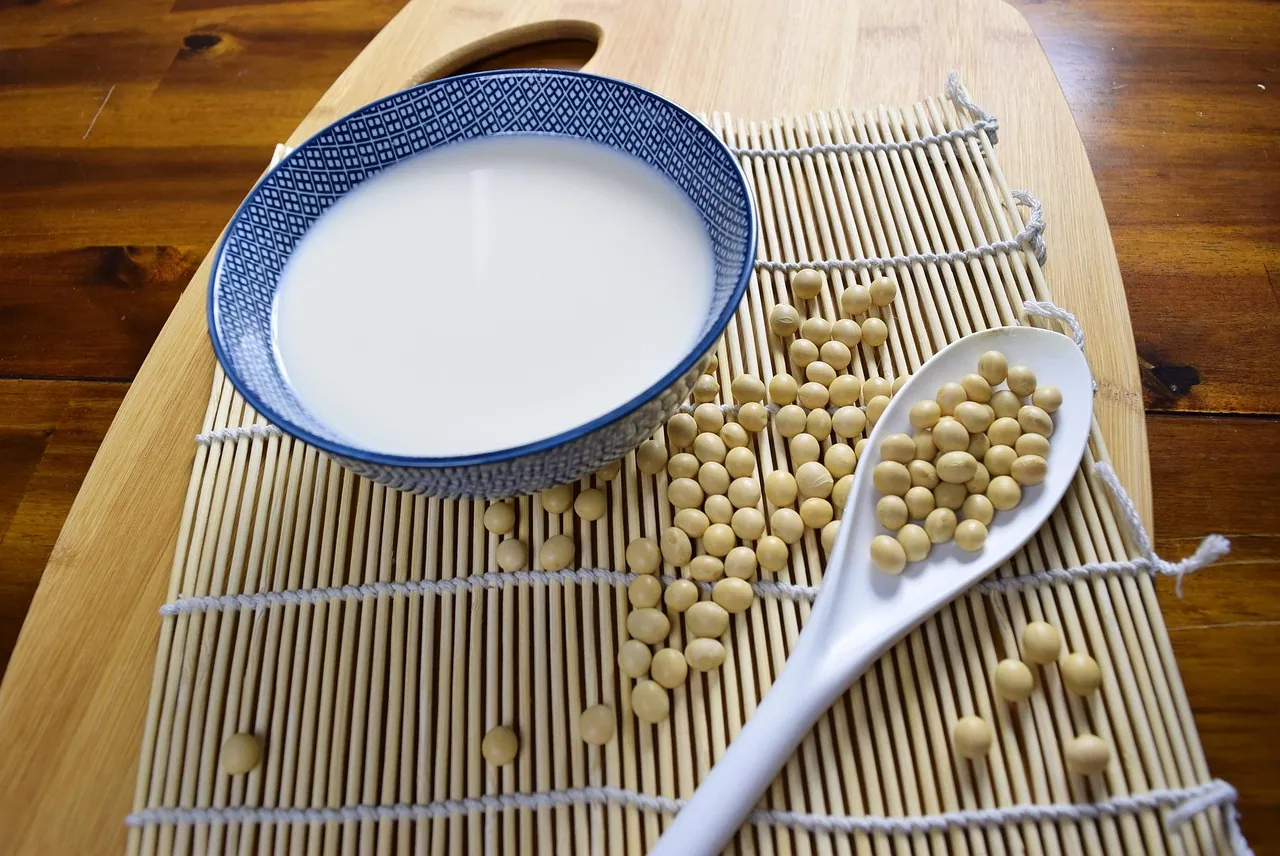
| Soy milk, plain | Isoflavones | 10.7 | 250 ml glass | 27 |
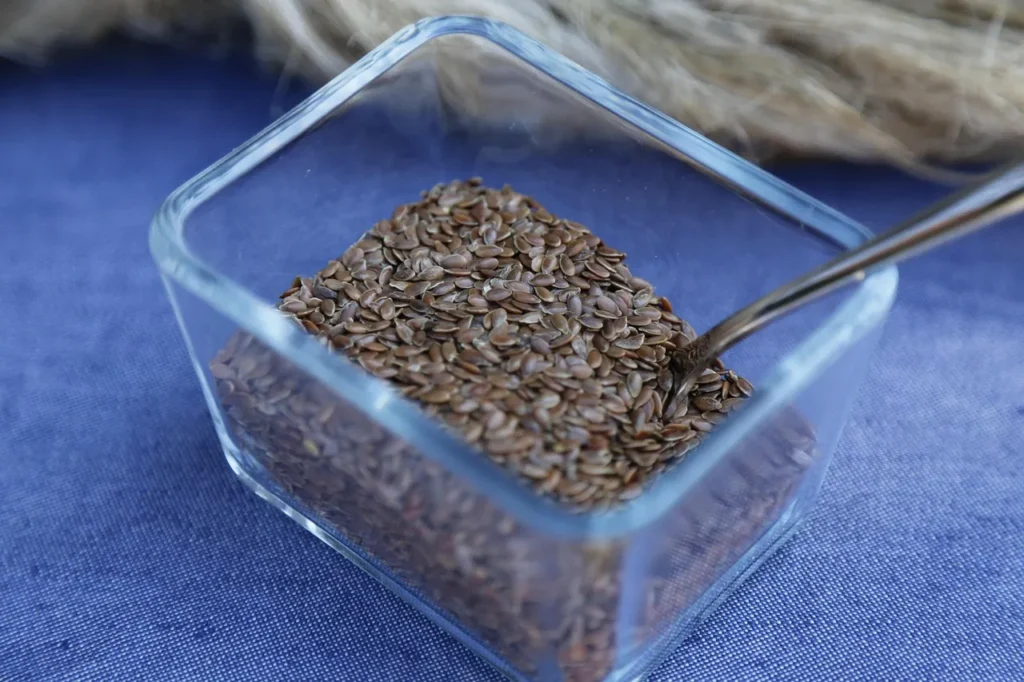
| Flaxseed (alsi) | Lignans | 301 | 1 tbsp ground (≈7 g) | 21 |
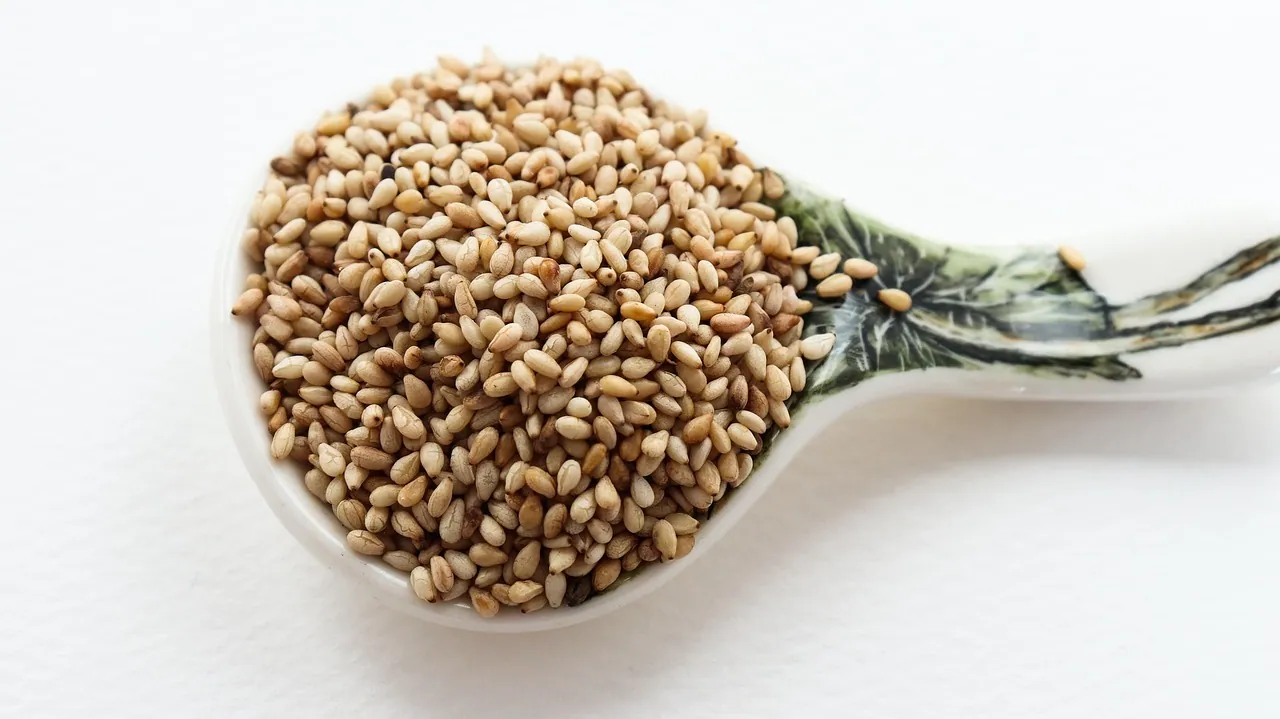
| Sesame seeds (til) | Lignans | 29.3 | 1 tbsp (≈9 g) | 2.6 |
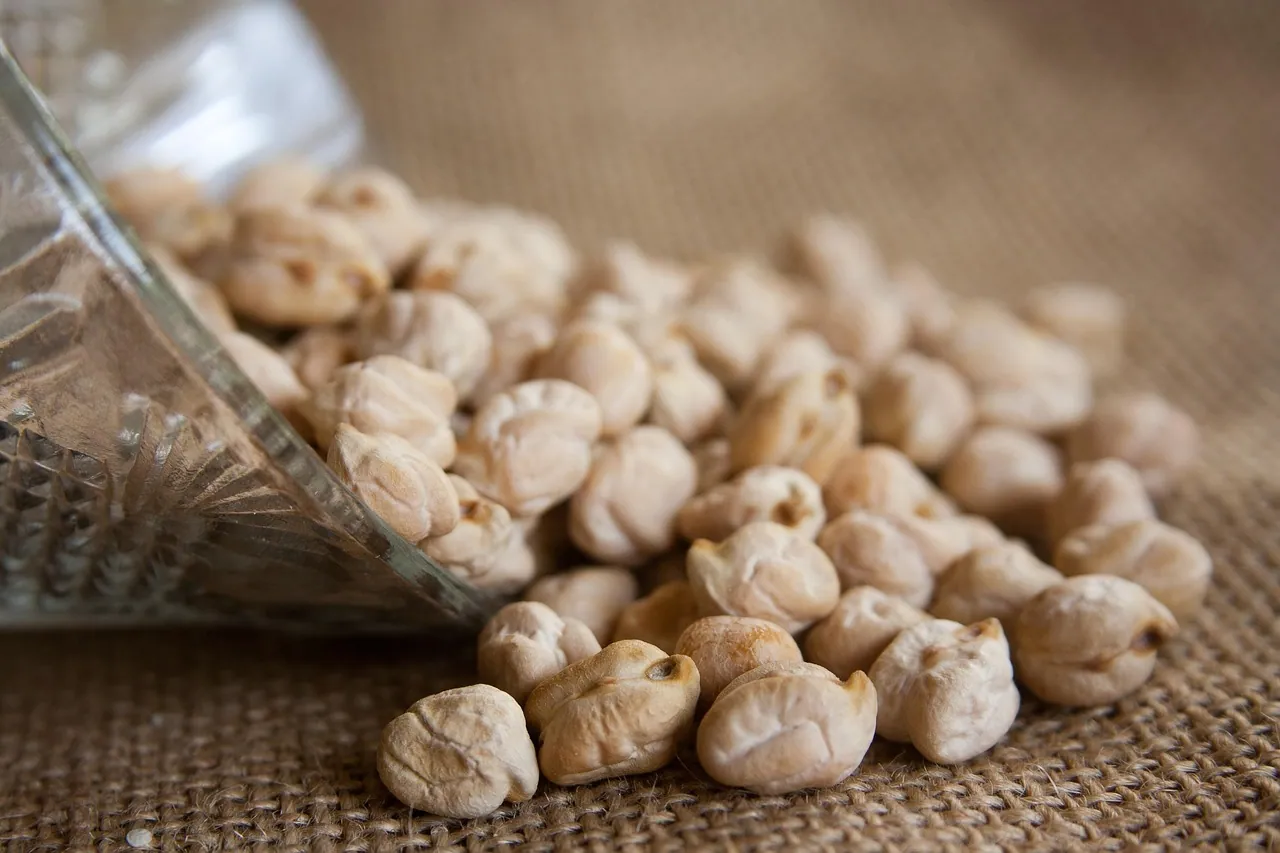
| Chickpeas, raw (kabuli chana) | Isoflavones | 0.38 | 40 g dry | 0.15 |
Here is what the table tells you. Soy foods have the most isoflavones by a wide margin. A 250 ml glass of soy milk has about 180 times the isoflavones of a 40 g serving of dry chana. Flaxseed leads for lignans. Sesame and chickpeas are healthy foods, but their phytoestrogen content is small. Include them because they are nutritious and not as a hormone strategy. Values vary with variety and processing. The USDA recorded firm tofu samples ranging from 3 to 142 mg per 100 g, so treat these figures as averages.
Do phytoestrogen foods actually reduce hot flushes?
Somewhat, and soy has the best evidence. A 2012 meta-analysis of 17 randomised trials found that about 54 mg of soy isoflavones a day reduced hot flush frequency by 20.6% and severity by 26.2% compared with placebo, over 6 weeks to 12 months. Flaxseed failed a large 2012 trial. Hormone therapy is still much more effective.
That figure comes from a 2012 systematic review in Menopause (Taku et al.). It pooled extracted or synthesised soy isoflavones and found that products providing more than 18.8 mg genistein worked more than twice as well as lower doses. A broader 2016 JAMA meta-analysis of 62 studies and 6,653 women found that phytoestrogens reduced daily hot flushes by 1.31 on average and slightly improved vaginal dryness. It found no clear effect on night sweats, and the authors noted that study quality varied widely.
Not every authority agrees that this is enough. The North American Menopause Society’s 2023 nonhormone therapy position statement lists “soy foods and soy extracts” under options it does not recommend for hot flushes, because the evidence is limited or inconsistent. It also says hormone therapy remains the most effective treatment. We think the fair reading is this: soy may take the edge off mild symptoms for some women, and there is little downside for most, but it is not a treatment for severe hot flushes.
| Claim | What trials found | Strength | Practical takeaway |
|---|---|---|---|
| Soy reduces hot flushes | −20.6% frequency, −26.2% severity at ~54 mg/day (2012 meta-analysis) | Moderate, inconsistent | Worth a 12-week trial if symptoms are mild |
| Flaxseed reduces hot flushes | 410 mg lignans/day for 6 weeks no better than placebo (2012 RCT, 188 women) | Negative | Eat it for fibre and omega-3, not for hot flushes |
| Phytoestrogens help vaginal dryness | Small score improvement (2016 JAMA meta-analysis) | Weak | Use proper moisturisers or ask your doctor |
| Phytoestrogens stop night sweats | No significant effect (2016 JAMA meta-analysis) | Not supported | Adjust room temperature and triggers instead |
| Food can replace HRT | Hormone therapy remains most effective (NAMS 2023) | Not supported | Discuss HRT or nonhormonal medicines with a doctor |
What about flaxseed?
Flaxseed is the richest lignan source by far, but it didn’t beat a dummy bar in the best trial so far. In a phase III Mayo Clinic–led trial published in 2012, 188 postmenopausal women ate either a flaxseed bar providing 410 mg lignans or a placebo bar daily for six weeks. Hot flush scores fell by 4.9 points with flax and 3.5 with placebo, a difference that was not statistically significant (P = 0.29). Alsi is still an excellent food for fibre and plant omega-3. Just don’t expect it to fix hot flushes.
Top 10 estrogen rich foods in an Indian kitchen
This is the list ordered by measured phytoestrogen content per realistic serving, with how Indian households actually eat each food. The first five do most of the work.
- Soya chunks / nuggets. These are the cheapest isoflavone source in India, and a 200 g pack usually costs under ₹100. Soak 30 g dry chunks, squeeze them out and add them to a matar-soya sabzi or pulao. That serving gives about 50 mg isoflavones and roughly 15 g protein.
- Whole soybeans (bhatmaas, soyabean). Soak overnight and pressure-cook like rajma. Kumaoni bhatt ki churkani and Northeast-style bhatmaas achar are traditional uses.
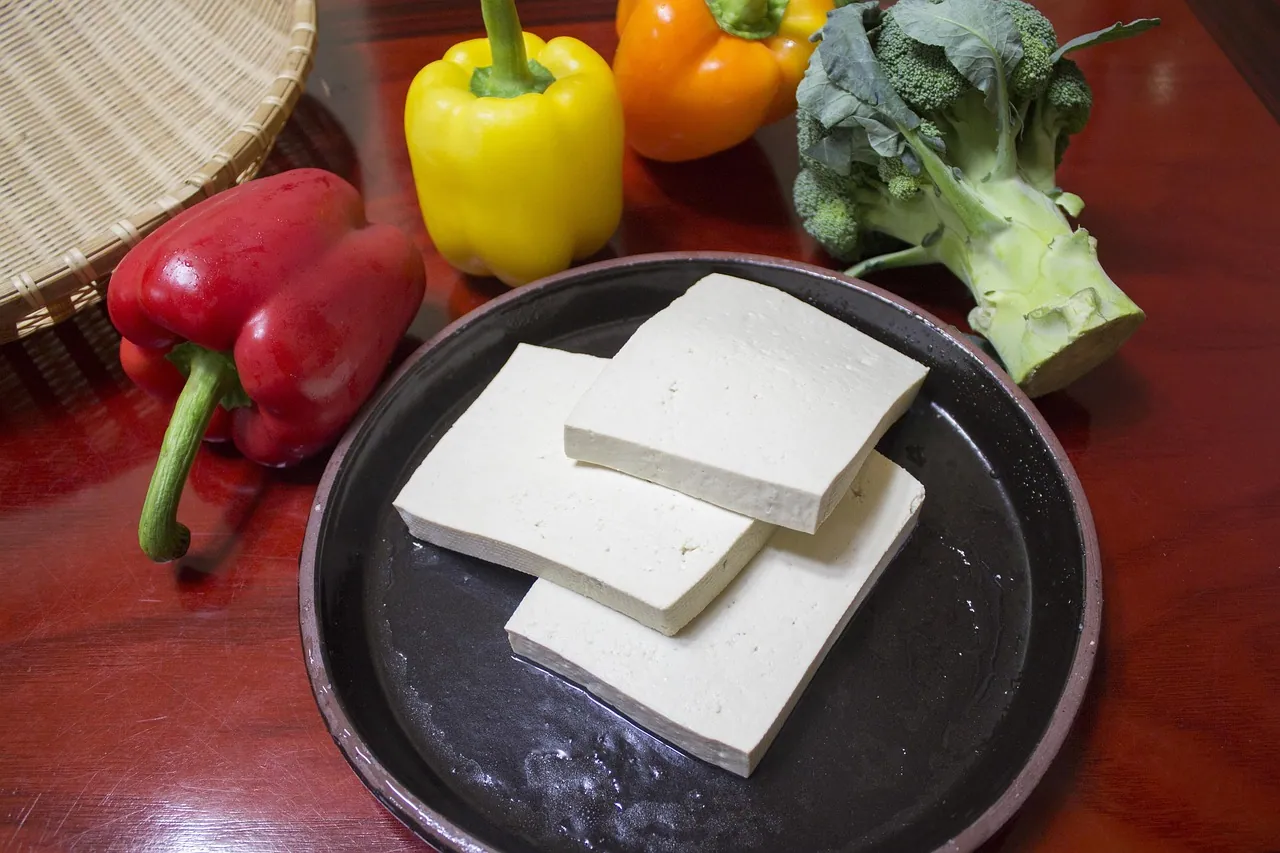
- Tofu. It works anywhere you’d use paneer, as in tofu bhurji, tofu tikka and palak tofu. Calcium-set firm tofu also counts towards your calcium intake.
- Soy milk. Use it for morning chai, overnight oats or a smoothie. Choose unsweetened.
- Roasted soy nuts. They make a crunchy chakna swap for namkeen: 25 g gives about 37 mg.
- Edamame. It is increasingly available frozen in metros. Stir-fry it with jeera and chilli.
- Tempeh. It’s fermented and firm, and more Indian brands now sell it. Pan-fry it with a tandoori marinade.
- Flaxseed (alsi). Grind it fresh, because whole seeds often pass through undigested. Stir 1 tbsp into atta, curd or chutney.
- Sesame (til). It has modest lignans, but it is also a traditional calcium source in til chikki, til chutney and gajak.
- Legumes (chana, rajma, masoor, moong). Their isoflavone content is tiny, but they supply fibre and protein and fit a heart-healthy menopause diet.
You’ll notice some foods are missing: dates, pomegranate, garlic, peaches and dry fruits. Viral “estrogen” lists often include them, but they are not meaningful phytoestrogen sources in the USDA or lignan databases. They’re fine to eat but have no special hormone value.
Increase estrogen foods: the myths worth dropping
Searches for “increase estrogen foods” usually rest on a few misunderstandings.
Myth 1: “Eating soy raises your estrogen levels”
Phytoestrogens bind to receptors. They don’t add estradiol to your blood. Your blood test won’t show a jump to premenopausal levels after a week of tofu, and no food can do that.
Myth 2: “More is better, so take the capsule”
Supplements concentrate isoflavones far beyond food levels. The NIH’s National Center for Complementary and Integrative Health notes that concentrated soy isoflavone extracts have been studied as safe for only up to 6 months. It also warns that tyramine-rich soy products such as tofu and soy sauce can interact dangerously with MAOI antidepressants. For the pros and cons of pills, see our guide to the best vitamins and supplements for menopause.
Myth 3: “Soy causes breast cancer”
Human data point the other way. The After Breast Cancer Pooling Project (Nechuta et al., 2012) followed 9,514 breast cancer survivors in the US and China for a mean of 7.4 years. Women eating at least 10 mg of isoflavones a day after diagnosis had a 25% lower risk of recurrence (HR 0.75). This is observational data. It is reassuring about moderate soy foods, but it doesn’t tell you to take soy supplements.
Myth 4: “Chickpeas and sesame are strong estrogen boosters”
The table shows chickpeas at 0.38 mg isoflavones per 100 g, which is around 400 times less than dry soybeans. Keep eating chole for protein and fibre, not for hormones.
A 7-day plan using estrogen rich foods for menopause
Here is how to add phytoestrogen foods to a normal Indian week. The plan provides roughly 30–95 mg isoflavones a day, averaging about 60 mg. That average is close to the median dose used in the hot-flush trials, and the plan avoids supplement-level amounts. The plan is vegetarian. Non-vegetarians can keep their usual eggs, fish or chicken alongside it. Portion sizes are illustrative, not a calorie prescription.
| Day | Breakfast | Lunch | Snack | Dinner | ≈ Isoflavones / lignans |
|---|---|---|---|---|---|
| Mon | Poha + 1 glass unsweetened soy milk | Roti with 1 tbsp alsi in dough, dal, sabzi | Fruit + curd | Soya chunk matar, brown rice | ≈ 80 mg / 21 mg |
| Tue | Besan chilla + til chutney | Rajma, rice, salad | 25 g roasted soy nuts | Palak tofu (100 g), 2 roti | ≈ 67 mg / 3 mg |
| Wed | Oats cooked in soy milk + 1 tbsp ground flax | Chole, roti, cucumber raita | Buttermilk + peanuts | Mixed veg khichdi, curd | ≈ 27 mg / 21 mg |
| Thu | Tofu bhurji (100 g) + toast | Masoor dal, rice, bhindi | Til chikki (1 small piece) | Soybean curry (100 g boiled), roti | ≈ 95 mg / 3 mg |
| Fri | Idli, sambar | Soya pulao (30 g chunks), raita | Fruit | Moong dal, roti with alsi, sabzi | ≈ 52 mg / 21 mg |
| Sat | Vegetable upma + soy milk | Kadhi, rice, salad | Edamame (75 g) with jeera | Paneer or egg curry, roti | ≈ 64 mg / 0 mg |
| Sun | Moong chilla + flax chutney | Tofu tikka (100 g), salad, roti | Makhana | Dal, vegetables, rice | ≈ 30 mg / 21 mg |
If you want this adapted to your thyroid report, blood sugar or cholesterol, a dietitian can work out portions for you. Fitstrot’s online nutritionist consultation does this over video.
Three easy recipes to start with
- Soya chunk matar (serves 2): Boil 60 g dry chunks for 5 minutes, then squeeze and rinse. Make an onion-tomato masala with jeera, haldi and garam masala. Add 1 cup peas, the chunks and ½ cup water, and simmer for 10 minutes. Each serving gives about 50 mg isoflavones.
- Alsi roti: Knead 1 tbsp freshly ground flaxseed into atta for 2 rotis. You won’t taste it, and it adds about 21 mg lignans.
- Tofu bhurji: Crumble 100 g firm tofu into a tadka of onion, green chilli, tomato and haldi, and finish with coriander. It cooks in 8 minutes and has about 30 mg isoflavones.
Estrogen rich foods for women with thyroid, breast cancer history or other conditions
For most women, eating soy foods a few times a week is safe. A few groups should check with their doctor first.
If you have hypothyroidism
A 2006 review in Thyroid of 14 trials found little evidence that soy affects thyroid function in people with normal thyroid function and adequate iodine. However, soy can reduce how well levothyroxine is absorbed. The authors said hypothyroid adults “need not avoid soy foods”. In practice, take your thyroid tablet on an empty stomach as prescribed, keep a gap of a few hours before soy milk or tofu, and use iodised salt. Tell your doctor if your intake of soy changes a lot, because your dose may need rechecking. Never adjust the dose yourself.
If you’ve had breast cancer or take tamoxifen / aromatase inhibitors
Moderate soy food intake appears safe in cohort studies (see Myth 3). Isoflavone supplements are a different matter. Discuss any soy, flax or herbal product with your oncologist before starting it.
If you take MAOI antidepressants or have a soy allergy
Fermented and aged soy products can be high in tyramine. Ask your prescriber before eating them. If you have a soy allergy, avoid soy altogether. You can still eat flaxseed and sesame as long as you aren’t allergic to them.
If you’re perimenopausal with irregular or very heavy bleeding
Don’t try to manage this with food alone. Heavy, prolonged or post-menopausal bleeding needs a gynaecologist’s evaluation.
Are there high estrogen foods to avoid?
For most women in menopause, no phytoestrogen food needs to be avoided at normal amounts. The exceptions are soy allergy, MAOI medication and, with your oncologist’s guidance, concentrated isoflavone supplements after hormone-sensitive cancer. What menopausal women should actually limit is alcohol, spicy food and caffeine, which the NHS lists as common hot-flush triggers.
The NHS menopause self-help page (reviewed May 2026) suggests avoiding triggers such as spicy food, caffeine, hot drinks, smoking and alcohol. It also recommends eating calcium-rich foods and doing weight-bearing exercise to protect your bones. If kadak chai or an extra-spicy dinner reliably sets off a hot flush, cutting back may help more than adding tofu.
Troubleshooting: “I added soy and nothing changed”
- Too little, too briefly: Trials ran for 6 weeks to 12 months. Give it 12 weeks at roughly 40–60 mg a day before you judge.
- Your gut bacteria may matter: Only some people make equol, a more active soy metabolite. If you don’t, your response may be smaller. There is no reliable food fix for this.
- Bloating or gas: Increase flax and soy gradually and drink enough water. The flaxseed trial reported bloating in both groups, which is probably due to the fibre.
- Symptoms are severe: Food isn’t the right tool for this. Ask your doctor about HRT or proven nonhormonal options.
Phytoestrogen foods are one part of a menopause plan
Phytoestrogen foods are one of five levers you can pull. The other four have better evidence for long-term health:
- Protein at every meal to slow the muscle loss that speeds up after menopause. Our high-protein vegetarian foods list helps you plan it.
- Calcium and vitamin D for bone density. Dairy, ragi, til and calcium-set tofu all count.
- Strength and weight-bearing exercise 2–3 times a week, as the NHS recommends to protect against weak bones.
- Stress and sleep work such as yoga, breathing practice and a cool bedroom. Gentle guided sessions like Fitstrot’s online yoga classes fit this part of the plan.
Frequently asked questions
Which food has the highest estrogen content?
No food contains human estrogen. Among phytoestrogen foods, dry soy products rank highest: textured soy (soya chunks) has about 173 mg isoflavones per 100 g and raw soybeans about 155 mg, according to USDA data. For lignans, flaxseed leads at about 301 mg per 100 g.
Can estrogen rich foods replace hormone replacement therapy?
No. Soy isoflavones reduced hot flush frequency by about 20% in trials. Hormone therapy is considerably more effective and remains the first-line treatment for moderate to severe hot flushes when it’s suitable for you. Discuss HRT or nonhormonal medicines with your doctor.
How much soy is safe to eat per day during menopause?
One to two servings of soy foods a day is a common, well-studied range. That could be 100 g tofu plus a glass of soy milk, which is roughly 50–60 mg isoflavones. That is close to the median dose used in trials. Concentrated supplements are different and should be discussed with a doctor.
Do estrogen rich foods for hair growth actually work?
There is no good evidence that phytoestrogen foods regrow hair. Hair thinning around menopause has many causes, including thyroid problems, low iron and genetics. Soy and flax provide protein and useful fats, but if hair loss is noticeable, get your thyroid and ferritin checked.
What are the best natural estrogen foods for vegetarians?
Soya chunks, soybeans, tofu, soy milk, roasted soy nuts, edamame and ground flaxseed are all vegetarian. Sesame and legumes add small amounts. A vegetarian Indian diet can easily reach 40–70 mg isoflavones a day with one or two soy servings.
Does flaxseed help with hot flashes?
The best evidence says no. A 2012 phase III trial in 188 women found that a flaxseed bar with 410 mg lignans daily for 6 weeks worked no better than placebo. Flaxseed is still worth eating for its fibre and omega-3 content.
How long do phytoestrogen foods take to work?
Trials that found benefits lasted 6 weeks to 12 months. Give a consistent daily intake about 12 weeks before you decide whether it’s helping. If symptoms are affecting your sleep or work before then, see your doctor rather than waiting.
Want a menopause plate built around your own reports, food habits and budget? Book a one-on-one session with a Fitstrot nutritionist and leave with a week of meals you’ll actually cook.


