

The best zumba songs share three things: a steady beat you can count in eights, a tempo that matches the part of class you are in, and a chorus people already love. A random shuffle of party hits won’t give you that. A playlist built section by section, from a gentle warm-up through merengue, salsa, reggaeton and Bollywood peaks to a slow cool-down, will.
This guide gives you a verified list of real tracks with their listed tempo (BPM), a slot-by-slot class structure, a separate list of Hindi and Bollywood picks for Indian classes, and a plain-English note on what you can legally play when you teach. Every song below was checked this month against a public tempo database. We left out anything we couldn’t confirm.
What makes a song work for a Zumba class?
A song works for Zumba when its beat is easy to hear, its tempo suits the section and its phrasing repeats predictably. For the peaks, research points to about 135–142 BPM for interval-style work (Harvard Health, 2020). Warm-ups sit lower, around 100–125 BPM, and cool-downs drop below 100 BPM so heart rate can settle.
Tempo is only part of it. A track also needs:
- A clear downbeat. Merengue’s march and reggaeton’s “dembow” pattern are easy to hear, so beginners can find the step without a count-in.
- Predictable 32-count phrases. Most Latin and Bollywood dance tracks repeat verse and chorus blocks. That lets an instructor put one move on each block and repeat it when the chorus comes back.
- Familiarity. People move harder to songs they know. In a 2024 study by Jones, Karageorghis and colleagues, unfamiliar, non-lyrical music had to be about 10 BPM faster than familiar songs with lyrics to have the same effect.
If you’re new to the format and want to know how the steps fit the rhythms, our sibling guide to Zumba dance moves breaks down the basic salsa, merengue, cumbia and reggaeton steps these songs are built for.
The zumba music song tempo guide, section by section
A typical studio class runs 40–60 minutes. In the best-known lab study of a real class, the average session lasted 38 minutes 48 seconds and averaged 79% of maximum heart rate (Luettgen et al., Journal of Sports Science and Medicine, 2012). That is interval work: intensity goes up and down with the music. The table below shows how Fitstrot instructors map tempo to each part of a 45-minute class. The BPM bands are working guidelines, not rules from a study.
| Section | Minutes | Target BPM (as felt) | Typical rhythm | Job of the music |
|---|---|---|---|---|
| Warm-up | 0–6 | 100–125 | Pop, funk, soft merengue | Raise heart rate gradually; loosen hips, shoulders and ankles |
| Merengue block | 6–12 | 120–130 | Merengue | Simple march steps; build confidence and rhythm |
| Salsa block | 12–18 | Fast, often counted in half-time | Salsa | Footwork and coordination at moderate-to-high effort |
| Reggaeton / kuduro | 18–26 | 90–130 | Reggaeton, kuduro | Grounded, powerful moves with a heavier, bass-driven beat |
| Peak block | 26–34 | 130–145 | Bollywood, Latin pop, dance-pop | Highest intensity; jumps optional for low-impact versions |
| Toning / slower groove | 34–39 | 95–115 | Cumbia, slower Bollywood | Squats, lunges and arm work at a steadier pace |
| Cool-down | 39–45 | Below 100 | Ballads, slow pop | Bring heart rate and breathing back down; stretch |
A note on reading BPM numbers: tempo databases often list salsa, reggaeton and some Bollywood tracks at half or double the speed you actually feel on the dance floor. A salsa song listed at 105 BPM may feel like 210 half-beats when you’re doing quick footwork. If a song feels too fast to step cleanly, it’s too fast for your class.

Popular zumba songs list: the verified Latin and English playlist
Every track below is a real, commercially released song; title, artist and listed tempo were checked on a public BPM database in September 2026. They’re grouped by where they fit best in class.
| Class slot | Song | Artist | Listed BPM | Why it works |
|---|---|---|---|---|
| Warm-up | Uptown Funk | Mark Ronson feat. Bruno Mars | 115 | Steady funk groove; easy step-touch and shoulder isolations |
| Warm-up | Waka Waka (This Time for Africa) | Shakira feat. Freshlyground | 127 | Familiar chorus; bridges into faster Latin blocks |
| Warm-up / peak | Happy | Pharrell Williams | 160 | Bright, bouncy; works as a light-jog warm-up or peak finisher |
| Merengue | Suavemente | Elvis Crespo | 124 | Classic merengue march; the go-to beginner merengue |
| Merengue | Tu Sonrisa | Elvis Crespo | 129 | Same driving march, slightly faster; good second merengue |
| Salsa | Vivir Mi Vida | Marc Anthony | 105 (half-time) | Uplifting chorus; clear clave for basic salsa steps |
| Salsa | La Vida Es Un Carnaval | Celia Cruz | 104 (half-time) | Salsa classic; energetic brass hits for arm styling |
| Salsa | Valió la Pena | Marc Anthony | 97 (half-time) | Long, steady groove for salsa combinations |
| Salsa / reggaeton | La Gozadera | Gente de Zona feat. Marc Anthony | 95 | Cuban-style party track; mixes salsa and urban moves |
| Reggaeton | Gasolina | Daddy Yankee | 96 | Heavy dembow beat; powerful, grounded moves |
| Reggaeton | Con Calma | Daddy Yankee | 94 | Slower, catchy groove; good for hip and core isolations |
| Reggaeton | Mi Gente | J Balvin & Willy William | 105 | Instantly recognisable hook; jumps optional |
| Reggaeton | Taki Taki | DJ Snake feat. Selena Gomez, Ozuna & Cardi B | 96 | Dark, punchy beat; strong for stomps and body rolls |
| Reggaeton (lighter) | Despacito | Luis Fonsi | 89 | Slow reggaeton; useful after a peak to lower intensity |
| Kuduro / peak | Danza Kuduro | Don Omar | 130 | Crowd favourite; big arm moves and side-to-side travel |
| Peak | La Mordidita | Ricky Martin feat. Yotuel | 142 | High tempo; one of the most demanding tracks in the list |
| Peak | Livin’ la Vida Loca | Ricky Martin | 178 | Very fast; short bursts and jacks only for fitter groups |
| Peak | Fireball | Pitbull feat. John Ryan | 123 | Horn-driven, high-energy; easy to cue jumps |
| Peak | On The Floor | Jennifer Lopez | 130 | Dance-pop build-ups suit squat-and-jump combinations |
| Peak | Give Me Everything | Pitbull feat. Nayer | 129 | Four-on-the-floor beat; easy to follow for mixed levels |
| Peak / toning | Time of Our Lives | Pitbull | 124 | Upbeat but manageable; works for toning with light weights |
| Cool-down | Walk Like an Egyptian | The Bangles | 103 | Light, playful moves as intensity drops |
| Cool-down | Photograph | Ed Sheeran | 108 (felt as slow) | Gentle ballad for stretching and breathing |
English zumba songs for mixed-age batches
If your group doesn’t know Latin music, English tracks are an easy way in. Uptown Funk, Happy, Waka Waka, On The Floor and the Pitbull tracks above are widely familiar in Indian cities and corporate batches. Start with one or two, then introduce a merengue once people are moving.
Dance zumba songs that flatter beginners
For total beginners, merengue is the friendliest rhythm: it’s just marching on the beat. Suavemente and Tu Sonrisa let a new participant succeed in the first minute. Save La Mordidita and Livin’ la Vida Loca for groups who already know the basic steps. At those tempos, beginners tend to lose the beat and stop moving.
Hindi zumba songs and Bollywood picks for Indian classes
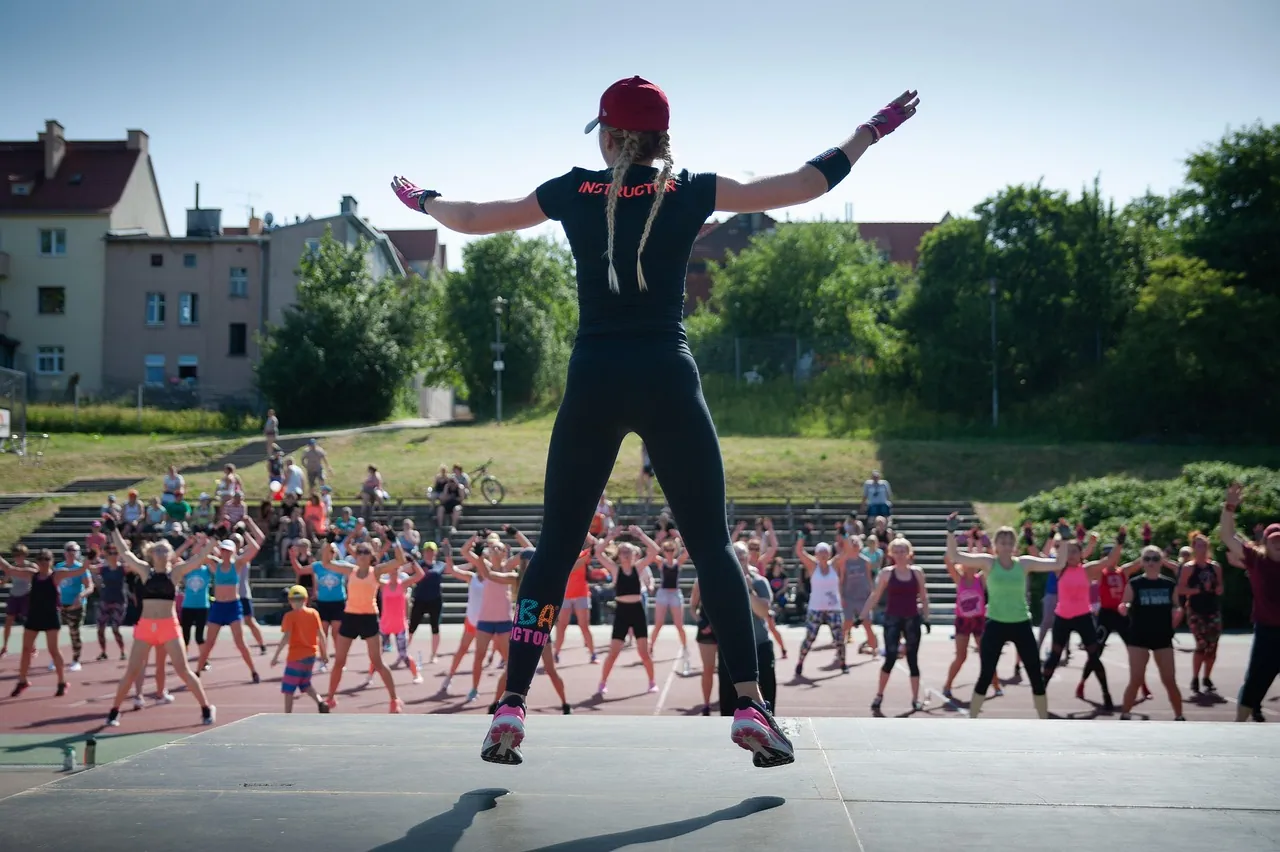
Hindi Zumba songs work best in the peak and toning blocks because many Bollywood dance numbers sit between 110 and 140 BPM and are built on dhol-heavy rhythms that are easy to hear. Tracks such as “London Thumakda” (listed 140 BPM) and “Balam Pichkari” (120 BPM) fit high-energy slots. Slower songs like “Tum Hi Ho” (94 BPM) suit a cool-down.
Mix one or two Hindi tracks into a Latin-based class rather than replacing the whole playlist. Zumba is built on Latin and international rhythms, and that mix is part of what makes it Zumba.
| Song | Film (year) | Lead artist listed | Listed BPM | Best slot |
|---|---|---|---|---|
| London Thumakda | Queen (2014) | Labh Janjua | 140 | Peak: bhangra shoulders and hops |
| Kar Gayi Chull | Kapoor & Sons (2016) | Badshah | 122 | Peak or warm-up finisher |
| Balam Pichkari | Yeh Jawaani Hai Deewani (2013) | Vishal Dadlani | 120 | Peak: Holi-style travelling moves |
| Malhari | Bajirao Mastani (2015) | Vishal Dadlani | 115 | Power block: stomps, squats, strong arms |
| Nagada Sang Dhol | Goliyon Ki Raasleela Ram-Leela (2013) | Shreya Ghoshal | 113 | Garba-inspired spins and claps |
| Ghoomar | Padmaavat (2018) | Shreya Ghoshal | 168 (felt slower) | Toning / graceful turns; low impact |
| Kala Chashma | Baar Baar Dekho (2016) | Amar Arshi | 95 | Groove block: bhangra-lite, crowd favourite |
| Chaiyya Chaiyya | Dil Se.. (1998) | Sukhwinder Singh | 90 | Toning or pre-cool-down; nostalgic for older batches |
| Tum Hi Ho | Aashiqui 2 (2013) | Arijit Singh | 94 | Cool-down and stretching |
Film names and years were checked against each soundtrack record. Most of these songs have several vocalists; we list the one the tempo database credits.

Does zumba music for exercise really change your workout?
Yes, and the effect is measurable but modest. A 2020 meta-analysis of 139 studies and 3,599 participants found that music improved mood during exercise (effect size g = 0.48), physical performance (g = 0.31) and perceived exertion (g = 0.22). Fast-tempo music improved performance more than slow-to-medium tempos (Terry et al., Psychological Bulletin).
Music doesn’t do the work for you. It changes how the work feels, which affects how long and how hard people keep going:
| Study (year) | Who / what | Key finding | What it means for your playlist |
|---|---|---|---|
| Terry et al. (2020), meta-analysis | 139 studies, 3,599 participants | Music improved mood, performance and perceived exertion; no significant effect on heart rate | Music makes hard work feel easier. It won’t change how hard your heart is working. |
| Karageorghis et al. (2011) | 28 active adults cycling at 40–90% HR reserve | Slow music (95–100 BPM) was not preferred at any intensity; fast music (135–140 BPM) was preferred more as intensity rose | Keep sub-100 BPM tracks for the cool-down only |
| Jones et al. (2024) | 24 adults at five intensities, tracks at 90–150 BPM | Fast tempo gave the best psychological outcomes; unfamiliar instrumental music needed to be about 10 BPM faster | Familiar songs with lyrics motivate at slightly lower tempos |
| Luettgen et al. (2012) | 19 women, one real Zumba class | Average 79% HRmax, 66% VO2max, 9.5 kcal/min, about 369 kcal per class | A well-paced class counts as vigorous aerobic exercise |
| Vendramin et al. (2016), systematic review | 11 studies, 586 participants aged 18–65 | Zumba improved aerobic capacity; small benefits for body weight; limited evidence for strength and flexibility | Pair Zumba with strength work for all-round fitness |
Harvard Health reached a similar conclusion in 2020: upbeat music in the range of 135 to 142 beats per minute may make interval training both more enjoyable and more effective. That range is a good anchor for your peak block.
The Harvard T.H. Chan School of Public Health’s Nutrition Source describes average Zumba classes as falling in the moderate-to-vigorous aerobic zone, depending on choreography and the instructor. That matters because the WHO recommends at least 150 minutes of moderate-intensity activity a week for adults, and reports that 31% of adults worldwide don’t reach it. Three well-paced 50-minute classes a week meet that target. Our guide to a 30-minute Zumba workout shows how to fit a shorter session into a busy day.
Myth check: “Any fast song is a good Zumba song”
This is the most common playlist mistake. Faster isn’t automatically better, for three reasons:
- Too fast breaks form. When a track outruns the step, people half-step, bounce on their toes or stop. Knees and ankles are among the most commonly injured sites in Zumba, according to research the Harvard Nutrition Source summarises, so sloppy footwork at speed is a real risk.
- All peaks means no intervals. Zumba’s cardio benefit comes from rising and falling effort. A playlist that stays at maximum from minute five wears people out by minute fifteen, and they spend the rest of the class walking.
- Tempo isn’t the same as energy. Con Calma (94 BPM) can feel more powerful than a 128 BPM pop track because of its heavy bass and space for big moves. Choose songs by how they feel to dance to, not just by the number.
Walkthrough: build your own 45-minute playlist in 20 minutes
Use this method whether you teach a batch or dance alone in your living room:
- Pick one anchor song per section. Use the tempo guide table above. For example: Uptown Funk (warm-up), Suavemente (merengue), Vivir Mi Vida (salsa), Gasolina (reggaeton), London Thumakda (peak), Kala Chashma (groove), Photograph (cool-down).
- Add one or two neighbours to each anchor from the same rhythm family, so each block lasts 6–8 minutes (roughly two songs).
- Check the shape. Write down each track’s felt tempo in order. It should rise to a peak around the two-thirds mark, then fall. If two very fast songs sit back to back early on, move one later.
- Trim intros. Use radio edits or skip the first 20–30 seconds of long intros so there’s no dead time between songs.
- Test it on your feet. Dance the whole playlist once at half effort. Any song where you lose the beat or stop moving should be replaced.
Warm up zumba songs: the first six minutes matter most
Open with something familiar and moderate, around 100–125 BPM: Uptown Funk, Waka Waka or Kar Gayi Chull. Use marching, step-touches, hip circles and shoulder rolls. Save jumps until at least the second or third song, once joints are warm. For a proper finish, our sibling guide on cool-down stretches after a workout pairs well with the slow tracks at the end of the list.
Zumba songs download: what you can legally play
- Dancing at home, for yourself: streaming from a paid or ad-supported service under its normal terms is fine. Avoid “free MP3 download” sites. Most host pirated files, and many serve malware.
- Teaching as a licensed instructor: Zumba Instructor Network (ZIN) members get a monthly package of music and choreography through ZIN’s platform and app, including original tracks from the Zumba Music Lab. This music is made for class use, and it’s the main reason instructors use it instead of commercial chart hits.
- Playing commercial songs in a studio, gym or public event in India: public performance of recorded music can require licences from copyright bodies such as IPRS (for the composition) and PPL or other rights holders (for the sound recording). These rules have been tested in the Delhi High Court, so studio owners should confirm current requirements with the licensing body or a lawyer rather than rely on a blog post.
- Uploading class videos: a copyrighted song in the background can get your video muted, blocked or struck on YouTube and Instagram. Use platform-licensed audio libraries or ZIN music within its terms.
For more on what the instructor network includes, see our explainer on what ZIN Zumba is.
Troubleshooting a playlist that isn’t working
- People stop dancing mid-song: the tempo is too fast, or the song has a long breakdown. Move it to a later slot or swap in a radio edit.
- Energy dips in the middle of class: you probably have two slow reggaeton tracks back to back. Put a merengue or Bollywood peak between them.
- Everyone is exhausted by minute 20: too many peaks too early. Push your highest-BPM tracks to the 25–35 minute window.
- Online class audio sounds bad: video-call software often treats music as background noise and suppresses it. Turn on “original sound” or music mode in your meeting app, and share computer audio directly instead of playing it through room speakers.
- Your ears ring after class: the volume is too high. WHO’s safe-listening guidance puts 80 dB as safe for about 40 hours a week, but 100 dB for only about 20 minutes a week. Turn studio speakers down and suggest earplugs to regulars.
Picking music for different groups
Corporate and office batches
Colleagues of different ages dance together, so lean on universally known tracks: Waka Waka, Happy, Kala Chashma, London Thumakda. Keep lyrics clean, since some reggaeton radio edits still contain explicit lines. Run a 30–40-minute class so people can fit it into a lunch break.
Older adults and low-impact classes
Cap the peak around 120–125 felt BPM and replace jumps with marches. Chaiyya Chaiyya, Suavemente and Time of Our Lives work well. Zumba Gold, the program’s adapted lower-intensity version for older adults, is built on the same principle. Anyone with heart, joint or balance problems should check with their doctor before starting.
Solo home practice
Choose songs whose choreography you already know, or follow a structured online class. Play the list in order, not on shuffle, which destroys the interval shape.

Frequently asked questions about zumba songs
What BPM is best for Zumba songs?
Aim for about 100–125 BPM in the warm-up, 120–145 BPM for peak blocks and below 100 BPM for the cool-down. Harvard Health (2020) cites 135–142 BPM as a helpful range for interval-style effort. Salsa and reggaeton are often listed at half their felt speed.
What are some popular Zumba songs to start with?
Reliable starters include “Suavemente” by Elvis Crespo, “Danza Kuduro” by Don Omar, “Gasolina” by Daddy Yankee, “Vivir Mi Vida” by Marc Anthony, “Waka Waka” by Shakira and “Uptown Funk” by Mark Ronson featuring Bruno Mars.
Which Hindi songs are good for Zumba?
Good Hindi options include “London Thumakda” (Queen, 2014), “Balam Pichkari” (Yeh Jawaani Hai Deewani, 2013), “Malhari” (Bajirao Mastani, 2015), “Kar Gayi Chull” (Kapoor & Sons, 2016) and “Kala Chashma” (Baar Baar Dekho, 2016). Use “Tum Hi Ho” for the cool-down.
Can I download Zumba songs for free?
Only through legitimate services under their terms. Free MP3 sites usually host pirated files. For personal use, stream from a licensed app. Instructors typically use ZIN music, and studios playing commercial songs publicly in India may need licences from bodies such as IPRS and PPL.
How many songs are in a Zumba class?
A typical 45–60 minute class uses about 12–16 songs of 3–4 minutes each, arranged in blocks for warm-up, Latin rhythms, peak, toning and cool-down. A 30-minute class usually uses 8–10 tracks.
Does music really make Zumba more effective?
Music improves mood, performance and perceived effort during exercise. A 2020 meta-analysis of 139 studies found the benefit was larger with fast-tempo music. It doesn’t change heart rate by itself, so the intensity still comes from how hard you move.
How often should I change my Zumba playlist?
Refresh about a third of the playlist every four to six weeks. Keep the crowd favourites and rotate the rest, so regulars stay motivated without having to relearn a whole class.
Want to feel a properly paced playlist rather than build one alone? Join a live Fitstrot online Zumba class and dance a structured warm-up-to-cool-down session from home. Book your first class this week.


