

The best time to workout is the time you can repeat on most days of the week. Evening sessions give a small edge in strength and power. Morning sessions come with better consistency and, in a few studies, a leaner waistline. The afternoon sits somewhere in between. For most people, that gap is far smaller than the gap between training and not training.
This guide sets out what the chronobiology studies found, with numbers and years, then turns that into choices that fit an Indian day: 9-to-7 office hours, long commutes and May afternoons at 42°C.
Which is the best time to workout? The short answer
No time slot wins outright. Strength and power usually peak in the late afternoon and evening. Morning exercisers tend to stick to their routine more reliably. Harvard Health’s 2018 guidance is to pick the time that lets you build a consistent routine, and meeting WHO’s minimum of 150 minutes of moderate activity a week matters more than the hour.
Harvard Health Publishing states plainly that there is no single optimal time of day for exercise, and that the right slot is the one you will keep. The World Health Organization’s physical activity fact sheet gives the real target: at least 150 minutes of moderate activity a week plus muscle-strengthening work on 2 or more days. By WHO’s own 2024 estimate, 31% of adults worldwide (about 1.8 billion people) did not reach that level in 2022. If that is you, the clock is not the problem.
Best time to workout morning or evening: what the studies found
Most research compares a morning slot (about 6–9 am) with an evening slot (about 5–8 pm). Here is what the better studies report, weak points included.
Strength and muscle: evening edge, but it fades with training
A 2019 meta-analysis of 11 studies in Chronobiology International (Grgic and colleagues) found that untrained people are stronger in the evening than in the morning. The key finding, though, was about results over weeks. Groups that trained in the morning and groups that trained in the evening gained similar amounts of strength and similar amounts of muscle size. People who trained in the morning also became stronger at that hour, closing most of the usual morning-to-evening gap.
In plain terms, your body adapts to the time you train.
Fat, blood pressure and performance: results differ by sex
A 2022 randomised trial in Frontiers in Physiology (Arciero and colleagues) put trained adults on the same 12-week programme at either 6 to 8 am or 6:30 to 8:30 pm. Women who trained in the morning lost about three times more abdominal fat than women who trained in the evening (−2.6 vs −0.9 on the study’s DXA measure) and had larger drops in blood pressure. Women who trained in the evening gained more upper-body strength (+12 kg vs +8 kg on bench press). In men, evening training brought a much bigger fall in systolic blood pressure (−14.9 vs −3.5 mmHg). The study was small (27 women and 20 men completed it) and was funded by a supplement company, so read it as a signal, not a rule.
Weight and waist size: morning looks slightly better in survey data
A 2023 analysis of 5,285 US adults in Obesity (Ma and colleagues) grouped people by when they did most of their moderate-to-vigorous activity. Among those meeting activity guidelines, the morning group had an average BMI of 25.9, compared with 27.6 in the midday group and 27.2 in the evening group. Average waists were 91.5 cm, 95.8 cm and 95.0 cm. It was a one-time snapshot, so it shows a link, not cause and effect.
Long-term health: evening looked best in one large cohort
Pointing the other way, a 2024 UK Biobank study in Diabetes Care tracked 29,836 adults with obesity for about 7.9 years. Compared with people who did very little aerobic activity, those who did most of their brisk activity in the evening had the lowest risk of death (hazard ratio 0.39). The afternoon (0.60) and morning (0.67) groups also had clearly lower risk, just less so.
| Outcome | Morning (6–9 am) | Afternoon (12–4 pm) | Evening (5–8 pm) | Strength of evidence |
|---|---|---|---|---|
| Peak strength and power on the day | Lowest at first, but improves if you keep training at this time | Rising | Highest in untrained people | Meta-analysis, 11 studies (2019) |
| Muscle and strength gained over weeks | Similar | Similar | Similar | Meta-analysis, 11 studies (2019) |
| Belly fat (women) | Larger drop in one trial | Not studied | Smaller drop | One small RCT, 12 weeks (2022) |
| Blood pressure | Better in women | Not studied | Better in men | One small RCT (2022) |
| Blood sugar in type 2 diabetes | Morning HIIT raised glucose in one trial | Afternoon HIIT lowered glucose | Mixed | Small crossover trial, 11 men (2019) |
| Sleep | No issue | No issue | Fine unless it is hard exercise ending within about 1 hour of bedtime | Meta-analysis, 23 studies (2019) |
| Sticking with it | Most common slot among consistent exercisers | Easily lost to work | Easily lost to late meetings and fatigue | Registry survey, 375 people (2019) |
| Indian summer heat | Coolest outdoor window | Avoid outdoors from about 11 am to 3 pm | OK after sunset; still humid | NHS heat guidance |
Myth check: “Working out at night ruins your sleep”
For most healthy adults, evening exercise does not harm sleep. A 2019 meta-analysis of 23 studies in Sports Medicine found it slightly increased deep (slow-wave) sleep. The one exception was vigorous exercise that ended 1 hour or less before bedtime, which delayed sleep onset and cut total sleep time.
The review by Stutz, Eiholzer and Spengler (2019) pooled 23 studies. Evening exercise raised slow-wave sleep by 1.3 percentage points and cut light stage-1 sleep. So a 7 pm gym session before an 11 pm bedtime is fine; a hard HIIT class at 10:15 pm is not.
If you can only train late, keep the final hour gentle. Take a lukewarm shower and keep your room cool. A slow evening yoga session is also a good way to unwind on days when a hard workout would keep you awake.

Best time to go to gym if you work a 9-to-7 job in India
For office workers, the question is which slot survives traffic, late calls and family dinner. In most Indian gyms, 6 to 9 am and 6 to 9 pm are the busiest hours. Mid-morning (10 am to 12 pm) and mid-afternoon (2 to 4 pm) are the quietest, which suits homemakers, students, shift workers and people who work from home.
Best time to workout in gym by schedule
| Your day | Suggested slot | Why it works | Pre-workout fuel | Watch out for |
|---|---|---|---|---|
| Office 9:30 am–6:30 pm, 1-hour commute | 6:00–7:00 am | Meetings cannot eat into it; cooler outdoors | 1 banana or 4–5 soaked almonds with water | Needs a 10:30–11 pm bedtime to protect 7 hours of sleep |
| Office with flexible logout | 7:00–8:00 pm, before dinner | Near your daily strength peak; relieves work stress | Roasted chana (30 g) or a fruit around 5 pm | Late calls; pack the bag in the morning |
| Work from home | 12:30–1:15 pm or 5:30–6:30 pm | Quiet gym; breaks up long sitting | Eat lunch after training, or have a light snack 90 min before | Outdoor runs at midday in summer |
| Night shift / BPO | Right after waking, before the shift | Anchors your body clock to your own “morning” | Normal meal 2–3 hours before | Training just before day-sleep |
| College student | Between classes or 5–7 pm | Off-peak campus or gym hours | Curd with poha, or a peanut chikki | Exam-week all-nighters; cut volume, do not skip entirely |
| Homemaker / caregiver | 10:30 am–12 pm | After the morning rush; least crowded gym | Breakfast 1.5–2 hours earlier | Skipping breakfast then training hard |
If the gym commute itself is the barrier, an at-home slot often beats a “better” gym slot you keep missing.
Training through Indian summers and monsoon
Heat changes the answer from April to June across most of north and central India. The NHS’s hot-weather guidance advises staying out of the sun between 11 am and 3 pm and avoiding activity that makes you hotter. In practice, move outdoor runs and cycling to before 7:30 am or after sunset. Keep midday sessions indoors and air-conditioned. Drink water before you feel thirsty, and stop if you feel dizzy, confused or stop sweating. In the monsoon, humidity makes the same workout feel harder, so drop intensity a notch.

When is the best time to workout for weight loss?
For weight loss, weekly volume and diet matter far more than the hour. Morning exercise has a slight edge in some studies: a 2023 analysis of 5,285 adults linked morning activity with a BMI of 25.9 vs 27.2 for evening. Registry data also shows morning is the most common slot among people who keep weight off.
The morning edge is mostly about behaviour, not burning more fat per minute. In a 2019 study of 375 people in the US National Weight Control Registry, 68% exercised at a consistent time of day. Those consistent exercisers were more likely to reach 150 minutes a week (86.3% vs 74.2%). Among them, 47.8% trained early in the morning. But their activity levels did not differ by which time they picked. Consistency was what mattered.
So the honest answer is to pick the slot you are least likely to skip, then build your calorie deficit through food. One workout burns roughly 250–400 kcal for most people. That is about one plate of chole bhature, which is why exercise alone rarely produces weight loss. A nutritionist-built Indian meal plan does more than any timing trick.
Best time to workout to lose belly fat
You cannot spot-reduce belly fat by picking a time slot, and no workout time burns “belly fat first”. The 2022 trial above found more abdominal fat loss with morning training in women, but that was one 12-week study of 27 women who were already fit. Treat it as a tie-breaker, not a guarantee. What reliably shrinks waist size is a steady calorie deficit, 2 or more strength sessions a week, enough protein and 7 or more hours of sleep.
Best time to workout for weight loss female
For women, the same principle holds: pick a time you can keep. Two extra factors matter. First, energy and strength can vary across the menstrual cycle. If that affects you, adjust intensity, not the time. Second, many Indian women manage the morning rush of cooking and school runs. A 20-minute home session at 6 am or a class after 8 pm is more realistic than a 1-hour gym trip at 9 am. The Arciero trial suggests morning training may favour belly-fat loss and evening training may favour strength in women.

Is it okay to work out on an empty stomach in the morning?
For most healthy adults, 30–45 minutes of light-to-moderate exercise before breakfast is safe. It does not cause meaningfully more fat loss over time than fed training. Eat something small (a banana or 2 dates) before heavy lifting or intervals, and speak to your doctor first if you have diabetes and take insulin or glucose-lowering tablets.
Fasted cardio burns slightly more fat during the session, but the body balances this out later in the day. A brisk walk, yoga or easy cycling feels fine on an empty stomach. Heavy lifting or intervals usually feel better with 20–30 g of fast carbohydrate 30–60 minutes before, such as 1 banana, 2–3 dates, a slice of toast with honey, or a small bowl of poha.
Coffee is fine too. Our guide to coffee before a workout covers dose and timing. If you have diabetes, one small trial is worth knowing about. In 2019, Savikj and colleagues found that morning HIIT raised average blood glucose in 11 men with type 2 diabetes (6.9 vs 6.2 mmol/L with afternoon HIIT). Discuss exercise timing, and any risk of low blood sugar, with your doctor. Do not change your medication on your own.
Best time to exercise for your goal
This table matches each goal with the time that has the strongest (still modest) support, plus a fallback.
| Your main goal | Best-supported time | Why | Fine alternative |
|---|---|---|---|
| Build a habit from zero | Morning, same time daily | Fewest clashes with work and family; consistency drives results | Any fixed slot you can keep 5 days out of 7 |
| Lift heavier / max strength | 4–8 pm | Strength peaks later in the day for most people | Morning, as long as you keep that time consistent |
| Muscle gain | Whenever you can train 3–4×/week | Gains are similar in the morning and evening | Split between both if your schedule varies |
| Weight or belly-fat loss | Morning (slight edge) | Better adherence; some data suggest a leaner waist | Evening, with dinner planned in advance |
| Blood-sugar control (with a doctor’s OK) | Afternoon or after a meal | Afternoon HIIT lowered glucose in one trial | A 10–15 minute walk after each main meal |
| Blood pressure | Either; evening in one trial for men | Both times lowered BP in the 2022 RCT | Daily brisk walking at any hour |
| Better sleep | Morning or early evening | Avoid hard sessions ending within about 1 hour of bedtime | Gentle yoga or stretching at night |
| Stress relief after work | 6–8 pm | Breaks the office-to-couch cycle | Lunchtime walk or dance break |
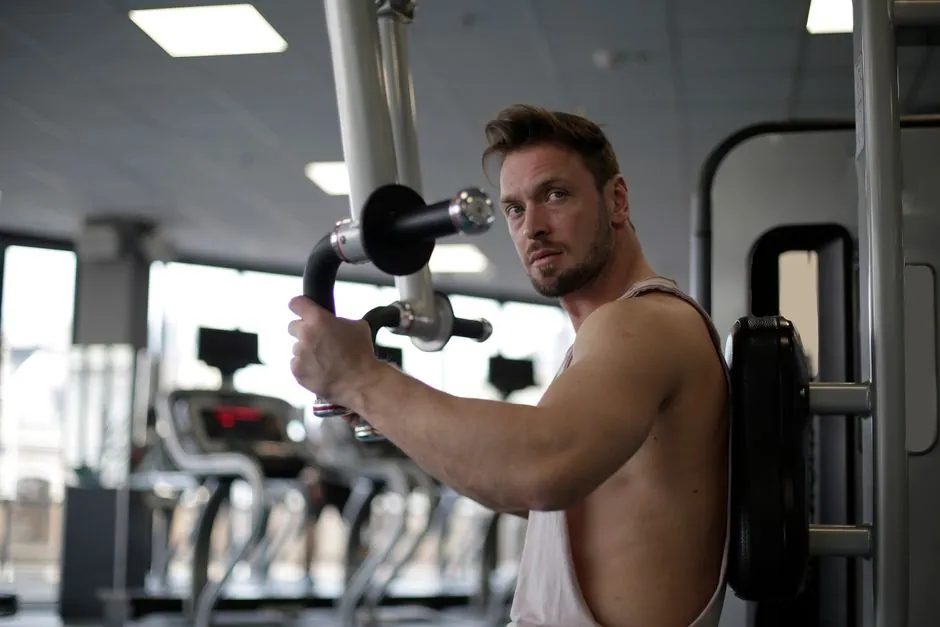
Walkthrough: a 20-minute before-breakfast session
Switching to mornings? Start with this no-equipment session. Warm up for 3 minutes first (march in place, arm circles, hip circles), then do the circuit below. Do it 3 days a week for 2 weeks before adding a fourth day or a longer session.
| Exercise | Sets | Reps / time | Rest | Form cue |
|---|---|---|---|---|
| Bodyweight squat | 3 | 12 | 45 s | Sit back as if into a chair; heels stay down |
| Incline push-up (hands on bed or table) | 3 | 8–10 | 45 s | Body in one straight line; chest to the edge |
| Glute bridge | 3 | 15 | 30 s | Squeeze your glutes at the top; do not arch your lower back |
| Reverse lunge | 2 | 8 per leg | 45 s | Front knee tracks over the middle toes |
| Plank | 3 | 20–30 s | 30 s | Ribs down, glutes tight, breathe normally |
| Brisk march or skipping (no rope) | 1 | 3 min | — | Stay at a pace where you can still talk in short sentences |
Finish with 2–3 minutes of easy stretching. Prefer dance cardio? See the best time to do Zumba.
Troubleshooting: when your chosen time keeps failing
Most people do not fail because they picked the “wrong” hour. They fail because the plan has a weak link.
- You keep snoozing the 6 am alarm. Your bedtime has not moved. Work backwards: a 6 am start needs lights-out by about 10:30–11 pm.
- Evening sessions get cancelled by work. Block it on your calendar like a meeting. Keep a 15-minute minimum version for chaotic days.
- You feel weak or dizzy in morning workouts. Add a small carbohydrate snack 30 minutes before. Drink 250–300 ml of water on waking. Lower intensity for the first 2 weeks while your body adjusts.
- You are wired and cannot sleep after night training. Move the hardest part earlier, keep the last 20 minutes easy, and avoid pre-workout drinks with caffeine after about 4 pm.
- Weekends break the routine. Keep the same wake-up time within about 1 hour on Saturday and Sunday.
Who should think harder about timing?
A few groups should plan timing more carefully, and some should check with a doctor first.
- People with type 2 diabetes: afternoon or after-meal activity may control glucose better, based on small trials. Agree a plan with your doctor, especially if you take insulin or sulfonylureas, because of the risk of low blood sugar.
- People with high blood pressure or heart disease: get medical clearance first. Warm up for longer in the early morning, when blood pressure naturally rises.
- Pregnant women: choose the coolest part of the day and follow your obstetrician’s advice on intensity.
- Older adults: late morning is often best, because joints are less stiff and there is daylight for balance and safety outdoors.
- Athletes with a competition time: train at the same time of day as your event for a few weeks before it, because the body adapts to the time you train.
Frequently asked questions
What is the best time to workout for most people?
The best time to workout is the one you can keep 4–5 days a week. Evening gives a small strength edge and morning tends to be easier to stick to. Consistent timing matters more than the hour you pick.
Is morning or evening workout better for weight loss?
Morning has a slight edge in some studies, largely through better consistency. A 2023 analysis linked morning activity with a lower average BMI. Diet and total weekly exercise still decide most of the result.
Is it bad to work out at night?
No. A 2019 meta-analysis of 23 studies found that evening exercise does not harm sleep in healthy adults. The exception is hard exercise that ends within about 1 hour of bedtime, which can delay sleep.
Should I eat before a morning workout?
For light cardio or yoga, an empty stomach is usually fine. For heavy lifting or intervals, eat 20–30 g of fast carbs, such as a banana or 2–3 dates, 30–60 minutes before.
What is the best time to go to the gym to avoid crowds in India?
Mid-morning (10 am–12 pm) and mid-afternoon (2–4 pm) are usually the quietest. The peak times are 6–9 am and 6–9 pm on weekdays.
Can I build muscle if I only train in the morning?
Yes. A 2019 meta-analysis of 11 studies found similar gains in strength and muscle size with morning and evening training. Your strength at that time also improves as you keep training then.
Is it safe to exercise in the afternoon during Indian summers?
Avoid outdoor exercise between about 11 am and 3 pm in hot weather. Train indoors with cooling, drink water regularly, and stop if you feel dizzy or confused.
Not sure which slot will stick for you? Book a 1-on-1 session with a Fitstrot trainer at the hour that fits your day, and build your plan around your real schedule.


