

The benefits of online diet counselling come down to three things: a qualified person looks at what you actually eat, you get that help without travelling to a clinic, and you can keep going long enough for new habits to stick. It is not a shortcut or a magic plan. It is a regular, structured conversation about food, delivered over a video call, with a written plan and follow-up in between. This guide explains what happens in a programme, who gets the most from it, and where it genuinely falls short.
What does online diet counselling actually involve?
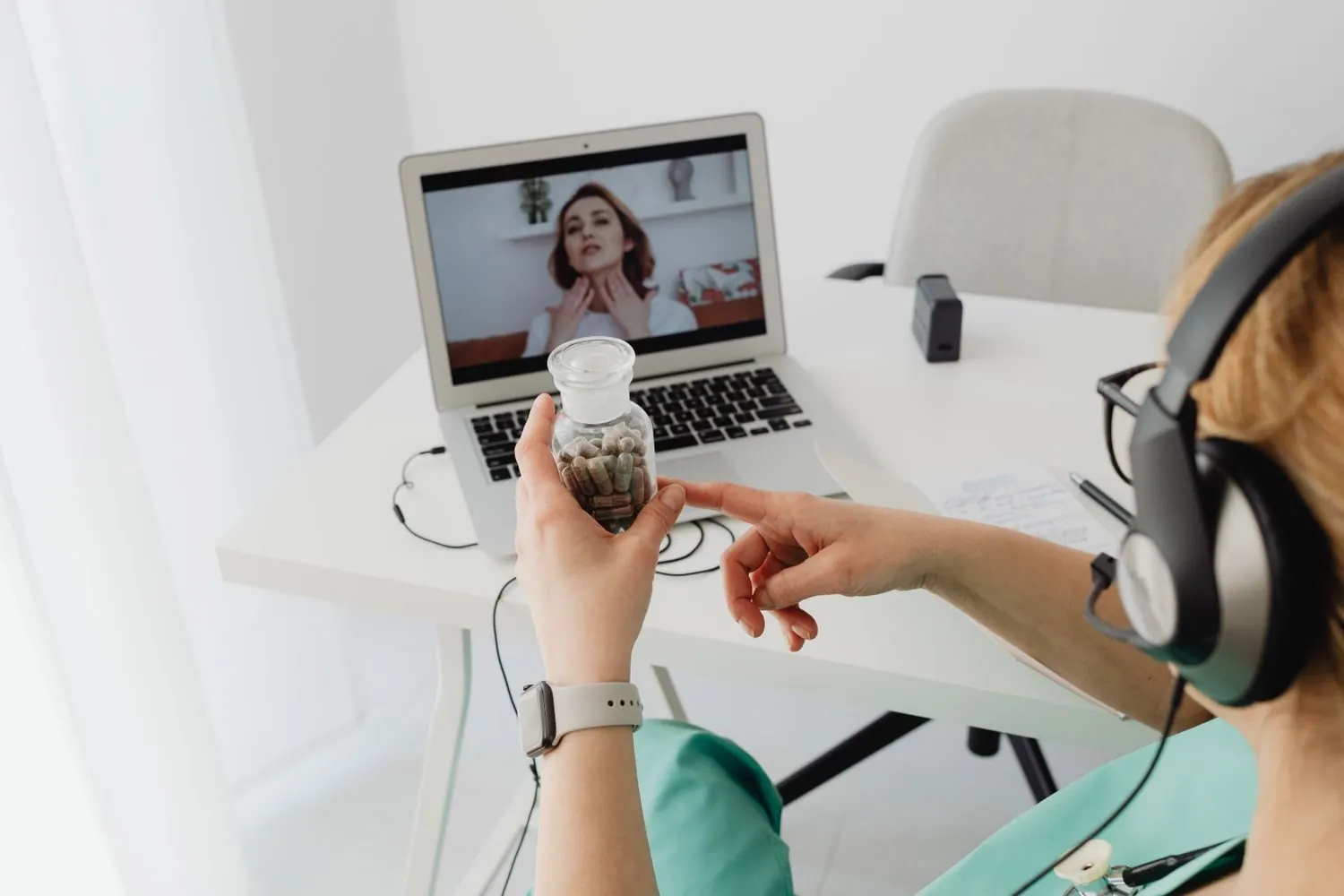
Online diet counselling is a series of video or phone sessions with a nutritionist or dietitian who reviews your health history, food habits and goals, then builds a written plan around your own kitchen. Expect a first session of roughly 30 to 45 minutes, shorter follow-ups of 15 to 30 minutes, and message support between calls.
The plan is built from what you really eat: the roti or rice at lunch, the 4 pm chai and biscuits, the office canteen, the weekend biryani. You are not handed a foreign meal template and told to cope. Most programmes also ask for a few days of food photos or notes, any recent blood reports, and honest answers about sleep, stress, water intake and activity.
If you want a closer look at the role itself, our guide on what an online nutritionist does covers the day-to-day work in more detail.
| Stage | What happens | What you bring or receive |
|---|---|---|
| Session 1 (week 1) | History, goals, daily routine, food preferences, any medical conditions | Recent blood reports, a list of medicines, 2-3 days of food notes. You receive a first plan and a simple tracking method. |
| Check-in 1 (week 2) | Review how the plan felt in real life: hunger, energy, cravings, what was hard | Food photos or log. You receive adjusted portions and swaps. |
| Weeks 3-6 | Fine-tune meal timing, eating out, festivals, travel, protein and fibre | Weight or waist readings if you choose to track them. You receive updated meal ideas. |
| Weeks 7-12 | Reduce reliance on the plan, build habits you can run alone, plan for maintenance | A revised written plan and a short list of rules you can follow without a nutritionist. |

What are the main benefits of online diet counselling?
The main benefits are convenience, easier consistency, access to specialists outside your city, a plan built around Indian home food, and usually lower total cost than repeated clinic visits. Shorter, more frequent check-ins are easy to schedule online, and frequent contact is what keeps most people on track for 8 to 12 weeks.
Here is each one, with honest limits.
Time and travel saved
In a large Indian city, an in-person visit can easily take two to three hours once you add travel, parking and waiting, even if the consultation itself is 30 minutes. Online, you join from your desk, your living room or a hotel room while travelling for work.
Consistency, which is where results actually come from
A good plan followed for four weeks beats a perfect plan followed for four days. Online sessions are simpler to keep because a traffic jam or a late meeting no longer cancels the appointment. A quick 15-minute call after a tough week is far easier to book than a full clinic slot, and those small corrections add up.
Access to the right specialist
If you live in a smaller town, there may be nobody nearby who works with PCOS, thyroid-linked weight gain, high cholesterol or paediatric feeding. Online counselling removes that ceiling. For example, someone managing PCOS through nutrition or trying to lower cholesterol through diet can work with a person who handles those cases regularly rather than a general practitioner of nutrition.

Cost that is easier to predict
Online practices usually carry lower overhead than a clinic, and you save on fuel, cab fares and time off work. Fees differ widely between practitioners, so compare what each package includes (number of sessions, message support, written plans) rather than only the headline price. If you want to understand what a package normally covers, see our overview of working with a nutrition consultant.
Online vs in-person: how do they compare?
For most everyday goals such as weight management, building a balanced routine and general diet quality, online and in-person counselling follow the same steps and deliver similar plans. The differences are logistics, not method. In-person visits make hands-on measurements easy; online visits make frequent follow-up easy.
| Factor | Online counselling | In-person clinic visit |
|---|---|---|
| Time per session | Call length only, about 15-45 minutes | Often 2-3 hours with travel and waiting in a metro |
| Follow-up frequency | Easy to keep short weekly or fortnightly check-ins | Often spaced 3-4 weeks apart |
| Choice of specialist | Anyone in India who offers online sessions | Whoever practises near you |
| Body measurements | Self-reported weight and waist, or photos | Hands-on measurement possible |
| Best for | Habits, weight, PCOS, cholesterol, routines that change often | Complex cases needing a physical examination |
Who benefits most from online diet counselling?
People with unpredictable schedules, those living outside major cities, anyone who needs frequent check-ins, and busy parents or caregivers tend to gain the most. Online counselling suits people who would otherwise skip appointments because travel makes them harder to keep.
- Shift workers and frequent travellers: a video call can move to a different slot or a different city without losing the booking.
- Residents of smaller cities: you reach specialists who are not within driving distance.
- People who need regular adjustments: weight goals, PCOS routines and post-delivery eating all change quickly and benefit from short, frequent reviews.
- Parents and caregivers: a call fits around school pick-up or a nap; a clinic trip rarely does.
- People who feel awkward talking about food in person: a call from a familiar room can make it easier to be honest about snacking or late-night eating.
If you are comparing professionals, it helps to know the difference between a nutritionist and a dietitian before you commit to a programme.
Myth check: is online counselling just a PDF diet chart?
No. A downloadable diet chart is a one-time document; counselling is an ongoing process in which a person reviews your actual week and changes the plan. The real value is the adjustment after you try it.
Here is how the two usually differ in practice:
- A generic chart assumes you eat at 8, 1 and 8 every day. Counselling adapts to your night shift, your fasting days and your joint-family kitchen.
- A chart cannot hear that you were starving at 5 pm and ate half a packet of namkeen. A nutritionist can move your protein or fibre earlier in the day.
Online counselling also does not mean bland, foreign food. A good plan keeps dal, sabzi, roti and curd, and changes portions and preparation rather than replacing your cuisine.
What does a nutritionist look at in a food log?
A nutritionist reviews timing, portion size, protein, fibre, liquid calories and hunger patterns, not just whether a meal was “healthy”. A simple log of what you ate, when, and how hungry you were gives them enough to suggest small, targeted changes within one or two sessions.
| Time | Example entry | What the nutritionist may notice |
|---|---|---|
| 8:30 am | 2 parathas with butter, 1 cup chai with sugar | Little protein, so hunger may return by 11 am. Possible fix: add curd or an egg, and keep the paratha to one. |
| 11:30 am | 2 biscuits with tea | A snack eaten from hunger, not habit. Possible fix: roasted chana or a fruit. |
| 1:30 pm | 2 rotis, dal, sabzi, salad | Reasonable balance. Check the portion of rice or roti against your goal. |
| 5:30 pm | Samosa, chai | Fried snack plus sugar every day. Possible fix: swap on three days of the week, not all seven. |
| 9:30 pm | Rice, paneer curry, 2 sweets | Late and heavy. Possible fix: earlier dinner or smaller rice portion. |
This is an illustration, not a prescription. Swaps depend on your age, weight, activity and health history.
Where does online diet counselling fall short?
Online counselling is a weaker fit when your condition needs a physical examination, hands-on body composition testing, tube feeding support or close medical supervision. In those cases a hybrid approach works better: one in-person evaluation, then remote check-ins. A responsible practitioner will tell you this upfront.
A few other honest limits:
- It does not replace a doctor. If you have diabetes, kidney disease, thyroid problems, pregnancy or any condition that affects what you can safely eat, your doctor stays in charge of treatment. Nutrition counselling works alongside that, and you should never change medicines because of a diet plan.
- It does not guarantee results. Progress depends on your consistency, sleep, stress and medical background. A reputable programme will not promise a specific number of kilograms.
- Self-reported data can be inaccurate. Home readings depend on you measuring the same way each time.
- Some people need in-person motivation. If you only act when someone is physically in front of you, ask how the programme handles accountability.
Eating disorders deserve a special mention. If you suspect you may be dealing with binge eating, severe restriction or purging, speak to your doctor or a mental health professional first. A weight-loss plan is not the right tool.
What if your online sessions are not working?
If progress stalls after four to six weeks, the cause is usually fixable: an overly strict plan, missing food logs, sessions too far apart, or unrealistic goals. Raise it at your next call rather than quietly dropping out.
- Plan feels impossible to follow: ask for a simpler version with fewer rules.
- You keep forgetting to log: switch to photos of meals instead of written notes, and send them once a day.
- Weight is not moving but you feel better: track waist and energy too; the scale is only one signal, and it can lag behind other changes.
- You feel judged: tell the practitioner, or change practitioners.
How do you choose a good online diet counsellor?
Choose a practitioner whose qualifications you can verify, who offers a written plan, who explains how follow-up works between sessions, and who is willing to refer you to a doctor when needed. Check these four things before paying for any package.
- Qualifications: a registered dietitian or credentialed nutritionist, especially if you have a medical condition.
- Follow-up structure: how many sessions are included, and how questions between calls are handled.
- Plan format: a written, personalised plan that fits your food culture and budget, not a copy-paste template.
- Honesty about limits: no promises of fixed kilograms in fixed days, and a clear referral path for medical issues.
If weight loss is the main goal and you also want exercise guidance, see the online weight loss trainer service, and for the basics behind any plan read our primer on diet and nutrition.
Frequently Asked Questions
Is online diet counselling as effective as seeing a nutritionist in person?
For most everyday goals, such as weight management, cholesterol and building better eating habits, online counselling follows the same method as an in-person visit, so the plan itself is comparable. The difference is that online sessions are easier to keep. Cases that need a physical examination may still need at least one in-person visit.
Can I get a personalised diet plan through an online consultation?
Yes. You share your history, recent blood reports and food notes by chat or upload, and you receive a written plan built around your routine, food preferences and goals. Reputable practitioners then revise it over follow-up calls rather than leaving you with one fixed document.
How often should I have online nutrition sessions?
It depends on your goal, but many programmes begin with a check-in every one to two weeks and space calls out as habits settle, often across 8 to 12 weeks. Shorter, more frequent contact is usually easier to maintain than occasional long appointments.
What should I prepare before my first online diet counselling session?
Keep recent blood reports, a list of current medicines and supplements, your usual daily meals for two or three days, your typical sleep and activity pattern, and your goal. Also note any food allergies, religious or fasting practices, and what your household cooks, so the plan fits your real routine.
Is online diet counselling suitable for PCOS, thyroid or high cholesterol?
For many people, yes, as a support alongside medical care, ideally with a practitioner who handles that condition often. Your doctor stays in charge of treatment and medicines. Share your reports and do not change any medication based on a diet plan.
Want to see how a session works for your goals? Book an online nutritionist consultation and start with one conversation about your current eating.


