
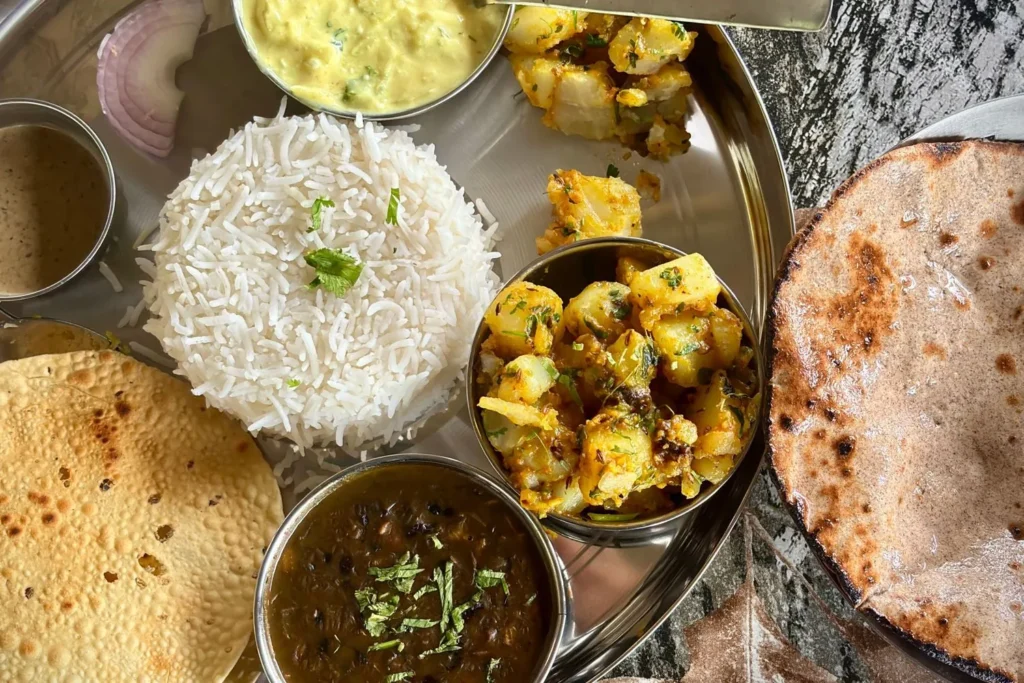
A good pcos diet plan does not mean cutting out whole food groups. It means building every meal around slow-digesting carbs, a solid portion of protein and plenty of fibre, so your blood sugar and insulin stay steadier through the day. Below is a full 7-day Indian chart with vegetarian and non-vegetarian options, gram-level portions, and straight talk about what food can and cannot do for PCOS.
We explain the science in our guide to PCOS nutrition, and whether professional support is worth it in how a nutritionist can help with PCOS. This page is the practical version: what goes on the plate, meal by meal.
What is a PCOS diet plan, and does it actually work?
A PCOS diet plan is a low-glycemic eating pattern that pairs slow-digesting carbs such as millets, dal and vegetables with 20-25 g of protein at main meals and 25-30 g of fibre a day. It helps manage insulin, cravings and weight, but it does not cure PCOS.
The reason it helps is insulin. A large share of women with PCOS, often estimated at well over half, have some degree of insulin resistance. When insulin runs high, the ovaries can make more androgens, which may worsen irregular periods, acne, unwanted hair growth and weight gain around the middle. Steadier meals take pressure off that loop.
Food is one lever, not the whole treatment. Sleep, movement, stress and your gynaecologist’s guidance matter just as much, and no diet replaces prescribed medicine.
7-day PCOS meal plan chart for an Indian kitchen
This pcos diet chart gives a vegetarian option for each meal, with a non-vegetarian swap in brackets where protein is the focus. Adjust portions to your height, activity and goals, and use the portion table further down for gram-level guidance.
| Day | Breakfast | Lunch | Evening snack | Dinner |
|---|---|---|---|---|
| Day 1 | 2 besan chillas with mint chutney (or 3-egg vegetable omelette) | 1 katori brown rice, moong dal, sauteed spinach, cucumber salad | 1 bowl roasted makhana with black pepper | 2 multigrain rotis, bhindi sabzi, 1 katori curd |
| Day 2 | Vegetable daliya with peanuts (or grilled fish with sauteed vegetables) | Quinoa vegetable pulao with 1 katori rajma | Sprouts chaat with lemon and onion | Paneer tikka (or grilled chicken) with a large salad |
| Day 3 | Moong dal chilla with grated vegetables (or overnight oats with chia) | 2 bajra rotis, lauki sabzi, 1 katori chana dal | Plain Greek yogurt with ground flaxseed | Vegetable soup, grilled tofu (or fish) with steamed broccoli |
| Day 4 | Broken-wheat vegetable upma (or 2 boiled eggs with whole wheat toast) | Brown rice and mixed dal khichdi with curd | Chaas with roasted jeera | 2 jowar rotis with palak paneer (or light chicken curry) |
| Day 5 | Sprouted moong salad (or spinach-mushroom omelette) | 1 katori rajma, 1 katori brown rice, salad | Hummus with cucumber and carrot sticks | Paneer or chicken skewers, sauteed vegetables, 1 small roti |
| Day 6 | Vegetable oats khichdi (or paneer-stuffed besan cheela) | Whole wheat vegetable pulao, cucumber raita | Small handful of almonds, walnuts and pumpkin seeds | Light fish curry with brown rice (or millet roti with mixed sabzi) |
| Day 7 | Ragi dosa with sambar (or 3-egg vegetable frittata) | Chole with quinoa or brown rice, green salad | Roasted chana, 1/2 cup | Grilled paneer (or prawns), stir-fried vegetables, 1 multigrain roti |
Have a fruit such as an apple, pear, guava, orange or papaya, with a few nuts, mid-morning on most days. Whole fruit is fine; juice and dried fruit are not.
How much should you eat at each meal?
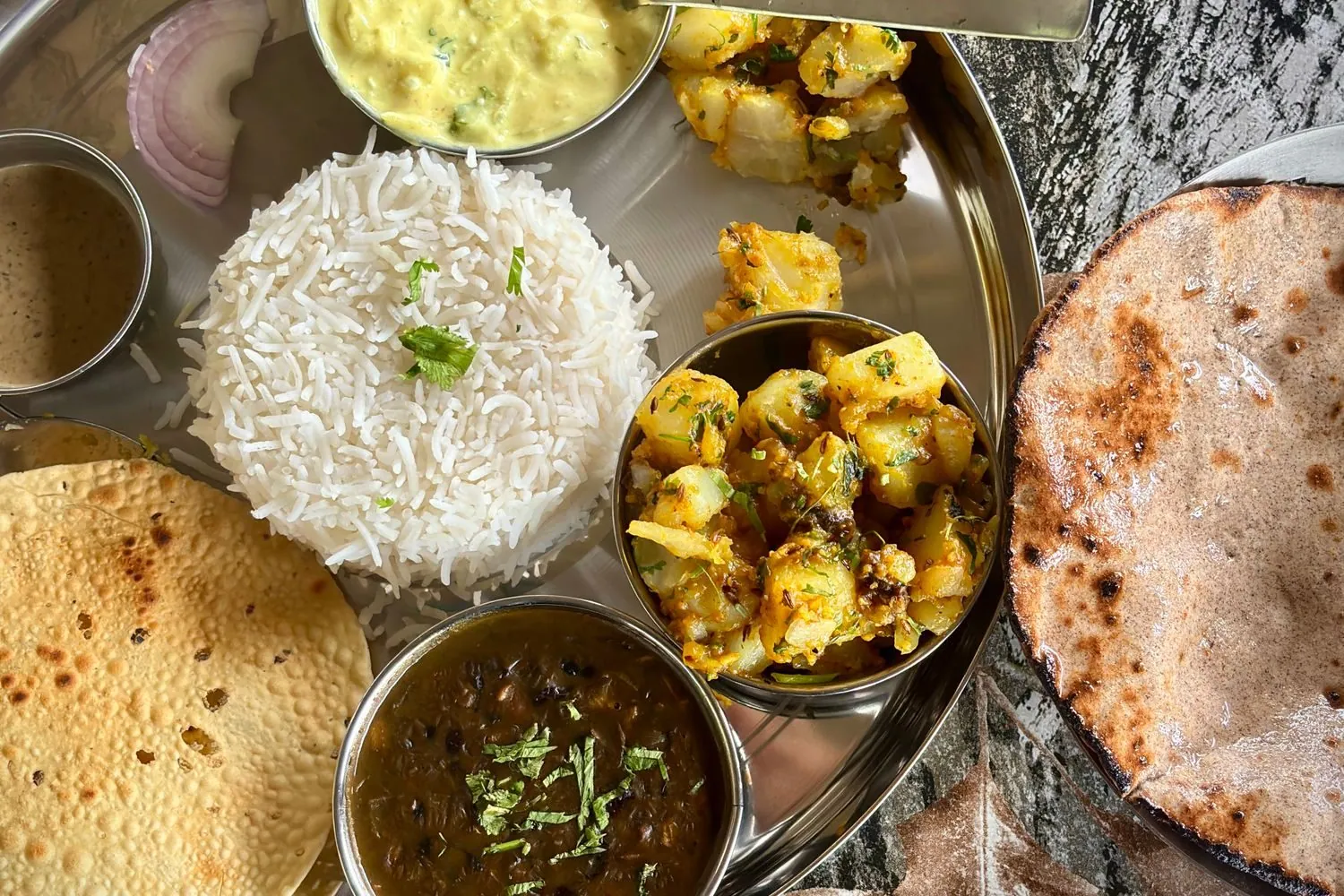
For most adults, one PCOS-friendly main meal is roughly 1 katori (about 150 g cooked) of low-GI carbs, 100-150 g of a protein food, two katoris of vegetables and 1-2 tsp of added fat. Smaller or more active bodies need adjusting, so treat these as starting points.
| Food | Portion | Roughly gives |
|---|---|---|
| Brown rice or millet, cooked | 1 katori (about 150 g) | 30-35 g carbs |
| Multigrain, jowar or bajra roti | 1-2 medium rotis | 15-18 g carbs each |
| Moong or masoor dal, cooked | 1 katori (about 150 g) | 8-12 g protein, 3-5 g fibre |
| Rajma or chole, cooked | 1 katori (about 150 g) | 10-13 g protein, 6-9 g fibre |
| Paneer | 100 g | 18-20 g protein |
| Whole eggs | 2 eggs | about 12 g protein |
| Chicken breast or fish, cooked | 100-120 g | 22-30 g protein |
| Curd, plain | 1 katori (about 150 g) | 5-6 g protein |
| Non-starchy vegetables, cooked | 2 katoris (200-250 g) | 4-7 g fibre |
| Cooking oil or ghee | 1-2 tsp per meal | about 40-90 kcal |
Combine two protein foods, say dal plus curd, and you reach the 20-25 g target without a large plate. Fibre from dals, vegetables and whole grains adds up quickly, and our guide to fibre-rich foods shows where the rest of your 25-30 g can come from.
How do you build a PCOS-friendly plate step by step?
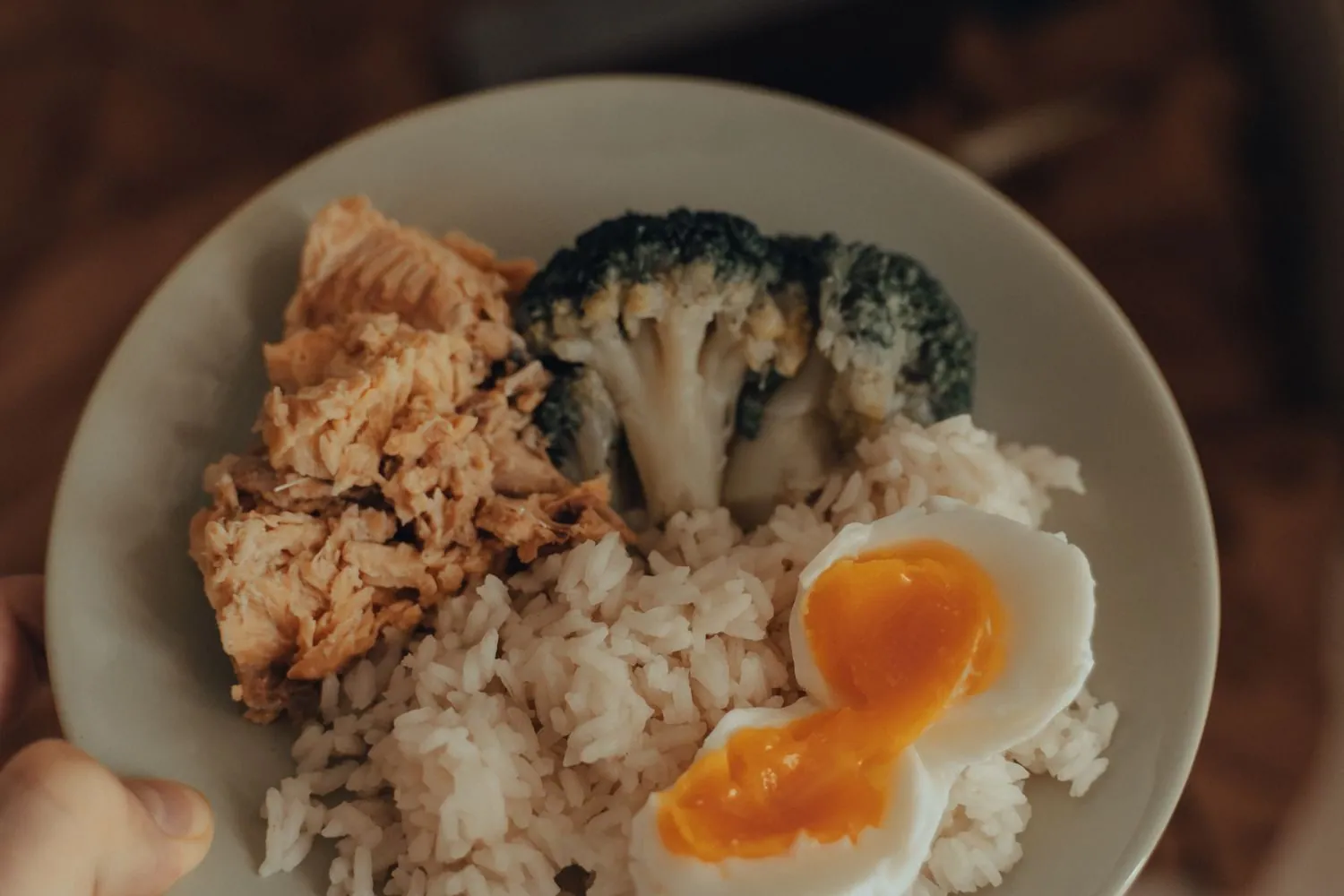
Fill half your plate with non-starchy vegetables, a quarter with protein such as dal, paneer, eggs or fish, and a quarter with low-GI carbs like millet roti or brown rice. Add 1-2 tsp of healthy fat. Eat the vegetables and protein first, then the carbs.
- Start with vegetables. Palak, lauki, bhindi, cauliflower, cabbage, beans or a big salad.
- Add the protein anchor. Dal, paneer, tofu, eggs, fish or chicken, in the portions above.
- Choose a slow carb. Jowar, bajra, ragi, whole wheat, brown rice or quinoa, kept to about one katori.
- Finish with fat and flavour. A teaspoon of ghee or oil, a few almonds, or flaxseed over curd.
This is the same logic behind our nutrition diet chart for weight loss, with the PCOS version leaning harder on fibre and low-GI swaps. Space meals roughly 3-4 hours apart, do not skip breakfast, and aim for about 2-3 litres of water a day.
Which foods should you choose, and which should you limit?
For low gi foods for pcos, lean on millets, oats, whole wheat, dals, sprouts, non-starchy vegetables, nuts and seeds. For foods to avoid in pcos, the main culprits are refined flour, sugary drinks and frequent deep-fried snacks. Limit them rather than banning them, since strict rules rarely last.
| Instead of | Try | Why it helps |
|---|---|---|
| White rice, large portions | Brown rice, millet or red rice, 1 katori | More fibre, slower glucose rise |
| Maida naan, white bread, bakery items | Multigrain or jowar roti, whole wheat toast | Less refined flour |
| Packaged juice, soft drinks | Whole fruit, nimbu pani without sugar | Keeps the fibre, cuts liquid sugar |
| Biscuits, chips, namkeen | Roasted makhana, chana or nuts | Protein and crunch without refined starch |
| Sweet chai or coffee, 3-4 cups | Less sugar, or unsweetened with spices | Hidden sugar adds up across the day |
Myths about a PCOS diet, corrected
- Myth: you must go zero-carb. Fact: quality and portion matter more than elimination. Slow carbs belong in the plan, and crash diets tend to backfire with rebound hunger.
- Myth: dairy and gluten are always off-limits. Fact: some women feel better after cutting one of them, but this is individual. Test one change at a time with a professional, not all at once.
- Myth: skipping meals speeds up weight loss. Fact: long gaps often lead to evening bingeing and big swings in energy. If you are thinking about fasting, discuss it with your doctor first.
- Myth: the right diet reverses PCOS. Fact: PCOS is a lifelong hormonal condition. Eating well can ease symptoms, but there is no guaranteed fix, and any weight change varies from person to person.
Troubleshooting: hungry, bloated or the scale will not move
- Hungry by 4 pm. Lunch probably lacks protein. Aim for 20-25 g, for example dal plus curd, and add a protein snack such as roasted chana.
- Bloated after rajma or chole. Soak overnight, pressure cook well, add jeera or hing, and start with half a katori before building up.
- Evening sugar cravings. Check that lunch had enough fibre and protein, sleep 7-8 hours, and plan a snack instead of waiting until you are starving.
- No change on the scale after 4 weeks. Check hidden oil, rice portions and sweet chai first. A realistic pace for most adults is about 0.25-0.5 kg a week, and PCOS often moves slower. Our guide to nutrition for weight loss covers the basics, and an online weight loss trainer can keep you accountable.
- Cycles still irregular after 3 months. Cycles respond slowly, but this is a reason to review things with your doctor, not to eat less.
Vegetarian, non-vegetarian and busy-week versions
Vegetarian: rotate dals, paneer, tofu, soya chunks, sprouts and curd through the week so you are not eating the same dal daily. Vegetarians should also ask their doctor about vitamin B12 and vitamin D checks. For more ideas, see our 7-day vegetarian weight loss meal plan.
Non-vegetarian: eggs, fish and chicken make hitting protein easy. Grill, bake or cook in light oil rather than deep-frying, and keep processed meats occasional.
Busy weeks: cook a pot of dal, a batch of millet or brown rice and a tray of grilled paneer or chicken on Sunday. Pre-cut vegetables and quick chillas or omelettes then cover most weekday meals in under 15 minutes.
When should you see a doctor or dietitian first?
See a doctor or registered dietitian before starting if you are pregnant or trying to conceive, have diabetes, thyroid disease, or kidney or liver problems, take metformin or other medicines, or have a history of disordered eating. Seek care too if periods stop for 3 months or bleeding is very heavy.
Never change or stop a medicine because of a diet. Supplements such as inositol, vitamin D or omega-3 should be based on blood tests and a doctor’s advice, not self-prescribed. This plan is general education, and your labs, weight, cycle pattern and food preferences should shape the final version.
Frequently Asked Questions
Can a PCOS diet plan cure PCOS?
No. PCOS is a long-term hormonal condition with no known cure. A low-GI, high-fibre pattern can ease symptoms such as cravings, weight gain and irregular cycles, but it works alongside, not instead of, care from a gynaecologist or endocrinologist.
Is rice allowed in a PCOS diet?
Yes, in sensible portions. Choose brown rice, red rice or millet, keep to about 1 katori (150 g cooked), and pair it with dal, vegetables and curd. An occasional small serving of white rice after the protein and vegetables is fine for most women.
How long does a PCOS diet take to work?
Many women notice steadier energy and fewer cravings within 2-4 weeks. Weight and cycle changes usually take 3-6 months or longer, and results differ widely. Consistency over months matters far more than a perfect week.
Is dairy allowed on a PCOS diet?
Moderate dairy such as curd, chaas, paneer and milk suits most women and is part of this plan. A smaller group feels better with less dairy, so if you want to test that, do it for a few weeks with professional guidance.
Should I take supplements with this PCOS meal plan?
Only if your doctor advises it. Some women are prescribed inositol, vitamin D or omega-3, but needs depend on blood work and medicines, so self-prescribing is not a good idea. Food comes first, supplements second.
Want this chart adapted to your labs, food preferences and budget? Book an online nutritionist consultation with Fitstrot, bring your latest reports, and leave with a week of meals built around you.


