
Search how to lose belly fat in 10 days and you get the same three promises: a detox drink, a 15-minute ab circuit, a transformation photo. Nobody leads with the part that decides whether your ten days work — the waistband that feels tight tonight is mostly not fat. It is gas, water, undigested food and a distended gut wall, and those four can add or subtract 3 to 5 cm from your abdomen inside 48 hours without a gram of fat changing hands.
That is not a reason to quit — it is why a well-run ten days feels dramatic. But if you cannot tell which part is bloat and which is fat, you will draw the wrong conclusion on Day 11 and decide your body is broken. It is not. You measured the wrong thing. This guide separates the two, gives you a clinic-grade waist protocol and a day-by-day table, and is honest about the ceiling.
Ten days changes your waist. It barely changes your fat.
Here is the arithmetic nobody puts in an intro. The US Centers for Disease Control and Prevention puts sustainable loss at about 1 to 2 pounds (0.45–0.9 kg) a week and explicitly warns against targets like “20 pounds in 2 weeks”. Ten aggressive but safe days therefore buys roughly 0.6–1.3 kg of body weight, perhaps 0.7–1.1 kg of it fat if you protect muscle. Split across your whole body, the abdomen surrenders maybe a fifth — around 150–300 g of belly fat, worth half a centimetre to one centimetre of true waist. Bloat moves four times that overnight.
| What changes | Typical 10-day change | How fast it moves | Comes back if you stop? |
|---|---|---|---|
| Gas and gut contents (bloating) | 2–4 cm of waist | 24–72 hours | Yes, within one heavy meal |
| Water held with sodium | 0.5–1.5 kg of scale weight | 2–4 days | Yes, in a day or two |
| Glycogen and its bound water | 0.5–1 kg of scale weight | 3–5 days | Yes, on refeeding |
| Subcutaneous belly fat (the pinchable layer) | Roughly 100–200 g | Weeks | No, if habits hold |
| Visceral fat (around the organs) | Small but real; responds first | Weeks to months | No, if habits hold |
| Abdominal tone and posture | Visible tightening | 7–10 days | Partially |
Five of those six rows move inside ten days. Only two are fat. An honest plan clears the first three while chipping quietly at the rest.
How do you tell belly bloating from belly fat?
Bloating changes through the day, feels tight or gassy, and can add 2–4 cm to your waist within hours of a meal. Belly fat is stable, soft or firm to the touch, and measures the same at 7 am and 9 pm. The simplest test: measure your waist fasted on waking, then again after dinner. A gap above 2 cm is bloat, not fat.
Cleveland Clinic lists excess gas as the most common cause of a bloated stomach — swallowed air, carbonated drinks, gut bacteria fermenting carbohydrates — followed by carbohydrate malabsorption, constipation and hormonal water retention, noting that oestrogen shifts across the menstrual cycle cause fluid retention directly.
Fat behaves nothing like that. Harvard Health Publishing notes that about 90% of body fat is subcutaneous — the layer you can pinch — while the remaining 10% is visceral fat packed around the organs. That 10% produces the inflammatory cytokines driving cardiometabolic risk, and responds fastest to a calorie deficit. The fat you can grab is the least dangerous fat you own. A flat-looking stomach by Day 4 is a debloating win, not a fat-loss win.
Crunches do not burn belly fat — and a trial tested exactly this
Spot reduction has been directly tested. Vispute and colleagues randomised 24 sedentary adults to an abdominal exercise group or a control group for six weeks; the exercise group did seven abdominal exercises, two sets of ten, five days a week, on an isocaloric diet. Published in the Journal of Strength and Conditioning Research (2011), the result was blunt: no significant effect on body weight, body fat percentage, android fat, abdominal circumference, abdominal skinfold or suprailiac skinfold. The only thing that improved was curl-up endurance — 47 reps versus 32 in controls.
Thirty days of ab work, zero centimetres. Fat is mobilised systemically through hormonal signalling, not drained locally by the muscle underneath it. Core work still matters — a stronger transverse abdominis changes how your midsection sits — but it is not a fat-burning exercise. See our guide to reducing body fat percentage.
Measure your waist the way a clinic would
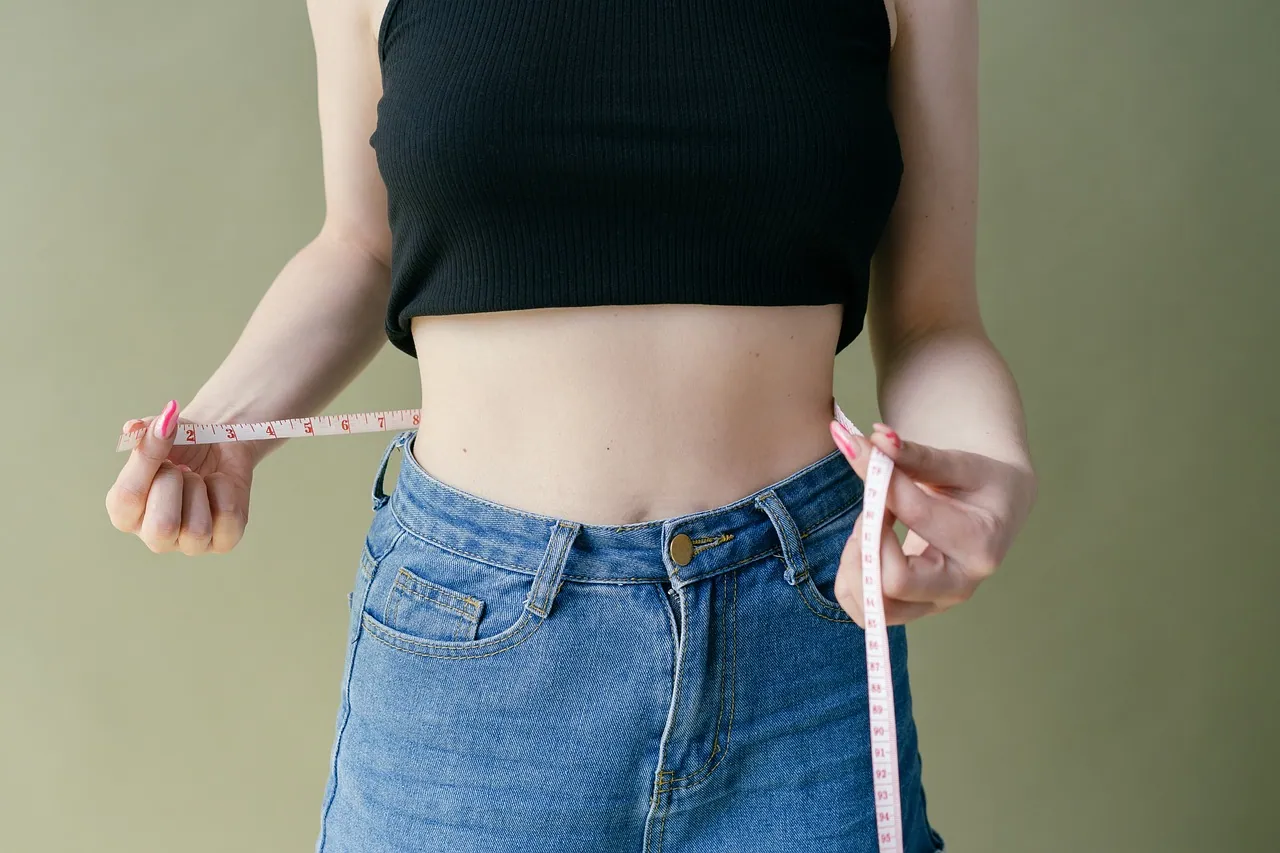
If your only instrument is a bathroom scale, you will misread this whole ten days. The protocol used in Indian obesity practice, described in Management of Obesity in Adult Asian Indians (PubMed Central), is specific: stand erect in the fasting state, and hold a non-stretchable flexible tape horizontal, just above the iliac crest, at the end of a normal breath out.
- Same time, every time: on waking, after the bathroom, before food or water.
- Bare skin. Clothing adds 1–2 cm of noise — larger than your real ten-day change.
- Find the landmark: top of the hip bone, tape just above it, horizontal all the way round. Check the back in a mirror.
- Breathe out normally, then read. No sucking in, no holding.
- Three readings; record the median, not the smallest.
- Measure on Day 1, 5 and 10 only. Daily measuring records noise and wrecks morale.
Indian bodies accumulate abdominal and visceral fat at lower body weights than European reference populations, so global thresholds under-call the risk. The same consensus guidance sets abdominal obesity for Asian Indians at 90 cm and above for men and 80 cm and above for women, with overweight starting at a BMI of 23 and obesity at 25 — several points below the familiar 25/30 cut-offs.
| Measure | Indian men | Indian women | What to do with it |
|---|---|---|---|
| Abdominal obesity cut-off | 90 cm and above | 80 cm and above | Above this, waist is your primary metric, not weight |
| Waist-to-hip ratio cut-off | 0.88 | 0.80 | Cross-check if your waist sits near the line |
| Overweight BMI | 23 and above | 23 and above | Act earlier than Western charts suggest |
| Obesity BMI | 25 and above | 25 and above | Worth a clinical conversation, not just a diet |
| Realistic 10-day waist change | 2–4 cm total | 2–4 cm total | Expect roughly 1 cm of it to be genuine fat |
| Morning-to-evening swing | 1–3 cm | 1–3 cm | Pure bloat — always measure fasted |
The food changes that flatten a stomach fastest
Debloating and fat loss need different levers, and ten days needs both. Start with salt, the biggest single lever in an Indian kitchen. WHO recommends under 5 g of salt (2,000 mg sodium) a day, while global mean intake sits at about 4,278 mg sodium — roughly 11 g of salt, more than double the limit. Pickles, papad, namkeen, packet masalas and restaurant gravies do most of that damage. Cut them for ten days and 0.5–1.5 kg of retained water leaves on its own.
Then soluble fibre — carefully. In the IRAS Family Study in Obesity (2012), Hairston and colleagues tracked abdominal CT scans in 1,114 adults over five years and found every extra 10 g of soluble fibre a day slowed visceral fat accumulation by 3.7%, independent of BMI change, with no effect on subcutaneous fat. Moderately active participants accumulated visceral fat 7.4% more slowly than the least active. The catch: adding 15 g of fibre overnight bloats you further. Ramp by 5 g every three days, with more water.
| Usual item | Why it works against you | Swap for 10 days |
|---|---|---|
| Pickle, papad, namkeen with meals | Very high sodium; drives water retention | Cucumber, onion and lemon salad |
| Two sweet chais plus biscuits | Added sugar, almost no satiety | Unsweetened chai or black coffee; 10 almonds |
| Large rajma or chana at dinner | Good food, heavy fermentation load at night | Keep legumes, move to lunch; soak overnight, pressure-cook well |
| Cold drinks and packaged juice | Carbonation adds gas; liquid sugar adds unfelt calories | Water, jeera water, unsweetened nimbu pani |
| Rice-heavy dinner at 10.30 pm | Late, fast-digesting, usually oversized | Roti or millet with dal and a large sabzi by 8.30 pm |
| Milky coffee or lassi if dairy makes you gassy | Lactose malabsorption is common in Indian adults | Curd or buttermilk, tolerated far better |
| Fried snack at 6 pm | Slows gastric emptying; keeps you distended into the night | Roasted chana, sprouts chaat or papaya |
Protein is the third lever and the one most Indian plans get wrong. Hold 1.4–1.8 g per kg of bodyweight to protect muscle in a deficit — about 85–110 g a day for a 60 kg adult. Dal, curd, paneer, eggs, chicken, fish and soya chunks cover it without supplements; our high protein diet guide has the Indian portion sizes worked out.
The 10-day plan, day by day
| Day | Food focus | Movement | Tracking | What you should notice |
|---|---|---|---|---|
| 1 | Baseline. Eat normally, log honestly | 30-min brisk walk | Fasted waist, weight, one photo | Nothing yet — this is your reference |
| 2 | Cut pickle, papad, namkeen, packet snacks, cold drinks | 40-min walk + 10-min core | — | Thirst; that is sodium leaving |
| 3 | Add 300 g vegetables across lunch and dinner; 3 L water | 30-min strength: squat, push, row, carry | — | Scale drops 0.5–1 kg. Water, not fat |
| 4 | Legumes at lunch; dinner finished by 8.30 pm | 45-min walk | — | Evening tightness clearly reduced |
| 5 | Hit the protein target; add oats or another soluble fibre | 30-min strength + 10-min core | Fasted waist and weight | 1–2 cm off the waist, mostly debloat |
| 6 | Hold the deficit; add no new restrictions | 45-min walk + 15-min mobility or yoga | — | Hunger arrives. Normal — more protein and vegetables |
| 7 | One planned social meal, eaten slowly, no cold drinks | Rest or an easy 20-min walk | — | Slight rebound next morning. Expected |
| 8 | Back to plan; sleep is tonight’s priority — 7–8 hours | 30-min strength | — | Rebound clears |
| 9 | Highest-protein day; keep salt low | 45-min walk + 10-min core | — | Waistband fitting differently |
| 10 | Normal plan meals | 30-min strength + 20-min walk | Fasted waist, weight, same-light photo | 2–4 cm total; roughly 1 cm of it real fat |

Two rules. Do not stack restrictions — people who cut salt, sugar, dairy, wheat and dinner on Day 2 quit by Day 5. And Day 7’s meal is deliberate: a plan you repeat beats one you abandon.
How to lose belly fat naturally, without buying anything
To lose belly fat naturally, run a modest 400–500 kcal daily deficit, eat 25–35 g of fibre and 1.4–1.8 g/kg of protein, walk 7,000–10,000 steps, lift twice a week, sleep 7–8 hours, and cut sugar-sweetened drinks entirely. Every one of those has measured effects on abdominal fat. No supplement on the market matches them.
Sleep is not a soft factor. In a randomised crossover trial at Mayo Clinic in the Journal of the American College of Cardiology (2022), twelve healthy non-obese adults spent 14 days on a 4-hour or a 9-hour sleep opportunity with free access to food. On short sleep they ate more, energy expenditure was unchanged, and while total body fat did not differ, abdominal fat rose only during sleep restriction — significantly in both subcutaneous and visceral depots.
Sugary drinks hit the exact fat you want gone. In 1,003 Framingham adults scanned by CT six years apart, reported in Circulation (2016), daily consumers of sugar-sweetened beverages gained 852 cm³ of visceral fat versus 658 cm³ in non-consumers, after adjusting for weight change. Diet soda showed no such association — a visceral effect independent of the scale.

Home remedies: which ones do anything?
The “how to lose belly fat home remedies” searches all land on the same five items — lemon water, jeera water, ajwain water, methi seeds, green tea. They are safe, hydrating and often genuinely helpful for bloating, but they work by displacing something worse, not by burning fat, and none creates a calorie deficit. A Cochrane systematic review (2012) pooled six trials outside Japan with 532 participants and found a mean weight difference of −0.04 kg for green tea preparations, with waist circumference moving −0.2 cm across five trials — “not likely to be clinically important”. Drink it; just do not credit it for the centimetres.
How to lose belly fat at home with no equipment
Everything above fits in a flat: squats, push-ups, split squats, glute bridges, planks and a loaded backpack cover strength; stairs cover cardio. Consistency, not equipment, is the constraint.
How to lose belly fat without exercise — and what that costs you
You can lose belly fat without exercise: diet creates the deficit, exercise protects muscle. The trade-off is real — without resistance training a larger share of the loss is lean tissue, so your waist shrinks while body fat percentage barely moves. If exercise is off the table, hold protein at 1.8 g/kg, keep the deficit moderate, and guard sleep hard. Expect a slower waist change.
How to lose belly fat with walking alone
Walking is the most under-rated abdominal tool Indian desk workers have: 7,000–10,000 steps daily, plus ten minutes within half an hour of lunch and dinner. A 60 kg adult walking briskly burns roughly 200–250 kcal an hour — meaningful every day, invisible twice a week.
If 10 days isn’t enough: what 15 days and 90 days deliver
By Day 10 the bloat is gone, so the easy centimetres are spent. Planning how to lose belly fat in 15 days adds five days of pure fat loss — another 300–500 g of body fat, perhaps half a centimetre of waist. The honest answer is that visceral fat responds to a sustained deficit over 8–12 weeks, and that is where a 90 cm waist becomes an 85 cm waist.

Set phase two up on Day 10 itself: keep the sodium discipline, the protein target and the walking. If you would rather have the deficit calculated for your actual diet than guessed at, an online dietitian consultation is the fastest fix.
Troubleshooting: your waist hasn’t moved by Day 6
- You are measuring in the evening, or over clothes. Re-measure fasted on bare skin. This alone resolves most “no change” reports.
- Salt is still getting in. Bread, biscuits, cheese, restaurant food and masala mixes are the hidden sources. Read labels for sodium, not salt.
- You are constipated. A backed-up colon is a visibly distended abdomen; persistent constipation warrants a doctor.
- You are sleeping five hours, or in the second half of your cycle. Both mask genuine fat loss entirely.
- The deficit is too small. A 200 kcal deficit is undetectable in ten days; it needs to be 400–500.
Adjusting the ten days for PCOS, post-pregnancy and desk jobs
PCOS: insulin resistance makes abdominal fat stubborn and the scale volatile. Keep the plan, prioritise resistance training over cardio, treat 1–2 cm as a good outcome.
Post-pregnancy: abdominal separation changes how the midsection sits regardless of fat, and crunches can worsen the appearance. Get cleared by your doctor and start with breathing and deep-core work instead of planks.
Desk jobs: the problem is the nine hours of sitting, not the workout — hourly movement alarms, calls taken standing, both walks booked into the calendar as meetings. A structured online weight loss trainer programme helps here mainly for accountability. Past 45, with muscle loss accelerating, the protein target and twice-weekly strength stop being optional.
Frequently asked questions
Can you really lose belly fat in 10 days?
You can lose 2–4 cm of waist in 10 days, but only about 1 cm of that is fat. The rest is gas, retained water and gut contents. Genuine fat loss over 10 days is roughly 0.7–1.1 kg across your whole body, of which the abdomen contributes perhaps 150–300 g.
How to lose belly fat fast in 10 days without starving?
Run a 400–500 kcal deficit, not a crash diet. Keep protein at 1.4–1.8 g per kg of bodyweight, fill half your plate with vegetables, cut sugar-sweetened drinks and high-sodium snacks entirely, and walk 7,000–10,000 steps daily. Aggressive restriction costs muscle and rebounds within a fortnight.
Will doing 100 crunches a day flatten my stomach?
No. A 2011 randomised trial in the Journal of Strength and Conditioning Research gave 24 adults seven abdominal exercises five days a week for six weeks and found no significant change in abdominal circumference, body fat percentage or abdominal skinfolds. Core work improves tone and posture, not fat.
Does lemon water or jeera water burn belly fat?
No. They add no fat-burning mechanism. They are hydrating, calorie-free and can genuinely ease bloating and digestion, which makes your stomach look flatter. That is a real benefit, but it is not fat loss, and it does not replace a calorie deficit.
Is walking enough to lose belly fat?
Walking alone can reduce belly fat if it creates a calorie deficit. In the IRAS Family Study, moderately active adults accumulated visceral fat 7.4% more slowly than the least active over five years. Adding twice-weekly strength training protects muscle and makes the same deficit produce a better result.
Why is my stomach flat in the morning and bloated by evening?
That is normal bloating, not fat gain. Through the day you accumulate swallowed air, food volume, and gas from bacterial fermentation of carbohydrates. A 1–3 cm morning-to-evening swing is typical. This is exactly why waist measurements must be taken fasted, at the same time every day.
How much waist size can I lose in 15 days instead of 10?
Five extra days of a consistent deficit buys roughly another 300–500 g of body fat and about half a centimetre of waist. The bloat component is already gone by Day 10, so days 11–15 deliver slower, purely fat-driven change. Visceral fat needs 8–12 weeks for a substantial reduction.
Should I do a 10-day detox or juice cleanse for belly fat?
No. Detox and juice programmes remove protein and fibre while providing liquid sugar, so you lose water and lean tissue rather than fat, and regain it within days. Your liver and kidneys already handle detoxification. A moderate deficit with adequate protein outperforms every cleanse on the market.
Measure your waist tomorrow morning, fasted, before anything else — that single number is the honest starting line. If you would rather a coach set the deficit and check the measurements with you, book a 1-on-1 session with a Fitstrot trainer and start Day 1 this week.


