

A good glutes workout does three jobs in one session: it loads the hips in extension (thrusts and deadlifts), it trains a squat or lunge pattern, and it works the side of the hip with abduction exercises. Leave one of the three out and progress stalls. Below you get the muscle map, an exercise chart with form cues, weekly layouts for two to four days, a no-gym version, fixes for feeling it in the wrong place, and an Indian protein guide.
One honest note first. Consistent training builds glute size and strength, but nobody can promise a specific shape or choose where the body stores fat. Genetics sets your starting point and your pace. What you control is load, effort and consistency, and visible change usually takes 8-12 weeks.
Which muscles does a glutes workout need to cover?
A complete glutes workout trains three muscles: the gluteus maximus, the largest, which extends the hip; the gluteus medius on the outer hip, which lifts the leg sideways and keeps the pelvis level; and the small gluteus minimus underneath it. Thrusts and deadlifts hit the maximus, while abduction work reaches the other two.
The maximus gives you most of the size and the power for climbing stairs, sprinting and standing up from a deep squat. The glute medius is the one people forget. When it is weak, the knee tends to cave inward on squats and the pelvis drops on each step when you walk or run. Training it is as much about stability as appearance, so every good set of glute exercises should include at least one sideways movement.
Myth check: do squats alone build your glutes?
No. Squats work the glutes, but the quads and hamstrings share a big part of the load, and the glutes are least loaded at the top of the squat, exactly where they could work hardest. Squats are a strong base, not a complete plan.
- Myth: “Squats are enough.” A hip-extension lift puts the most tension on the glutes where the hips lock out. A dedicated hip thrust workout covers that range, which is why serious programmes pair both patterns.
- Myth: “High reps tone, heavy weights bulk.” Muscle responds to hard sets close to failure, whether that is 8 reps or 20. Lifting heavy does not make anyone bulky by accident; adding real size takes years of deliberate effort and plenty of food.
- Myth: “You must feel a burn or be sore.” Soreness is a poor guide. Better signs are adding weight or reps over a few weeks while form stays clean.
- Myth: “Glute exercises burn fat off the hips.” Training builds muscle underneath; fat loss across the whole body comes from your overall food and activity, not from one exercise.
Glutes workout exercise chart: sets, reps, rest and form cues
This session takes about 50-60 minutes including warm-up. Pick a weight that leaves 1-2 reps in reserve on the last set of each exercise, then add about 2.5 kg once you hit the top of the rep range on every set.
| Exercise | Main target | Sets x reps | Rest | Form cue |
|---|---|---|---|---|
| Barbell or dumbbell hip thrust | Gluteus maximus | 4 x 8-12 | 90-120 sec | Chin tucked, ribs down, shins near vertical at the top, pause 1 second |
| Romanian deadlift | Glutes and hamstrings | 3 x 8-10 | 90 sec | Push hips back, soft knees, weight close to the legs, stop at a hamstring stretch |
| Goblet or back squat | Glutes, quads | 3 x 8-10 | 90 sec | Go to parallel or just below, knees track over the toes, drive through the whole foot |
| Walking lunge or split squat | Glutes, quads | 3 x 10 per leg | 60-90 sec | Long step, torso slightly forward, front heel stays down |
| Cable kickback or banded lateral walk | Gluteus medius, minimus | 3 x 12-15 per side | 60 sec | Keep hips square, move from the hip, do not swing the torso |
| Glute bridge finisher | Gluteus maximus | 2 x 15-20 | 45-60 sec | Light load, squeeze hard for 2 seconds at the top |
If you want the same idea shaped around female training goals, our glute workouts for women guide goes further on that.
Walkthrough: how to run the session from start to finish
- Warm up for 8 minutes. Do hip circles, 2 sets of 12 bodyweight glute bridges and 10 banded side steps each way. This is simple glute activation, and it makes the first working set feel far more connected.
- Lead with the hip thrust. You are freshest now, so give it your heaviest load. Take 1-2 lighter warm-up sets first, then 4 working sets.
- Move to the hinge, then the squat or lunge. Romanian deadlifts and squats come next while you still have energy for good form.
- Finish with sideways work. Lateral band walks or cable kickbacks go late because they are lighter and less technical, but do not skip them.
- End with the bridge finisher and a 5-minute cool-down. A figure-four stretch and a gentle hip flexor stretch for 30-45 seconds per side are enough.
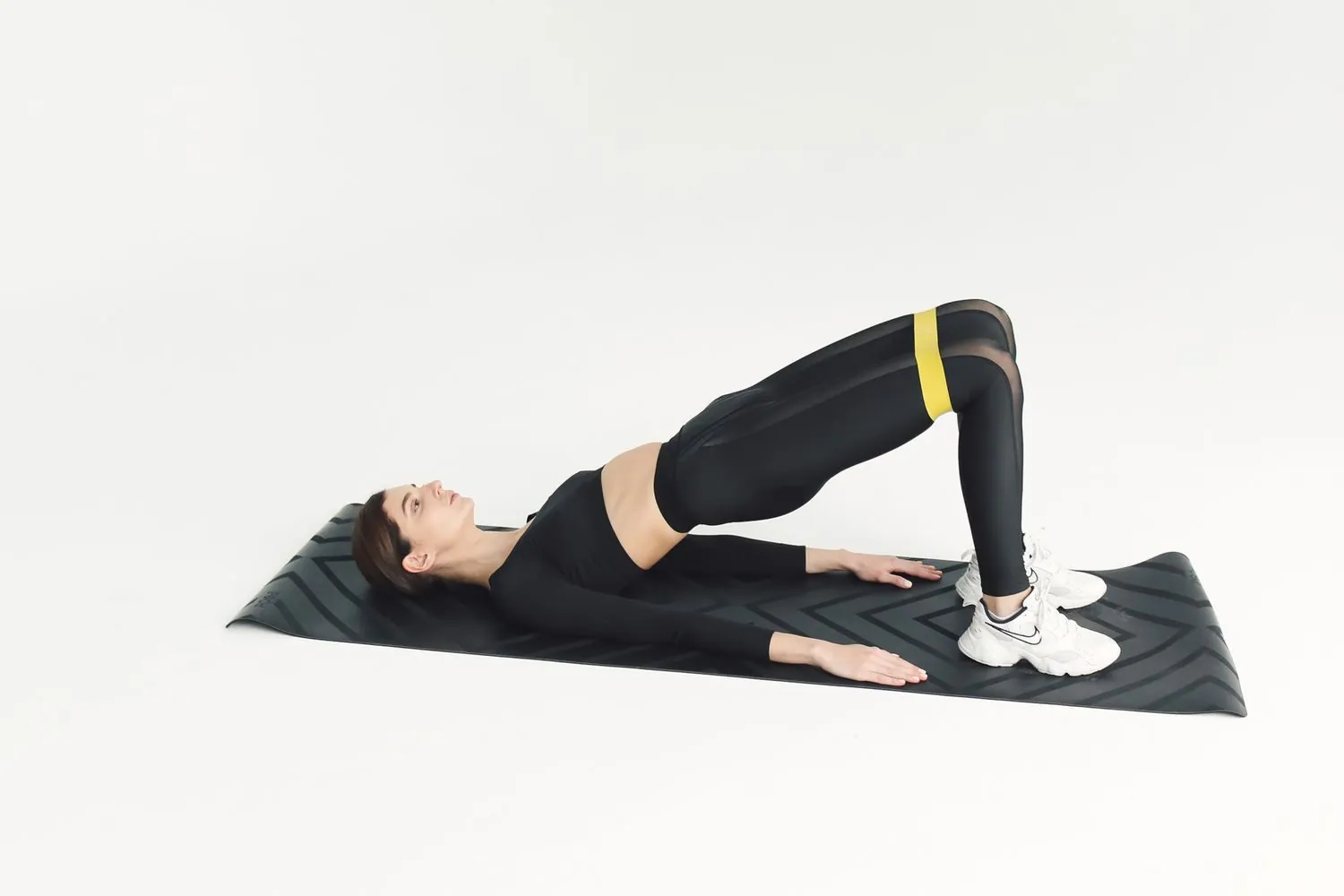
Keep the first two weeks lighter than you think you need to. In a glutes workout for beginners, the goal is to learn the hinge and thrust positions before chasing heavy weight. Once the movements feel automatic, push the load.
How often should you train glutes in a week?
Train glutes directly two to three times a week, leaving at least 48 hours between heavy sessions. Most people progress well on roughly 10-16 hard sets per week spread across those days. Beginners can start with two days and about 8-10 sets. If soreness lasts beyond three days, cut the volume.
Choose the layout that matches your calendar, then stay with it for 8-12 weeks before judging it.
| Level | Example days | Session focus | Approx. glute sets per week |
|---|---|---|---|
| Beginner, 2 days | Monday, Thursday | Both days: thrust or bridge, hinge, squat, one lateral move | 8-10 |
| Intermediate, 3 days | Monday, Wednesday, Saturday | Day 1 heavy thrust and hinge; Day 2 squat, lunge and lateral work; Day 3 lighter mix | 12-16 |
| Advanced, 4 days | Mon, Tue, Thu, Sat | Two glute-led days, two leg days that include hinge and squat work | 14-20 |
If you already have a leg day, count its squat and deadlift sets toward the weekly total instead of stacking more on top. Our leg workouts at the gym guide shows how to build that day, and the workout plan and workout routine posts help you fit the rest of the week around it.
Troubleshooting: why you feel it in your back, quads or hamstrings instead
- Quads burn on hip thrusts. Your feet are probably too close to your hips. Slide them back until your shins are close to vertical at the top.
- Lower back takes over. You are arching at the top. Tuck the chin, pull the ribs down and stop when your hips are in line with your torso, not beyond it.
- Hamstrings cramp on bridges. Feet are too far forward. Bring them closer and push through the heel.
- No progress after 6 weeks. Check whether the weight has actually gone up. Many people repeat the same load for months. Also check protein and sleep.
- Knee discomfort on squats or lunges. Shorten the depth, slow the lowering phase and keep the knee tracking over the toes. If a sharp or lasting pain shows up in the hip, back or knee, stop that exercise and see a doctor or physiotherapist.
Form faults are hard to spot on your own. A trainer who watches your set on video can fix a thrust position in a few minutes, which is exactly what 1-on-1 personal training at Fitstrot is built for. If tight hips limit your depth, online yoga classes are a useful way to build mobility between lifting days.
No gym? A glute workout at home with swaps
Yes, you can train glutes at home, and a glute workout at home works best when each gym lift has a close substitute. Progress is slower without heavy external load, so once 15-20 reps feel easy, add a loaded backpack, dumbbells or a thicker band.
| Gym exercise | Home swap | How to make it harder |
|---|---|---|
| Barbell hip thrust | Single-leg glute bridge, shoulders on a sofa or bed edge | Hold a dumbbell or a loaded backpack on your hips, pause 2 seconds |
| Romanian deadlift | Single-leg hinge with a dumbbell | Slow 3-second lowering |
| Back squat | Goblet squat or split squat with a backpack | Raise the back foot on a chair, add reps |
| Cable kickback | Banded kickback or donkey kick | Thicker band, 2-second hold at the top |
| Lateral band walk | Side-lying leg raise with a band above the knees | Add a second band, 15-20 reps |
A glutes workout with dumbbells is the easiest upgrade from bodyweight, since a single pair covers thrusts, hinges, squats and lunges. For a fuller home week, see our home workout guide.
What should you eat to support glute growth? An Indian protein guide
To build muscle, aim for roughly 1.6-2.0 g of protein per kg of bodyweight each day, with calories at maintenance or slightly above. For a 60 kg person that is about 95-120 g of protein, spread across three or four meals using eggs, paneer, dal, curd, soya chunks, chicken or fish.
- 1 whole egg: about 6 g protein
- 100 g paneer: about 18 g
- 1 katori cooked dal: about 6-8 g
- 200 g curd: about 7-8 g
- 50 g dry soya chunks: about 25 g
- 100 g cooked chicken breast: about 28-30 g
Treat these as estimates, since recipes and brands vary. Gains also slow down in a steep calorie deficit, so if you are cutting hard, expect to maintain strength rather than build size. For a food plan matched to your body, schedule and preferences, an online nutritionist consultation can turn these numbers into an Indian-food plan.
Frequently asked questions
What is the best glutes workout for beginners?
Start with two sessions a week: glute bridges or hip thrusts, a goblet squat, a Romanian deadlift with light dumbbells and banded lateral walks, each for 2-3 sets of 10-15 reps. Keep loads light for two weeks, learn the positions, then add small weight increases every week or two.
How long does it take to see results from a glutes workout?
Strength gains usually show within 2-4 weeks, while visible changes in size and shape take roughly 8-12 weeks of consistent training and enough protein. Results vary with genetics, sleep, food and starting point, so judge progress by weights lifted and measurements rather than daily mirror checks.
Can you do a glutes workout every day?
Heavy glute training every day is not recommended, because muscle grows during recovery and heavy sessions need about 48 hours between them. Light work such as walking, glute bridges or band activation on off days is fine as long as soreness is not building and form stays sharp.
Does a glutes workout help with posture and sitting stiffness?
Stronger glutes support the pelvis and hips, which can make standing and walking feel more stable after long desk hours. It is not a cure for pain. If you have ongoing lower back or hip pain, speak to a doctor or physiotherapist before starting heavy lifts.
Is a glutes workout different for men and women?
The muscles and the basic exercises are the same. Differences usually come down to goals, starting strength and how much volume each person wants to do. Our glute workouts for women guide covers a plan built around common female training goals.
Want someone to build and adjust this plan around your gym access, schedule and progress? Start with Fitstrot’s 1-on-1 personal training and ask your trainer to review your hip thrust form first.


