
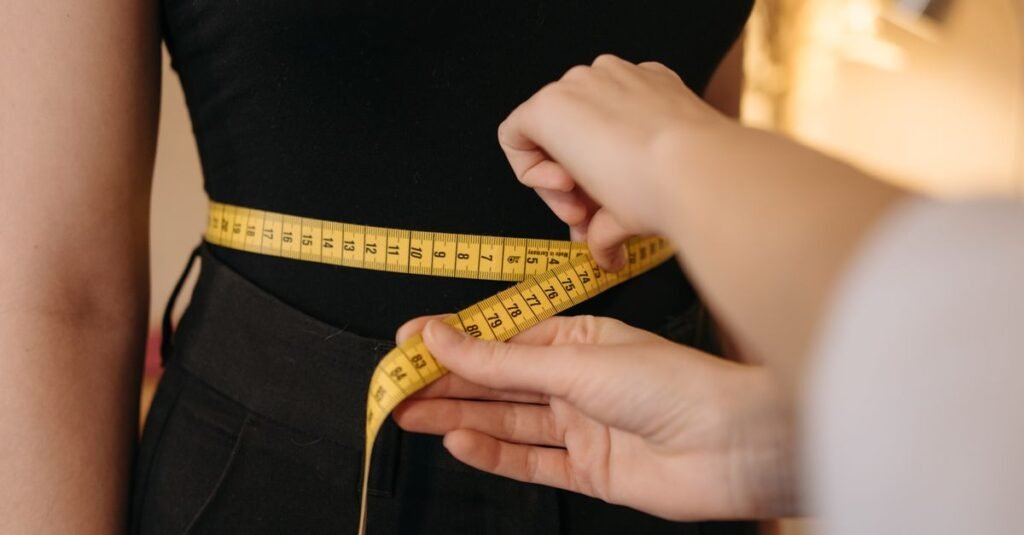
If you want to know how to reduce visceral fat, start with one reassuring fact: the fat packed around your liver, pancreas and intestines responds well when you change your habits. A 2017 meta-analysis of 89 studies found that, in percentage terms, visceral fat always fell more than the fat you can pinch, whatever method people used to lose weight. The catch is that no crunch, detox drink or “fat burner” targets it. What works is boring and measurable: enough aerobic exercise each week, an Indian plate with less refined starch and sugar, more soluble fibre, steady sleep and less alcohol.
This guide uses Indian waist cut-offs, which are lower than the Western numbers most websites quote. It gives the exercise doses that shifted visceral fat in controlled trials, and it tells you when a growing waist is a reason to see a doctor first.
What is visceral fat, and why do Indians need to watch it more closely?
Visceral fat is the fat stored deep inside the abdomen, around organs such as the liver and intestines. In a 2001 study, Asian Indians and Caucasians matched for age and BMI were compared, and the Indians carried significantly more visceral fat and showed clear markers of insulin resistance. So a “normal” BMI does not rule it out.
That study compared 12 healthy Asian Indians with 12 Caucasians using abdominal CT scans. Despite similar BMI, the Indian group had more visceral fat, higher fasting insulin, lower HDL and a glucose disposal rate of 4.7 vs 7.5 mg/kg per minute (Raji et al., J Clin Endocrinol Metab, 2001). It was small, but it matches a pattern Indian doctors see often: slim arms and legs, a firm rounded belly, and a prediabetes or fatty liver diagnosis a few years later.
Visceral fat matters because it is metabolically active. It sits next to the blood supply that feeds the liver, so the fatty acids and inflammatory signals it releases reach that organ first. Cleveland Clinic lists diabetes, high cholesterol and atherosclerosis among the conditions most commonly linked to it (Cleveland Clinic). If your doctor has mentioned high fasting insulin, our guide to insulin resistance and weight loss explains how the two problems feed each other.
Subcutaneous fat vs visceral fat: the 30-second difference
Subcutaneous fat sits just under the skin, and you can pinch it. Visceral fat lies behind the abdominal muscle wall, and you cannot. A hard, protruding belly that barely folds when you sit is usually more visceral. A soft belly you can grab in handfuls is mostly subcutaneous. Cleveland Clinic’s rough guide is that visceral fat should be about 10% of your total body fat.
Visceral fat range for male and female: the Indian cut-offs
A regular scale cannot see visceral fat, so waist size is the practical stand-in. The 2009 Indian consensus statement on obesity set narrower limits for Asian Indians than for white Caucasians, and its authors estimated this would label another 10-15% of the population as overweight or obese (Misra et al., JAPI, 2009). Its abdominal obesity thresholds, waist ≥90 cm for men and ≥80 cm for women, are still used in Indian clinical trials.
| Marker | Men: higher risk at | Women: higher risk at | Source |
|---|---|---|---|
| Waist circumference (Indian cut-off) | ≥ 90 cm (35.4 in) | ≥ 80 cm (31.5 in) | Indian consensus statement, 2009 |
| Waist circumference (Western cut-off) | > 102 cm (40 in) | ≥ 89 cm (35 in) | Mayo Clinic, Cleveland Clinic |
| Waist-to-hip ratio | > 0.90 | > 0.85 | Cleveland Clinic |
| Waist-to-height ratio | > 0.5 | > 0.5 | Cleveland Clinic |
| Example: 170 cm tall adult | Keep the waist under 85 cm (half your height) and under 90 cm (men) or 80 cm (women). Use whichever is stricter. | Worked example | |
Notice the gap. A man with a 98 cm waist passes the Western test but is clearly above the Indian one. The Indian numbers exist because Indians develop diabetes and heart disease at lower waist sizes.
How to measure visceral fat at home
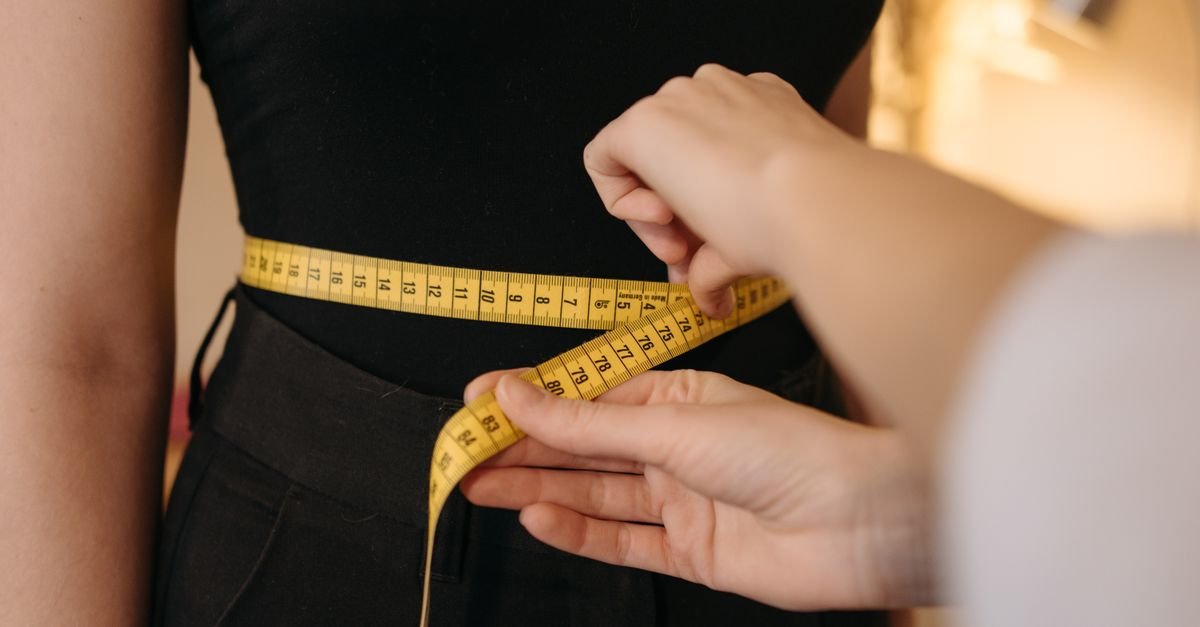
Mayo Clinic’s method: stand, place the tape around your bare stomach just above your hip bone, keep it level all the way round, pull it snug without pressing into the skin, and do not suck in (Mayo Clinic). Measure on the same morning each week, before breakfast, at the end of a relaxed exhale. Take three readings and keep the middle one. Ignore daily swings from bloating and watch the 4-week trend.
Visceral fat level on a smart scale vs a DEXA scan for visceral fat
Most body-composition scales show a visceral fat level estimated from bioelectrical impedance and a built-in formula. It is a brand-specific index, not a measurement in kilograms or square centimetres, so “level 10” on one brand is not “level 10” on another. Treat any visceral fat level chart on the box as a guide for that device only.
| Method | What it measures | Accuracy for visceral fat | Best use |
|---|---|---|---|
| Measuring tape | Total abdominal girth | Indirect, but backed by large outcome data | Weekly home tracking |
| Waist-to-height ratio | Girth relative to frame | Indirect, fairer across heights | Quick screening |
| Smart scale “visceral fat level” | Electrical resistance + proprietary formula | Low to moderate. Hydration and meals shift it | Trend on one device only |
| DEXA scan | Fat and lean tissue by low-dose X-ray, with visceral fat estimated by software | Good | Baseline and a 3-6 month re-check |
| CT or MRI | Direct image of visceral fat area | Research reference standard | Only when medically needed |
Myth check: “Crunches, jeera water and fat burners melt belly fat”
Crunches strengthen the abdominal muscles, but Mayo Clinic is clear that they will not burn off belly fat on their own. Pills, detox drinks and sweat belts fare no better. A 2017 meta-analysis of 89 studies covering diet and exercise, weight-loss drugs and bariatric surgery concluded that “no intervention preferentially targets visceral fat”. Visceral fat loss goes along with overall fat loss (Merlotti et al., Int J Obes, 2017). The good news from the same review is that, as a percentage, visceral fat always fell more than subcutaneous fat. You cannot aim at it, but it responds first.
How to burn visceral fat: what controlled studies actually showed
Visceral fat responds most to regular aerobic exercise, overall fat loss and better food quality. In the STRRIDE trial, jogging about 32 km a week for 8 months cut visceral fat by 6.9% without any diet change, while inactive controls gained 8.6% in just 6 months. Doing nothing is not neutral.
| Lever | Study | What people did | Result on visceral fat |
|---|---|---|---|
| Exercise amount | STRRIDE RCT, 175 adults (Slentz 2005) | Walked or jogged about 19 km/week, or jogged about 32 km/week, about 8 months, no diet change | Controls: +8.6% in 6 months. About 17.7 km/week prevented gain. 32 km/week: −6.9% |
| Aerobic training | Meta-analysis, 15 studies, 852 people (Vissers 2013) | Moderate- or high-intensity aerobic training, no low-calorie diet | Reductions of more than 30 cm² (women) and 40 cm² (men) on CT within 12 weeks |
| Overall fat loss | Meta-analysis, 89 studies (Merlotti 2017) | Diet and exercise, drugs or surgery | No method targeted visceral fat, but its percentage drop was always larger than subcutaneous fat’s |
| Sugary drinks | 6-month RCT, 47 adults (Maersk 2012) | 1 litre/day of regular cola vs milk, diet cola or water | Visceral fat 24-31% higher with cola. Liver fat up 132-143% |
| Soluble fibre | IRAS cohort, 1,114 adults, 5 years (Hairston 2012) | Habitual diet | Each extra 10 g/day soluble fibre: 3.7% slower visceral fat gain |
| Sleep | IRAS cohort, 1,107 adults, 5 years (Hairston 2010) | Habitual sleep | Under 40: ≤5 h/night linked to 13 cm² more visceral fat gain than 6-7 h |
Two honest caveats: the fibre and sleep findings are observational, so they show association, not proof of cause, and most of these trials were done outside India. They still point the same way, and the advice they lead to is safe.

The Indian plate that shrinks visceral fat: a meal-by-meal walkthrough
You do not need a special “visceral fat diet”. You need the same Indian meals, put together differently.
1. Drink your water, not your sugar
In a Danish trial, overweight adults drank 1 litre a day of one drink for 6 months. Regular cola drinkers ended up with 24-31% more visceral fat and 132-143% more liver fat than the milk, diet cola or water groups, even though total fat mass did not differ (Maersk et al., Am J Clin Nutr, 2012). In Indian terms: packaged juice, sweetened lassi, cold drinks and the third cup of sugary chai. Swap to water, unsweetened chaas or nimbu pani without sugar, and cut the sugar in your tea week by week.
2. Add soluble fibre at every meal
In the 5-year IRAS study, every extra 10 g of soluble fibre a day was linked to a 3.7% slower rate of visceral fat gain, with no link to subcutaneous fat. Moderately active people had a 7.4% lower rate of visceral fat gain (Hairston et al., Obesity, 2012). Indian sources include oats, rajma, chana, moong and other dals, isabgol, guava, apple and bhindi. Our fibre nutrition guide lists amounts. Raise fibre over 2-3 weeks and drink more water, or expect bloating.

3. Rebuild the thali proportions
- Breakfast: besan or moong chilla with curd, or vegetable oats upma, instead of biscuits with sugary tea.
- Lunch: half the plate sabzi and salad, a quarter dal, chana, paneer, egg or chicken, a quarter rice or 1-2 rotis.
- Evening snack: roasted chana, a fruit or sprouts chaat instead of namkeen or samosa.
- Dinner: lighter than lunch, 2-3 hours before bed.
Steady, modest fat loss through these swaps is enough. Because visceral fat drops proportionally faster than subcutaneous fat, you do not need a crash diet that costs you muscle and ends in rebound.
Aerobic exercise for visceral fat: how much is actually enough?
The minimum is 150 minutes of brisk walking or 75 minutes of jogging a week, plus strength training twice a week (Mayo Clinic). That level mainly stops visceral fat from growing. To actually shrink it without dieting, STRRIDE participants needed more: the equivalent of jogging about 32 km a week.
In STRRIDE, about 11 miles (17.7 km) of exercise a week, at either intensity, prevented visceral fat gain. Only the highest dose, about 20 miles (32 km) of jogging, reduced visceral, subcutaneous and total abdominal fat with no change in calories (Slentz et al., J Appl Physiol, 2005). The Vissers meta-analysis agreed: moderate- or high-intensity aerobic training has the highest potential to reduce visceral fat, with results visible after 12 weeks (Vissers et al., PLoS One, 2013).
Strength training still earns its place. It protects muscle while you lose fat and helps blood sugar control, and Mayo Clinic notes that strength work and HIIT may help reduce belly fat. Treat weights as the partner. Aerobic minutes do most of the visceral work. Use the talk test: at moderate effort you can speak in sentences but not sing. At vigorous effort you can only manage a few words.
| Day | Session | Weeks 1-4 | Weeks 5-8 | Weeks 9-12 | Form cue |
|---|---|---|---|---|---|
| Mon | Brisk walk | 30 min | 40 min | 45 min, or 25 min jog/walk intervals | Short, quick steps. Arms bent about 90° |
| Tue | Strength A: chair squat, incline push-up, dumbbell row | 2 × 10-12, rest 60-90 s | 3 × 10-12, rest 60-90 s | 3 × 8-12 heavier, rest 90 s | Squat: knees track over toes. Row: elbow to hip |
| Wed | Brisk walk or cycle | 30 min | 40 min | 45-50 min | Hold talk-test pace throughout |
| Thu | Intervals (if cleared by your doctor) | Easy 20 min walk | 6 × 1 min fast / 2 min easy | 8 × 1 min fast / 2 min easy | Stop at once if chest pain or dizziness |
| Fri | Strength B: glute bridge, step-up, plank | 2 × 10-12 (plank 2 × 20 s), rest 60 s | 3 × 12 (plank 3 × 30 s) | 3 × 12-15 (plank 3 × 40 s) | Bridge: squeeze glutes, ribs down. Plank: straight line head to heels |
| Sat | Long walk, Zumba or a sport | 40 min | 50-60 min | 60-75 min | Pick something you will repeat |
| Sun | Rest + 8,000 steps | Easy | Easy | Easy | Rest still means moving around |
By weeks 9-12 this adds up to roughly 230-280 aerobic minutes a week. If you would rather not build it alone, an online weight loss trainer can adjust intervals and loads to your joints, schedule and fitness.

Sleep, stress and alcohol: the three slow leaks
Sleep that is too short or too long is linked to more visceral fat gain. In a 5-year study of 1,107 adults, people under 40 who slept 5 hours or less gained 13 cm² more visceral fat than those sleeping 6-7 hours. Those sleeping 8 hours or more gained 6 cm² more.
That finding comes from the IRAS Family Study, which measured fat by CT 5 years apart (Hairston et al., Sleep, 2010). The link did not hold in people over 40, a reminder that sleep is one factor among several. Keep fixed sleep and wake times, including weekends, and keep screens out of the last 30 minutes, when late-night snacking also happens. If you snore loudly or wake up gasping, ask your doctor about sleep apnoea, which is common with a large waist.
On alcohol, Mayo Clinic says drinking too much of any kind raises the risk of belly fat, and recommends moderation if you drink. Sugary mixers and the fried snacks that come with drinks add up fast. Cutting back is one of the quickest ways to bring your waist down.

What are the signs you are losing visceral fat, and how long does it take?
The clearest signs you are losing visceral fat are a waist measurement that trends down over 8-12 weeks, belts that need a new notch, and better fasting glucose, triglycerides or liver enzymes on repeat blood tests. Cleveland Clinic says fat loss usually shows within 2-3 months of steady activity and better eating.
You may also notice your waist shrinking faster than your weight, less of the post-lunch slump, and easier breathing on stairs at the same pace. Expect the tape to move before the scale does. To track whole-body composition and not just your waist, see our guide on how to reduce body fat percentage.
Troubleshooting: “My waist hasn’t moved in 8 weeks”
- Count real minutes, not planned ones. Check your step counter or watch. Under 150 minutes a week is the most common gap.
- Audit your drinks. Sweet chai, juice and weekend drinks can cancel out a 45-minute walk.
- Watch the weekends. Five clean days and two restaurant days often means no progress.
- Fix how you measure. A different tape position or measuring after meals hides real change.
- Check your sleep. Regular 5-hour nights work against everything else.
- Get a medical check. Hypothyroidism, PCOS, some medicines and fatty liver can slow progress. A nutritionist consultation can then fit your meals around your reports.
Who should see a doctor before starting?
Visceral fat is a health issue, not just a fitness goal. Talk to your doctor first if you:
- have diabetes and take insulin or sulphonylureas, because more exercise and fewer carbs can cause low blood sugar. Never change or stop medicines on your own.
- have heart disease, high blood pressure, or chest pain, breathlessness or dizziness on exertion. Get cleared before intervals.
- have fatty liver or raised liver enzymes, so your doctor can track them as your waist comes down.
- are pregnant, recently delivered, or have knee, hip or back problems. Cycling, swimming and walking are lower-impact options.
- notice your waist growing quickly with no diet change, or with swelling, pain or bowel changes. That needs a medical check, not a fitness plan.
Frequently asked questions
How to reduce visceral fat fastest without crash dieting?
Combine at least 150 minutes a week of brisk walking, building towards 250-plus, with two strength sessions, no sugary drinks, more soluble fibre and 6-7 hours of regular sleep. A meta-analysis found measurable visceral fat loss from aerobic training within 12 weeks, even without dieting.
What is a normal visceral fat range for Indian men and women?
There is no simple home “normal” number for visceral fat itself. Waist is the practical proxy: Indian guidelines flag abdominal obesity at a waist of 90 cm or more in men and 80 cm or more in women. Also keep your waist under half your height.
Can you have visceral fat if you are thin?
Yes. Asian Indians tend to carry more visceral fat than Caucasians at the same BMI. A slim person with a firm, rounded belly, high triglycerides or prediabetes may have excess visceral fat despite a “normal” weight.
Is a smart scale’s visceral fat level accurate?
It is an estimate from electrical impedance and a brand-specific formula, so readings vary with hydration and meals and cannot be compared across brands. Use it only for trends on the same device. A DEXA scan is far more reliable.
Is walking enough to burn visceral fat?
Walking about 17-19 km a week prevented visceral fat gain in the STRRIDE trial. Actually shrinking it without dieting took more, about 32 km of jogging a week. Brisk walking plus food changes can reduce it at lower volumes.
Do ab exercises reduce visceral fat?
No. Crunches and planks strengthen your core but do not burn the fat around your organs. Visceral fat falls with overall fat loss, driven mainly by aerobic exercise and diet quality.
Does alcohol increase visceral fat?
Mayo Clinic says drinking too much alcohol of any kind raises the risk of belly fat. Cutting back reduces calories and usually brings the waist down over time. If you drink, keep it moderate, and skip sugary mixers and fried snacks.
Want a plan built around your waist measurement, schedule and blood reports? Start with a Fitstrot online weight loss trainer: a tape, a 12-week aerobic progression and a weekly check-in.


