
Yoga for addiction recovery is a supportive habit, not a treatment. Slow movement, steady breathing and a few minutes of quiet attention can help you feel calmer, sleep a little better and sit with an uncomfortable urge without acting on it. What it cannot do is detox your body, treat dependence or replace a doctor, a counsellor or a peer group. This guide explains what yoga can realistically add, a simple 15-minute routine, and when to put the mat aside and call a professional.
Important: if you are dependent on alcohol, sedatives or opioids, do not stop suddenly on your own. Withdrawal from some substances can be medically dangerous. Speak to a doctor or a de-addiction centre first.
What can yoga actually do for someone in recovery?
Yoga can help with stress, restlessness, poor sleep and body awareness during recovery, which makes it a useful add-on to treatment. It gives you a short, repeatable activity of 10 to 20 minutes that you can do when tension builds. It does not remove cravings, treat withdrawal or fix the underlying causes of dependence.
In practice, people in recovery often describe three problems that yoga can touch: a body that feels tense and wired, a mind that races at night, and a gap in the day where cravings tend to arrive. A fixed daily practice fills that gap with something calm and structured. Over weeks, many people also get better at noticing the early signs of a craving, such as a tight chest or restless legs, before the thought of using takes over.
Think of it as one tool in a bigger kit. The kit also includes medical care where needed, therapy, a support group, regular meals, sleep and people you can call. Our guide to the benefits of yoga covers the wider picture if you are new to the practice.
Where does yoga fit, and where do you need professionals?
Yoga fits in the daily-life layer of recovery: managing stress, sleep and cravings between appointments. Professionals are needed for detox, withdrawal, medicines, co-existing conditions such as depression or trauma, and relapse planning. The table below shows the split so you do not ask yoga to do a job it cannot do.
| Need | What yoga can offer | What you need from professionals |
|---|---|---|
| Withdrawal symptoms | Gentle stretching and slow breathing to ease restlessness once you are medically stable | Medical assessment and supervised detox, especially for alcohol, sedatives and opioids |
| Cravings | A calming routine and a breathing tool for the next 10 to 20 minutes | Therapy, relapse-prevention planning and, where prescribed, medical treatment |
| Sleep | A slow evening wind-down with floor-based poses | A doctor if insomnia lasts weeks or is severe |
| Low mood or anxiety | A daily habit that may lift stress | A psychiatrist or counsellor if low mood, panic or hopelessness is persistent |
| Trauma | Choice-based movement, only if you feel safe | A trauma-trained therapist |
| Daily structure | A fixed time, a place and a short routine | A support group, family involvement, follow-up visits |
When should you see a doctor before or during yoga?
See a doctor or registered de-addiction service before starting if you use alcohol, sedatives or opioids daily, if you have ever had seizures, severe shakes or hallucinations when you cut down, or if you have thoughts of harming yourself. Yoga should never delay medical help, and you should not change any prescribed medicine on your own.
Get professional help promptly if you notice:
- Shaking, sweating, confusion, vomiting or a racing heartbeat after stopping a substance.
- Strong thoughts of self-harm, or feeling that life is not worth living. In India you can contact the Tele-MANAS mental health helpline on 14416, or call 112 in an emergency.
- A craving or lapse you cannot manage alone. A lapse is not failure; it is a signal to contact your counsellor, sponsor or doctor.
- Chest pain, dizziness or breathlessness during any breathing practice. Stop and seek medical advice.
If you also live with long-term conditions such as high blood pressure, heart disease or pregnancy, ask your doctor before trying breathing practices.
Myth check: does yoga cure addiction or detox the body?
No. Yoga does not cure addiction and does not “flush out” a substance. Your liver and kidneys do the clearing, and the pull of dependence is a health condition, not a lack of discipline. What yoga can do is help you manage stress and build a calmer daily routine alongside real treatment.
Two other common beliefs deserve correcting.
- “Harder yoga means faster recovery.” Not true. Hot or power-style classes can leave a recovering body drained. Gentle and restorative styles are usually kinder in the first months.
- “If I relapse, yoga did not work.” Recovery is rarely a straight line. A lapse says your plan needs support, not that the practice was useless. Keep the practice, and add help.
How can breathing help when a craving hits?
Slow breathing with a longer exhale can ease the physical tension that often travels with a craving. Try inhaling for 4 counts and exhaling for 6 to 8 counts, for 2 to 5 minutes. Many cravings rise and fade within minutes to roughly half an hour, so the goal is to ride it out, not fight it.
This idea is sometimes called “urge surfing”: you notice the craving like a wave, breathe through it, and watch it rise and fall instead of acting. It is a skill, so it gets easier with repetition. Keep it simple at first; the three techniques below are enough.
| Technique | How to do it | Time | Caution |
|---|---|---|---|
| Longer exhale breathing | Sit or lie down. Breathe in for 4 counts, out for 6 to 8, through the nose if comfortable | 2 to 5 min | Reduce the counts if you feel dizzy |
| Three-part breath (dirga) | Breathe slowly into the belly, then ribs, then upper chest; exhale in reverse | 3 to 5 min | Keep it gentle, never forced |
| Alternate nostril breathing (nadi shodhana) | Close one nostril lightly, breathe in, switch, breathe out; no holding the breath | 3 to 5 min | Skip if your nose is blocked; do not hold the breath |
| Not recommended early on | Fast, forceful practices such as kapalbhati and bhastrika, and breath holds | Not applicable | Can cause light-headedness, anxiety or palpitations; avoid unless a qualified teacher and your doctor agree |
What does a simple 15-minute routine look like?
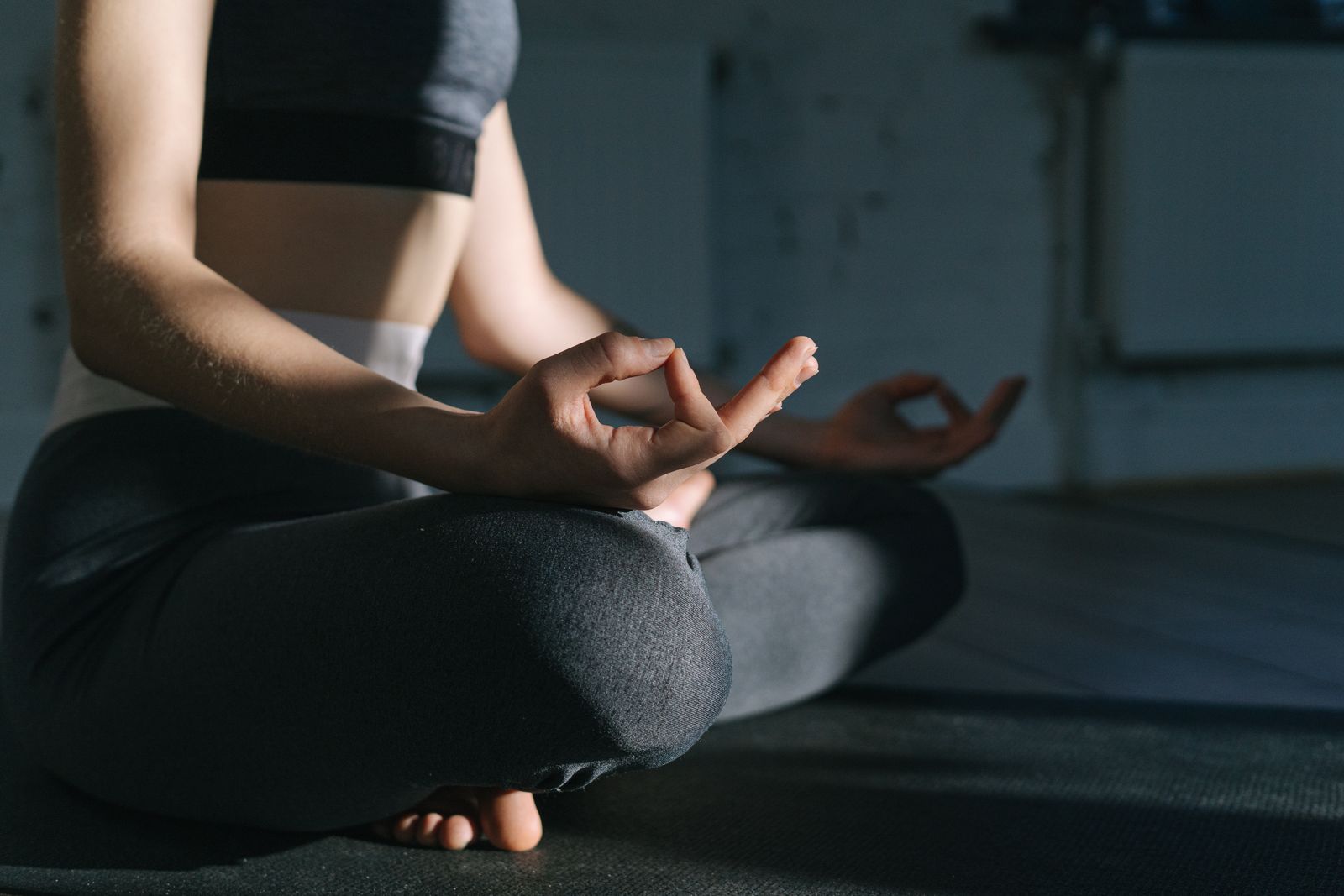
A beginner-friendly recovery routine runs about 15 minutes: 3 minutes of breathing, 8 to 9 minutes of slow floor poses, and 3 minutes of lying rest. Do it 4 to 5 days a week at the same time, such as after waking or before bed, and keep every movement gentle and pain-free.
- Settle (3 minutes): sit comfortably and do longer exhale breathing. Let your shoulders drop.
- Cat-cow (1 to 2 minutes): on hands and knees, move your spine slowly with the breath.
- Child’s pose, balasana (1 to 2 minutes): rest your forehead down. Stay for 5 to 10 slow breaths.
- Seated forward fold, paschimottanasana (1 to 2 minutes): bend your knees if your back is tight.
- Legs up the wall, viparita karani (3 minutes): lie with your legs resting on a wall. Stop if it hurts your back or head.
- Corpse pose, shavasana (3 minutes): lie flat, eyes closed, and let the breath be natural.
If you have back pain, keep the movements small and read our notes on yoga for back pain. For more routine ideas, see the self-care yoga routine and our guide to yoga at home.
Which styles of yoga suit early recovery?
Gentle, restorative and beginner-level classes suit early recovery best, because the aim is calm and regulation rather than sweat or intensity. Slow flows and floor-based poses are easier on a body that may be tired, underslept or recovering. Hot yoga and fast power classes are better left until you are stable and your doctor agrees.
Restorative yoga uses props and long holds, which many people find soothing. If you are unsure what each style involves, read about the different types of yoga first. You can also add five minutes of quiet attention using meditation for beginners, such as counting breaths or scanning the body from feet to head.
What if yoga makes you anxious or restless?
If yoga feels uncomfortable, it usually means you need to change the format, not give up. Try shorter sessions, eyes open, movement instead of stillness, or a different time of day. Some people, particularly those with a history of trauma, find sitting still or lying with closed eyes unsettling. Stop and choose what feels safe.
- Stillness raises anxiety: do moving practices first, such as cat-cow and gentle stretches, and keep meditation to 1 to 2 minutes.
- Closing the eyes feels unsafe: keep them open and rest your gaze on the floor.
- Cannot concentrate: use a count, such as breathing in for 4 and out for 6, to give the mind a job.
- Skipped three days: restart with 5 minutes. Do not wait for a perfect week.
- Cravings arrive during practice: notice them, keep breathing, and shorten the session if needed. Tell your counsellor what you noticed.
- Body feels very tired or weak: do only breathing and lying poses for now, and mention it to your doctor.
If anxiety is a big part of your story, our page on yoga for anxiety covers calming practices in more detail.
How can family and workplaces support someone in recovery?
Family members can support recovery by encouraging treatment, keeping the home calm, offering to practise a short routine together and avoiding blame. Workplaces can help by offering privacy, flexible time for appointments and access to stress-relief sessions. Support works best when it is quiet, steady and free of judgement.
- Families: ask what helps, rather than monitoring. Offer a 10-minute practice together, and avoid keeping alcohol or other triggers at home where possible.
- Employers: offer confidential access to counselling and a flexible lunch-hour wellness slot, including online yoga for stress relief, without asking anyone to disclose their health.
- Friends: be reliable and do not push. A walk or a quiet class together can be easier than a conversation.
A private, at-home option can help if a studio feels intimidating; see our overview of online yoga classes to understand how live sessions work.
Frequently Asked Questions
Can yoga alone cure addiction?
No. Yoga supports stress management, sleep and body awareness, but it does not treat dependence. It works best alongside medical care, counselling and peer support, planned with your doctor or a de-addiction service.
How often should someone in recovery practise yoga?
Short and regular usually works best: about 10 to 20 minutes, 4 to 5 days a week. A calm 15-minute routine you can repeat is more useful than one long class that is hard to sustain.
Is hot yoga or power yoga safe in early recovery?
Gentler styles are usually the safer start. Heat and intense effort can be draining when the body is still recovering, so begin with restorative or beginner classes and check with your doctor before moving to harder styles.
Can breathing exercises help with alcohol cravings?
Slow breathing with a longer exhale can help you ride out the physical tension of a craving, which often fades within minutes to roughly half an hour. It does not remove dependence, so keep your treatment plan and support network in place.
What should I do if yoga brings up difficult feelings?
Stop, open your eyes and breathe naturally. Switch to movement or end the session. Tell your counsellor or therapist what came up, since strong emotions or memories are best handled with professional support rather than alone.
If you want a gentle, private way to start, explore Fitstrot’s online yoga classes and begin with a beginner session, while keeping your treatment and support team in the loop.


