
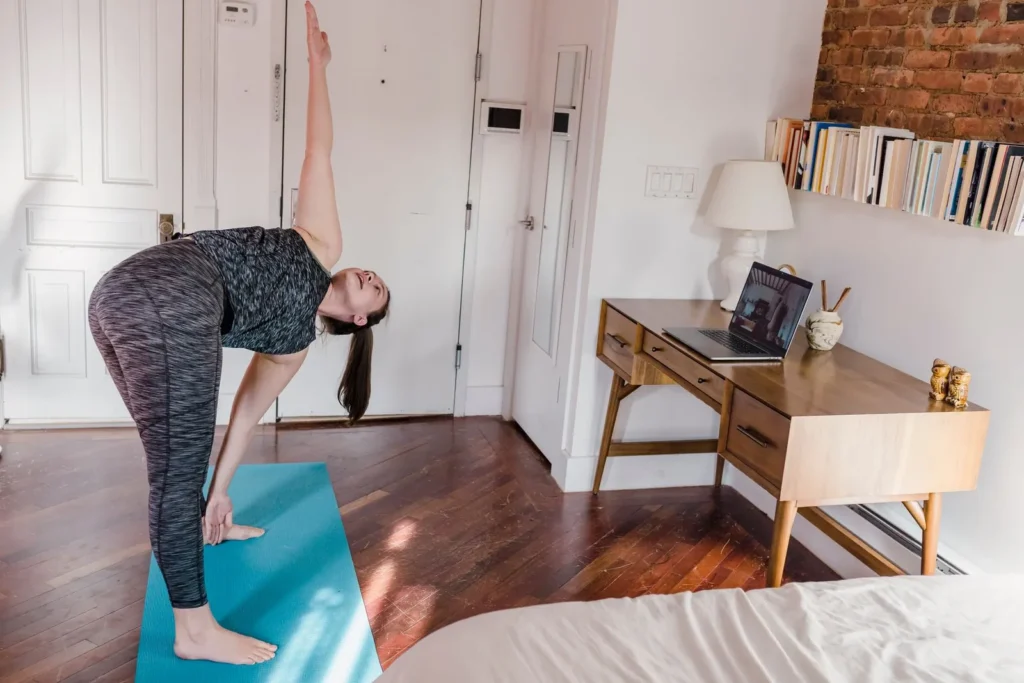
If you want yoga for work from home that fits a real workday, think short and repeatable: a few stretches and slow-breathing breaks slotted between calls to ease a stiff neck, tight hips and a screen-tired mind. This guide gives you a 12-minute sequence, a sample day schedule, fixes for common problem spots, and plain advice on which poses to skip or change.
One honest note first: yoga is a gentle movement habit, not a treatment. It may ease everyday stiffness for many people, but it cannot fix a poor workstation or replace medical care for pain that is sharp, spreading or persistent.
What does yoga for work from home actually involve?
Yoga for work from home means short blocks of seated and standing stretches, gentle strength moves and slow breathing, usually 2 to 15 minutes at a time, spread around your workday. You need no mat, special clothes or separate room. The aim is to break up long sitting and give your neck, hips, wrists and breathing some relief.
Yoga adds slow breathing and steady attention to a plain stretch, which many people find calming as well as loosening.
Home setups work against you. In an office you walked to meeting rooms and the pantry. At home the trip from bed to desk is a few steps, and the chair is often a dining chair or a sofa corner. Hours in one position tend to tighten the hips and chest and round the upper back toward the screen. If you work in a shared office, desk yoga for office workers covers the version built for limited privacy. New to yoga? Browse the types of yoga to pick a style later, and see yoga at home for floor-based practice. Everything below is gentle enough for beginners.
Where a home desk day hurts, and which yoga move helps
This table matches the usual trouble spots to a move from the sequence below. Treat it as a comfort guide, not a diagnosis.
| Where it hurts | What long sitting tends to do | Yoga move to try | Go gentler if |
|---|---|---|---|
| Neck and shoulders | Head drifts toward the screen, shoulders creep up | Neck side stretch, towel shoulder opener | You feel tingling down the arm |
| Upper back | Rounds forward, chest closes | Seated cat-cow, shoulder opener | The front of the shoulder pinches |
| Lower back | Slumps, deep core goes quiet | Small-range cat-cow, half-fold with hands on desk | You have disc trouble or leg-radiating pain |
| Hips and thighs | Hip flexors stay shortened | Low lunge | Your knees are sensitive |
| Wrists and forearms | Hold one typing position | Wrist and forearm stretch | Numbness or tingling is present |
| Eyes | Blink less while focusing on one distance | Palming, full blinks, 20-20-20 breaks | You have an eye condition |
Sitting shortens the hips and chest and quietens the upper back and deep core, so a good home routine opens the front of the body and gently wakes up the back. If your discomfort sits mostly in the lower back, read yoga for back pain before going beyond the gentle moves here.
The 12-minute between-meetings sequence
Do this in your chair and the space beside it. Keep every stretch at a mild pull, never a sharp one. On a busy day, pick any three steps and still count it as a win.
| Step | Pose | Time | How to do it | Modify if |
|---|---|---|---|---|
| 1 | Belly breath reset | 1 min | Sit tall, one hand on the belly. Inhale about 4 counts, exhale about 6. | Dizzy: shorten the counts |
| 2 | Seated cat-cow | 1 min | Hands on knees. Inhale, lift the chest. Exhale, round the spine. | Lower back pinches: skip the arch |
| 3 | Neck side stretch | 1 min | Ear toward one shoulder, 4 to 5 breaths each side. Never tip the head backward. | Arm tingles: stop |
| 4 | Towel shoulder opener | 1.5 min | Hold a towel or dupatta wide, lift it overhead and back, elbows straight, 5 slow rounds. | Shoulder pinches: hold wider |
| 5 | Seated twist | 1.5 min | Sit sideways, hold the chair back, turn from mid-back, 4 to 5 breaths each side. | Pregnant or back irritated: small, open turn |
| 6 | Wrist and forearm stretch | 1 min | Arm out, palm up, draw fingers down gently. Flip palm down. 20 to 30 seconds each. | Tingling grows: release |
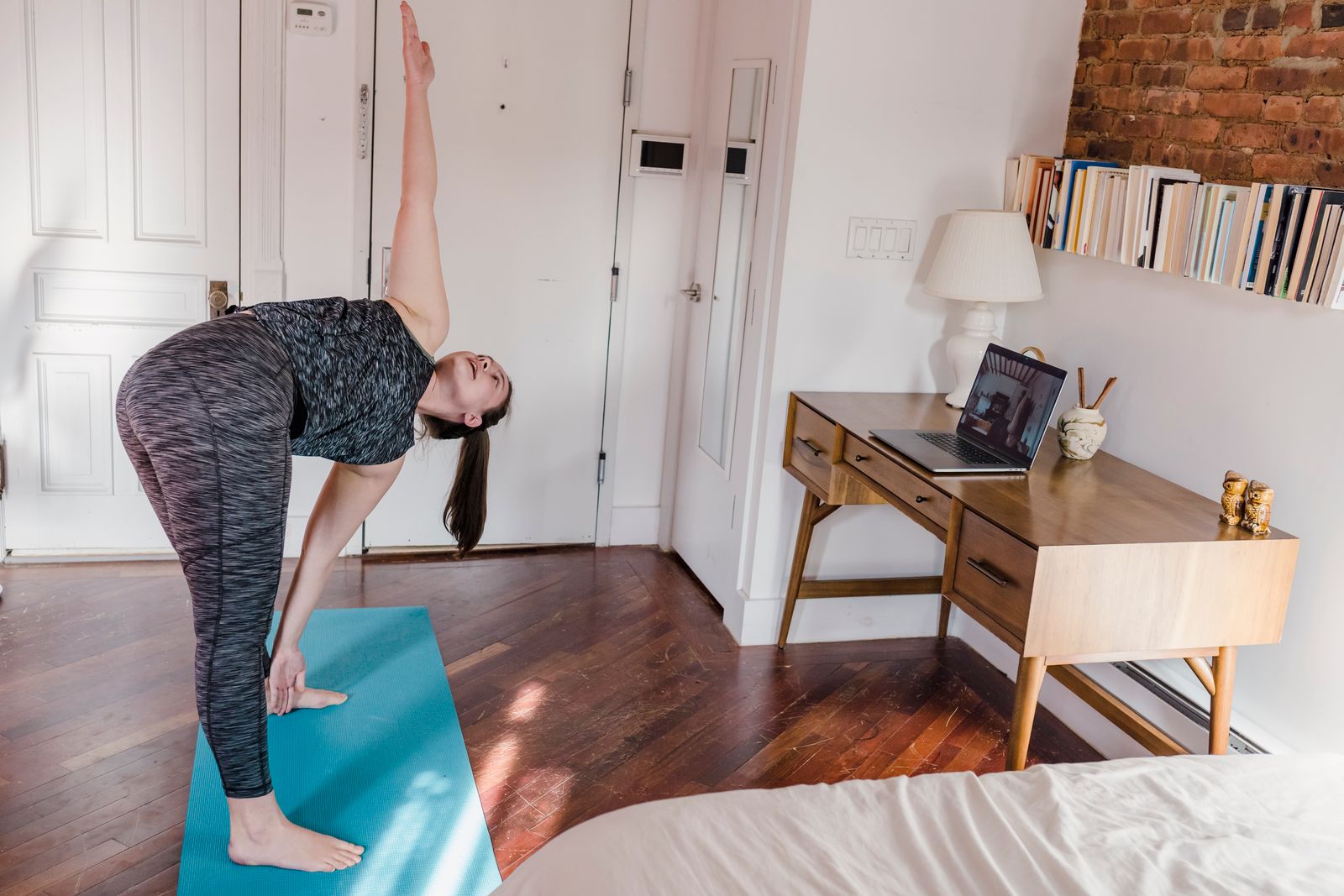
| 7 | Standing half-fold | 1 min | Feet hip-width, knees bent, hinge at the hips, hands on the desk. Rise slowly. | Disc trouble, high blood pressure or dizziness: keep the back flat and head level |
| 8 | Low lunge | 2 min | Back knee on a folded dari, tailbone slightly tucked, hips forward until the back hip stretches. 1 minute per side. | Knee pain: stay standing, hand on the desk |
| 9 | Legs on chair | 2 min | Lie on the floor, calves on the seat, arms relaxed, slow breaths. | Lying flat worsens reflux or breathing: stay seated |
Cat-cow is a standard opener in vinyasa yoga. The steady breathing in step 7 echoes the slower pace of hatha yoga. Twists also appear in yoga for digestion, but do not twist hard right after a meal. The legs-on-chair finish is the kind of calm ending used in online yoga for stress relief classes.
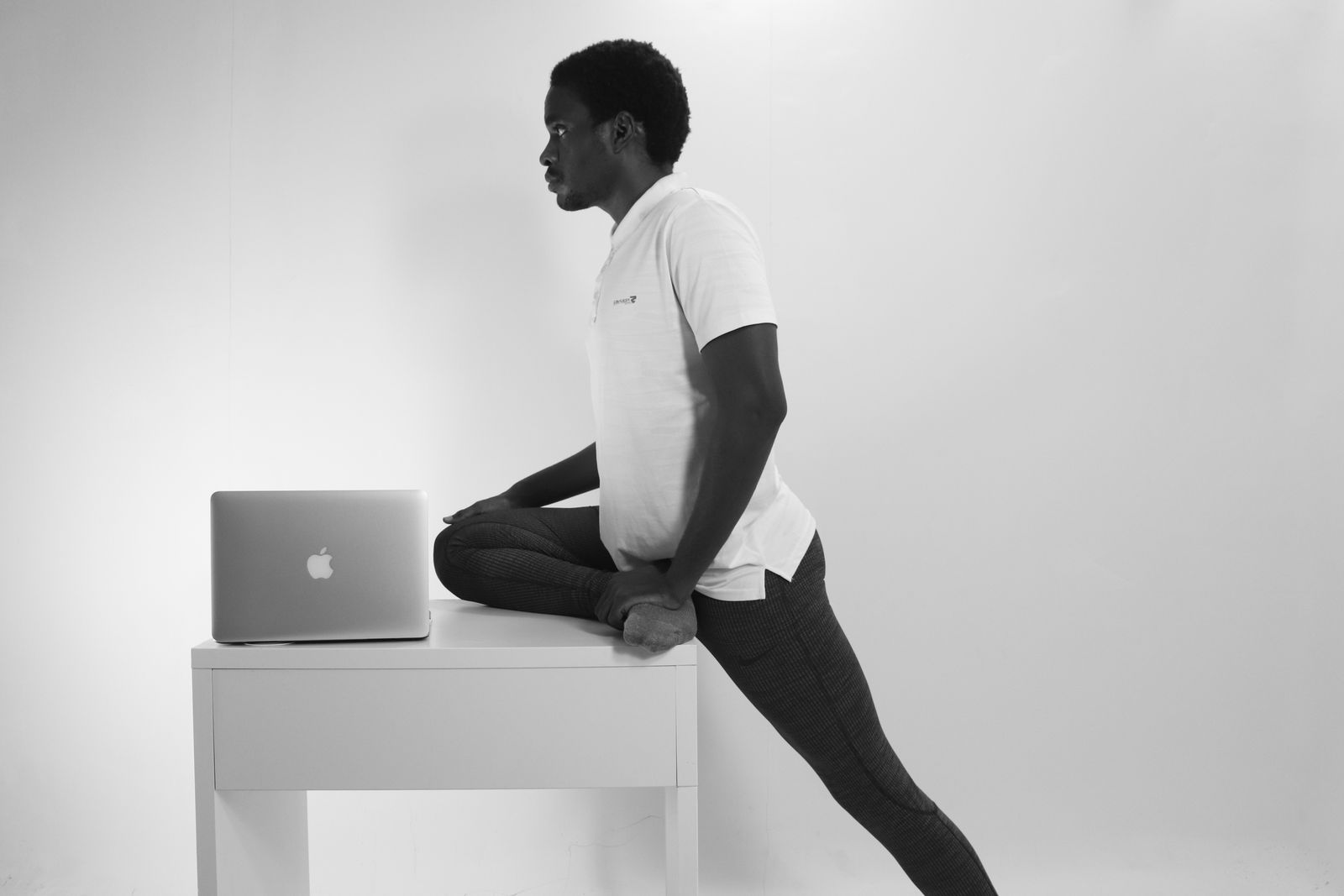
Three alignment checks apply throughout: lengthen the spine before you fold or twist, keep both sit bones and feet grounded, and keep the neck long and the jaw soft.
How do you fit yoga into a work-from-home day?
Spread about 25 minutes across the day: roughly 5 minutes before logging on, 2 to 3 minutes every 60 to 90 minutes, and one 10 to 12 minute session at log-off. Short, frequent breaks are easier to keep than one long class, especially when each follows a fixed trigger such as chai.
| Slot (sample IST day) | Length | What to do | Why this slot |
|---|---|---|---|
| Before logging on, about 9:00 | 5 min | Belly breath, cat-cow, side bends | Wakes a body that went from bed to chair |
| Mid-morning, about 11:00 | 2 min | Seated twist, neck side stretch | Breaks the first long sit |
| After lunch, about 1:45 | 3 min | Side bends, shoulder opener, easy walk | Gentle only on a full stomach |
| Mid-afternoon, about 4:00 | 3 min | Wrist stretch, low lunge, 20-20-20 eye break | Hips and wrists are stiffest by now |
| At log-off, about 6:30 | 10 to 12 min | The full sequence above | Marks the end of work |
Block these slots on your calendar like a meeting, and tie each to something that happens daily: the kettle, the end of a stand-up, closing the laptop for lunch. If you miss a day, restart with your smallest break. The same short-and-often thinking helps with study stress too, as in yoga for exam stress, and the log-off session slots into a longer self-care yoga routine on slower days.
Myth check: “I have no time” and “it only counts on a mat”
Myth: a yoga break wastes work time. A 2 to 3 minute break is shorter than most phone scrolls. Many people return to the screen a little steadier, though results vary and nobody can promise a productivity gain.
Myth: it only counts as a proper class on a mat. Short seated and standing moves are real movement. A mat matters only for floor work, and a folded dari, thick bedsheet or towel does that job. A class adds depth and correction, while small breaks cover the other eight hours that a class cannot.
Which yoga poses should you skip or change when working from home?
Skip deep backbends on a wheeled chair, hard wrist-loading poses on a bare floor, and forced neck drops backward. Change folds, twists and legs-up poses if you have disc trouble, high blood pressure, glaucoma, pregnancy or a recent injury. Any sharp, shooting, tingling or radiating pain means stop.
- Lower-back disc problems: use a half-fold with bent knees and hands on the desk, and avoid deep folds and hard twists.
- High blood pressure or easy dizziness: rise slowly from folds, avoid holding the head below the heart for long, and ask your doctor before trying legs-up-the-wall.
- Glaucoma or eye-pressure concerns: skip head-down folds unless your eye doctor agrees.
- Pregnancy: avoid deep twists and long spells flat on your back, and check with your doctor or a prenatal instructor first.
- Wrist symptoms such as carpal tunnel: avoid body weight on the wrists and shorten the holds.
- After a full meal: wait roughly an hour before folds and twists.
See a doctor or physiotherapist for numbness or tingling down an arm or leg, pain that wakes you at night, pain after a fall, or unexplained weakness. Seek urgent care for chest pain, breathlessness or fainting.
Troubleshooting: why are you still stiff after your yoga breaks?
- Neck aches again by afternoon: your screen is probably too low. Raise the laptop on a stand or a stack of books and use a separate keyboard. Stretches cannot cancel hours of looking down.
- Wrists tingle: keep your forearms roughly level with the keyboard and stretch for shorter spells, more often. Tingling that keeps returning deserves a doctor’s visit.
- Hips tight again by evening: one lunge a day is too little against eight hours of sitting. Stand every 30 to 45 minutes and take calls standing or walking when you can.
- Lower back sore after the lunge or fold: you likely went too deep. Bend the knees and shorten the range.
- Eyes tired and dry: every 20 minutes, look at something about 20 feet away for 20 seconds. Rub your palms warm, cup them over closed eyes for 30 to 60 seconds, and blink fully ten times.
Working from bed, sofa or a small flat? Making yoga fit
In a small flat or a busy joint family home, the barrier is usually space and privacy, not flexibility. Keep a folded dari or bedsheet near the desk so floor moves take seconds to set up. A wall corner suits the legs-on-chair finish, and a hallway or balcony suits the lunge. On calls, switch the camera off and mute for your 2 to 3 minute break.
With no floor space at all, use a standing-only version: side bends, towel shoulder opener, half-fold with hands on the desk, and a short split stance holding the chair. Cat-cow, the neck stretch and the wrist stretch need only the chair you are in.
Be honest about the bed or sofa, though: it is the hardest setup for your body. A dining table and a firm chair for your main work hours will help more than any single pose.
Should you follow a video, join a live class or practise alone?
Practise alone for the 2 to 5 minute breaks, since you know the moves and need no setup. Use a guided live or recorded class once or twice a week for longer sessions, where an instructor can correct alignment you cannot see and adapt moves for a stiff neck or sore lower back.
Solo breaks give you frequency. A teacher gives you depth, accountability and modifications for your own body, which matters if any caution above applies to you. FitStrot’s online yoga classes are built around this kind of practice.
Questions people ask about yoga for work from home
Do I need a yoga mat to do yoga while working from home?
No. Seated twists, neck and wrist stretches and standing half-folds need no mat. A mat helps only for floor poses such as the low lunge and legs-on-chair finish, and a folded dari, bedsheet or towel is a fine substitute.
How often should I take a yoga break during my workday?
A practical pattern is a 2 to 3 minute break every 60 to 90 minutes, plus one longer session of 10 to 12 minutes at the end of the day. Regular timing matters more than perfect timing.
Can yoga help with tiredness from back-to-back video calls?
It may help. Slow breathing and brief movement between calls give your body and eyes a genuine pause, and many people feel calmer afterwards. It will not replace rest, so also leave short gaps between meetings and look away from the screen regularly.
Is it fine to do yoga in office clothes or right after lunch?
Yes for office clothes, as long as you can move freely. After lunch, keep to gentle neck, shoulder and standing moves, and wait roughly an hour after a full meal before deep folds and twists.
When should I see a doctor instead of stretching?
See a doctor if pain is sharp, spreads down an arm or leg, comes with numbness or tingling, wakes you at night, follows a fall, or does not ease within a couple of weeks. Seek urgent care for chest pain, breathlessness or fainting.
Want someone to check your alignment and adapt this sequence to your neck, wrists or lower back? Join a live session in FitStrot’s online yoga classes and bring this 12-minute routine along, so your instructor can fine-tune it for your desk setup.


