

Yoga for stress works because it gives your body something stress never does: a reason to slow down. Long, steady exhales, gentle folds and a few quiet minutes on the floor tell your nervous system the threat has passed, and that is a physical effect you can feel within one 15-minute session, not just an idea. This guide covers the poses that calm you fastest, the breathing that does the heavy lifting, a 15-minute routine, a weekly plan, and what to do when it does not seem to work.
How Does Yoga Help Reduce Stress?
Yoga reduces stress by pairing slow breathing with gentle movement, which shifts the body from its alarm state (fast heartbeat, shallow breath, tight muscles) towards its resting state. Most people feel calmer within 10 to 20 minutes, while a lasting drop in baseline stress usually builds over about four to six weeks of regular practice.
Stress is a body event before it is a thought. Your heart speeds up, your jaw and shoulders tighten, your breathing climbs into the chest. Yoga works on all three at once. The long exhale slows the heart, the postures release the places you clench, and holding attention on breath or sensation gives a looping mind something else to do. It will not remove the cause of your stress, such as a difficult boss or a looming deadline, but it changes how much of that pressure your body keeps carrying afterwards.
Which Yoga Poses Are Best for Stress Relief?
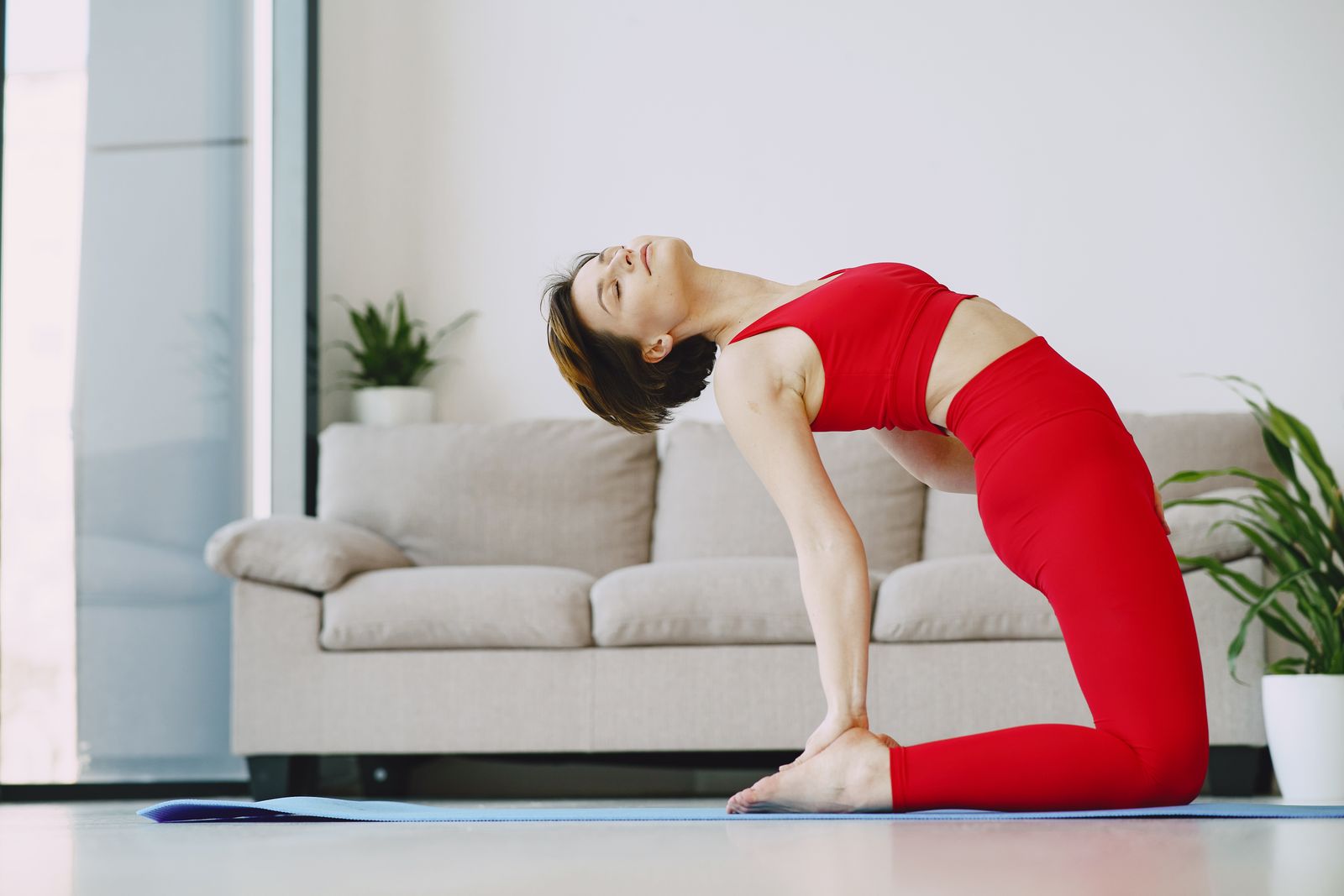
The best yoga poses for stress relief are slow, low-effort shapes: Child’s Pose, Cat-Cow, Seated Forward Fold, Legs-Up-the-Wall and Savasana. Hold each for 1 to 5 minutes (Cat-Cow for 8 to 10 breaths) and keep the exhale longer than the inhale. Forward folds and supported rests calm you more reliably than deep backbends or arm balances.
Strong backbends and standing power poses are energising, which helps when you feel flat but not when you are wound up. Use this table as a quick reference.
| Pose | How long | Breath | Form cue |
|---|---|---|---|
| Child’s Pose (Balasana) | 1 to 3 minutes | Slow belly breaths into the lower back | Knees wide, big toes touching, forehead down; place a pillow under the forehead if it does not reach |
| Cat-Cow (Marjaryasana-Bitilasana) | 8 to 10 rounds | Inhale to arch, exhale to round | Move from the tailbone; keep wrists under shoulders |
| Seated Forward Fold (Paschimottanasana) | 1 to 2 minutes | Exhale a little deeper each time | Bend the knees as much as needed; hinge from the hips, not the back |
| Supported Bridge (Setu Bandhasana) | 2 to 3 minutes | Natural, unhurried | Slide a folded blanket or bolster under the hips, feet hip-width apart |
| Legs-Up-the-Wall (Viparita Karani) | 5 to 10 minutes | 4 counts in, 6 to 8 out | Hips a hand’s width from the wall; arms relaxed by your sides |
| Reclined Twist (Supta Matsyendrasana) | 1 to 2 minutes each side | Long exhale into the twist | Keep both shoulders heavy on the floor; knees can rest on a cushion |
| Corpse Pose (Savasana) | 3 to 10 minutes | Let it go back to natural | Palms up, feet falling open, jaw soft; cover yourself if you feel cold |
If you only have time for one pose on a bad day, choose Legs-Up-the-Wall: it needs no flexibility, just a wall. To practise without a studio, see our guide to yoga at home for space and props.
Breathing Practices That Calm You in Minutes
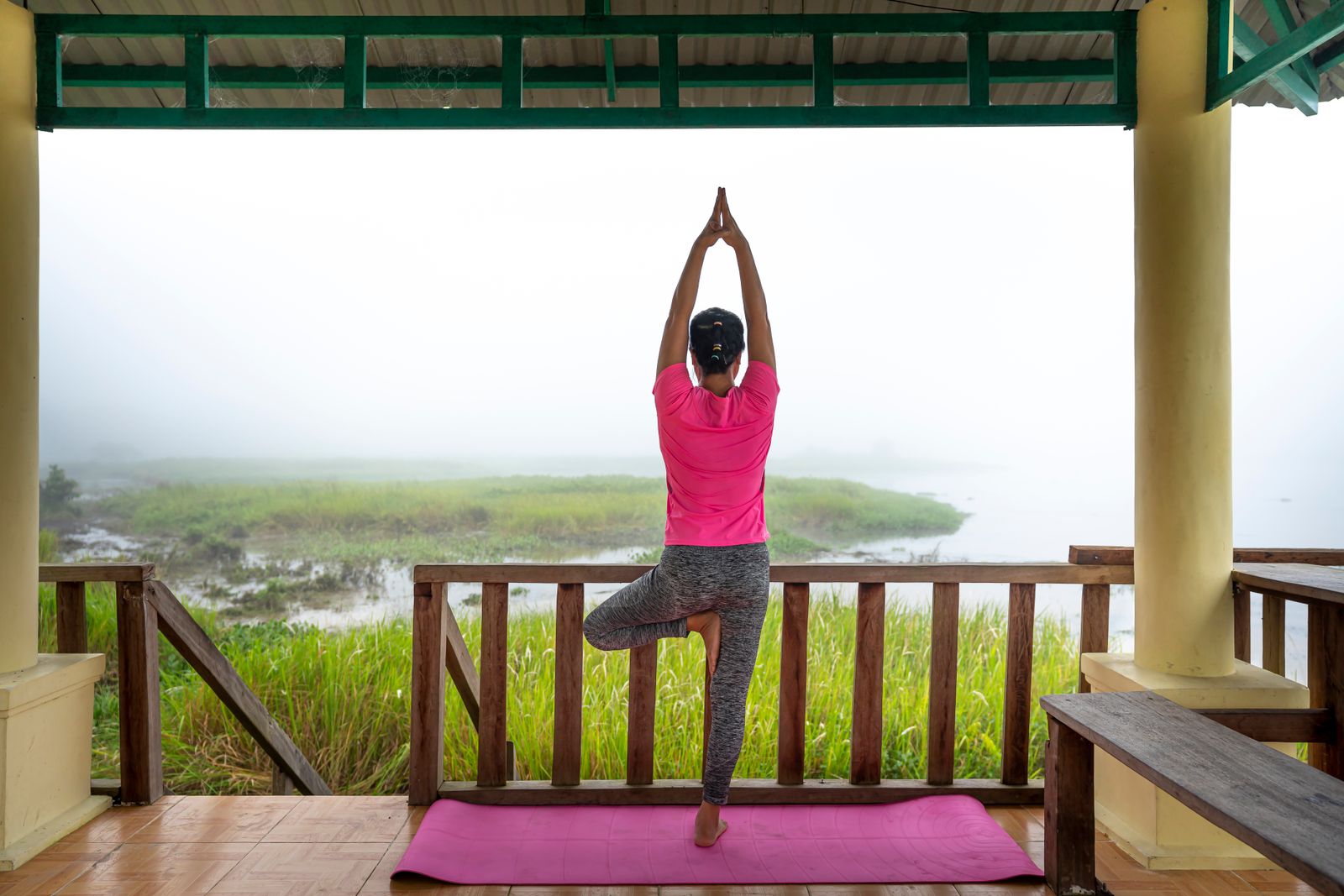
Breathing is the fastest stress tool in yoga, because a longer exhale slows the heart rate within a few breaths. Learn these three first. Each can be done on a chair, at your desk or in a parked car.
| Technique | How to do it | Time | Best used |
|---|---|---|---|
| Extended exhale | Inhale through the nose for 4 counts, exhale for 6 to 8 counts | 2 to 5 minutes | Before a meeting, in traffic, after a tense call |
| Bhramari (humming bee breath) | Inhale, then exhale with a soft hum like a bee, lips closed | 5 to 8 rounds | When the mind is racing or you have a tension headache |
| Nadi Shodhana (alternate nostril) | Close one nostril gently, inhale through the other, switch, exhale; no force, no breath holding | 3 to 5 minutes | Evening wind-down before bed |
Keep every breath comfortable. Never strain, never hold the breath hard and stop if you feel dizzy or light-headed; just return to normal breathing. If you have a heart or lung condition or are pregnant, check with your doctor before trying breath retention or fast breathing styles.
Myth Check: Do You Need to Be Flexible for Yoga to Work?
No. Stress relief in yoga comes from slow breathing and relaxed attention, not from how deep your stretch goes. Someone who cannot touch their knees but breathes slowly through a seated fold gets more calming benefit than someone forcing their forehead to their shins. Props, bent knees and chairs are part of the practice, not a compromise.
Three related myths cause most early frustration.
- “A harder class means more stress relief.” When you are already tense, a fast class can leave you more wired.
- “Yoga should clear my mind.” The aim is to notice thoughts without chasing them. A mind that wanders and returns fifty times is practising exactly right.
- “One long session on Sunday is enough.” Fifteen minutes four times a week beats ninety minutes once.
A 15-Minute Yoga Routine for Stress, Step by Step
This routine uses only low-effort poses and one breathing drill, so it works even on your most tiring day. Practise on a mat or folded blanket at a consistent time, and let your breath set the pace.
- Minutes 0 to 2, seated breathing. Sit comfortably, eyes closed. Inhale for 4 counts, exhale for 6 to 8.
- Minutes 2 to 5, Cat-Cow. On hands and knees, move with your breath for 8 to 10 slow rounds. This loosens the neck and spine where stress tends to settle.
- Minutes 5 to 8, Child’s Pose. Rest, breathe into the back of your ribs and let your shoulders drop away from your ears.
- Minutes 8 to 11, Seated Forward Fold. Fold over bent knees without forcing depth. Stay with the exhale.
- Minutes 11 to 13, Legs-Up-the-Wall. No wall? Rest your calves on a chair seat.
- Minutes 13 to 15, Savasana. Lie still. Bring wandering thoughts back to the floor under your back.
For more variety, our yoga sequence guide shows how to order poses sensibly.
What Type of Yoga Is Best for Stress?
For stress, the best types of yoga are restorative, yin and slow hatha, all built around long holds, supported poses and unhurried breathing. Restorative holds poses for 5 minutes or more with props, yin holds for roughly 2 to 5 minutes, and hatha moves slowly with attention to alignment. Fast vinyasa and power yoga suit energy, not calm.
Fast styles are not bad, just different: they raise heart rate and release endorphins, which helps when stress feels like heaviness. If it feels like buzzing tension, start slow and add pace later. Choose the format you will actually repeat; a live class adds a teacher and consistency, a home routine adds convenience.
How Often Should You Practise? A Weekly Plan
Practise yoga for stress three to five times a week for 15 to 20 minutes, plus a short breathing break on the other days. Consistency matters more than session length. The plan below fits a working week and can be shifted around your own timetable.
| Day | Practice | Time |
|---|---|---|
| Monday | 15-minute routine above | Morning or after work |
| Tuesday | Extended exhale breathing, plus a seated desk stretch | 5 minutes |
| Wednesday | Restorative evening: Supported Bridge, Reclined Twist, Savasana | 20 minutes |
| Thursday | Bhramari and a few rounds of Cat-Cow | 5 to 8 minutes |
| Friday | 15-minute routine, finishing with Legs-Up-the-Wall | 20 minutes |
| Saturday | Slow hatha or a live class | 30 to 45 minutes |
| Sunday | Nadi Shodhana and Savasana, no movement needed | 10 minutes |
Missed a day? Two short sessions in a busy week beat skipping everything.
Troubleshooting: When Yoga Does Not Seem to Help
If you feel no calmer after a couple of weeks, the cause is usually one of these fixable things.
- Your mind will not stop. Give it a job: count breaths from 1 to 10, or silently say “in” and “out”.
- You feel more tense after. You may be pushing too hard or choosing too fast a style. Back off the stretch and lengthen the exhale.
- You fall asleep in Savasana. Usually you are tired, not failing. Practise earlier in the day.
- Emotions come up on the mat. This can happen when you finally stop. Stay gentle, and consider talking to someone if it keeps happening.
- You keep skipping. Make it smaller: five minutes, same time daily, right after brushing your teeth.
Yoga for Stress at Work, Study and Home
Different pressures show up in different places: desk workers carry it in the neck, shoulders and hips, students in a racing mind, parents in a lack of quiet time. Small changes tune the routine to each.
Office workers: two-minute breathing breaks between meetings, a seated twist and shoulder rolls at your chair. Students: a brief breathing drill before study blocks; our guide to yoga for exam stress covers revision and exam days. Busy parents: Legs-Up-the-Wall after the kids sleep; five minutes counts. For more home-based calming practices, see online yoga for stress relief.
When Is Yoga Not Enough for Stress?
Yoga helps with everyday stress, but it does not replace professional care when stress becomes severe. See a doctor or mental health professional if you have constant worry or low mood lasting more than two weeks, panic attacks, trouble sleeping most nights, or thoughts of harming yourself.
Yoga can sit alongside therapy and medical treatment, but should not be your only support if daily life is affected. Also see a doctor before starting if you have a heart condition, high blood pressure, are pregnant, or are recovering from an injury or surgery, and tell your instructor so poses can be adjusted. No routine guarantees a result; people respond at different speeds.
Frequently Asked Questions
How quickly can yoga reduce stress?
Slower breathing and relaxed muscles can show up within a single 15 to 20 minute session. A more lasting drop in everyday stress usually takes about four to six weeks of practising three to five times a week, though timelines vary with how heavy your stress is and how well you sleep.
Which yoga pose is best for stress relief?
Legs-Up-the-Wall and Child’s Pose are the most reliable for most people. Both are supported, need no flexibility and encourage a longer exhale. Hold Legs-Up-the-Wall for 5 to 10 minutes or Child’s Pose for 1 to 3 minutes, breathing slowly through the nose.
What is the best time of day to do yoga for stress?
Whenever you will actually do it. A morning session sets a calmer tone before the day begins, while an evening session helps you unwind and sleep. If your stress peaks at work, add a two-minute breathing break at midday.
Can beginners do yoga for stress?
Yes. The calming poses are the simplest ones: Child’s Pose, Cat-Cow, supported rests and Savasana, and none need prior flexibility. Start with 10 to 15 minutes and slow breathing.
Is yoga enough for chronic stress or anxiety?
Yoga is a helpful daily tool, but it is not enough on its own if stress or anxiety is affecting your sleep, work or relationships for weeks. Use it alongside good sleep, social support and, where needed, advice from a doctor or therapist.
Start with one short, guided session
Pick the 15-minute routine above and do it three times this week, or book a live beginner session in Fitstrot’s online yoga classes where an instructor can correct your form and pace the breathing for you.


