
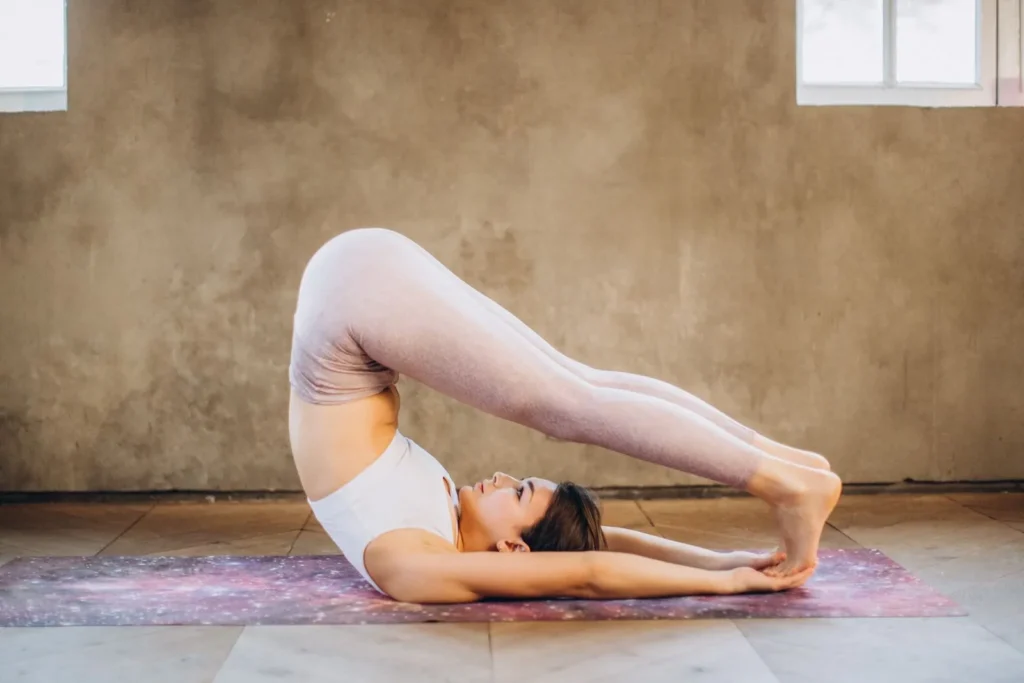
Yoga for gas works best when you keep it gentle: slow, low-pressure poses that give trapped wind room to move, rather than hard twists on a full stomach. If you get gas pain after dinner, this guide covers which poses to try, how long to wait after eating, and how to tell ordinary gas from something a doctor should look at. Think of it as a comfort routine that sits alongside medical care, not a treatment or a cure.
How long should you wait before doing yoga for gas after eating?
Sit upright in Vajrasana for 5 to 10 minutes straight after a meal if your knees are comfortable. Wait roughly 2 hours after a full meal before any twist, squat or lying pose, and 30 to 60 minutes after a light snack. A slow 10-minute walk suits almost any time.
Squeezing or twisting too early can cause burning or a sour taste. Match the pose to the clock:
| When | Suitable | Skip for now |
|---|---|---|
| 0 to 15 minutes after a meal | Vajrasana, easy sitting, slow nose breathing | Twists, squats, forward folds, lying flat |
| 30 to 60 minutes after a light snack | Cat-cow, one-knee Pawanmuktasana | Deep compressions, strong twists |
| About 2 hours after a full meal | The full routine further down | Headstand, shoulder stand, hard core work |
| Bedtime, at least 2 to 3 hours after dinner | Lying knee-drop twist, Balasana, slow breathing | Forceful breathing practices |
If you are new to practising at home, our guide to yoga at home covers mat, space and safety basics before you start.
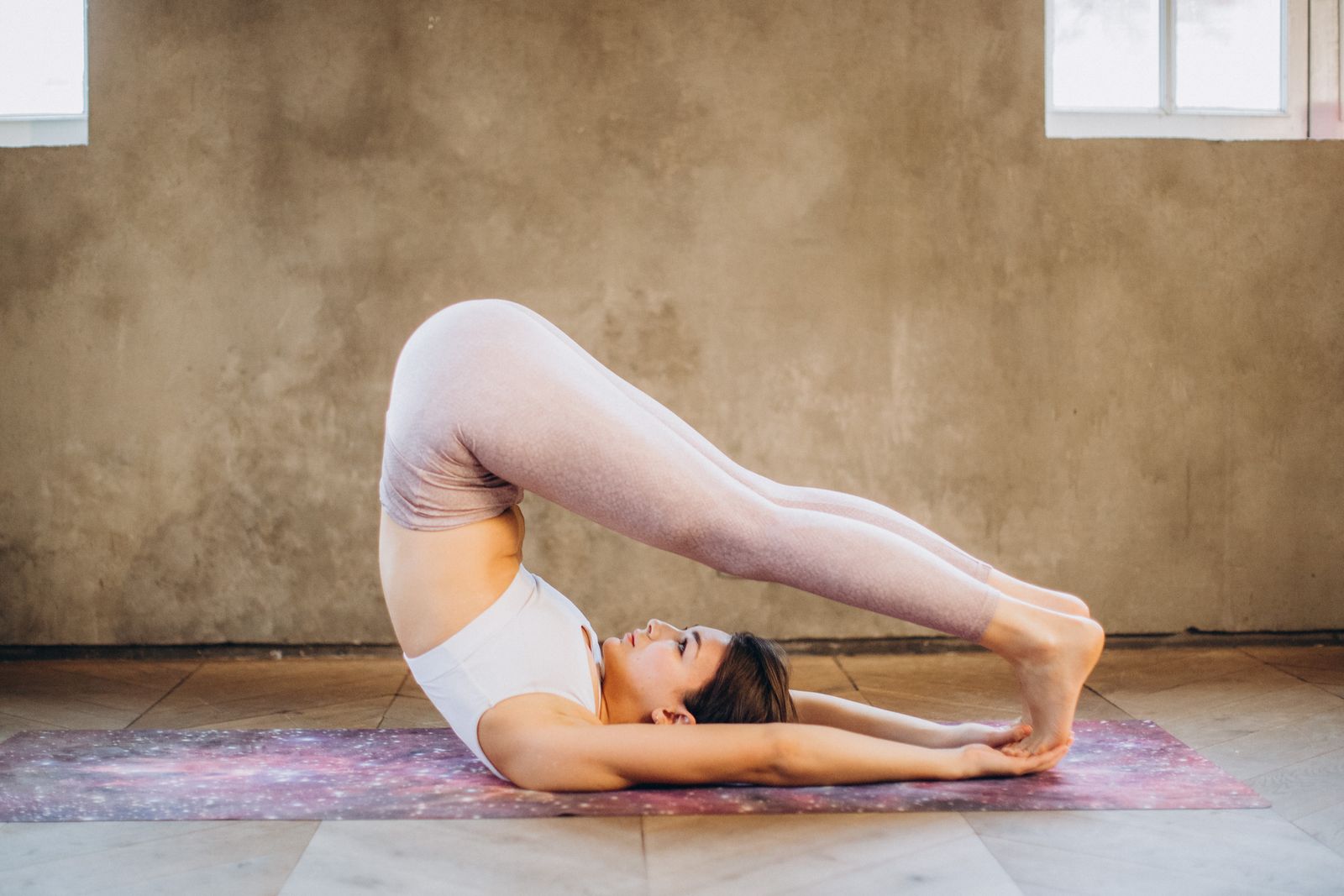
Pose guide: gentle yoga poses for gas at a glance
These six yoga poses for gas are chosen for low pressure and easy exits. None needs flexibility, and you can stop at any point. A modified pose you can breathe in beats a deep one you cannot.
| Pose | How to do it | Hold | Take care if |
|---|---|---|---|
| Vajrasana | Sit on your heels, spine tall, hands on thighs | 5 to 10 minutes | Knee pain or surgery; place a folded blanket between calves and thighs |
| Pawanmuktasana (one knee) | Lie on your back, hug one knee in, other leg long or bent | 20 to 30 seconds per side, 3 rounds | Pregnancy, hernia, recent abdominal surgery |
| Cat-cow | On hands and knees, arch and round the spine with your breath | 8 to 10 slow rounds | Wrist or knee pain; pad your knees |
| Easy seated twist | Sit tall, turn to one side using half your range | 5 breaths per side | Disc problems, pregnancy, any sharp pain |
| Balasana | Knees wide, sit back, rest forehead down | 1 to 2 minutes | Knee pain; raise the seat with a pillow |
| Supported Malasana | Squat with a rolled blanket under the heels or a block under the hips | 20 to 30 seconds, 2 to 3 rounds | Knee or ankle problems, pregnancy |
Walkthrough: three poses that most people use for trapped wind
Pawanmuktasana, one knee at a time. Draw the right knee towards your chest and hold the shin with both hands. Breathe out slowly as you hug it in, and breathe in as you ease off slightly. Stay for 20 to 30 seconds, then change legs. Hugging both knees squeezes harder, so start with one.
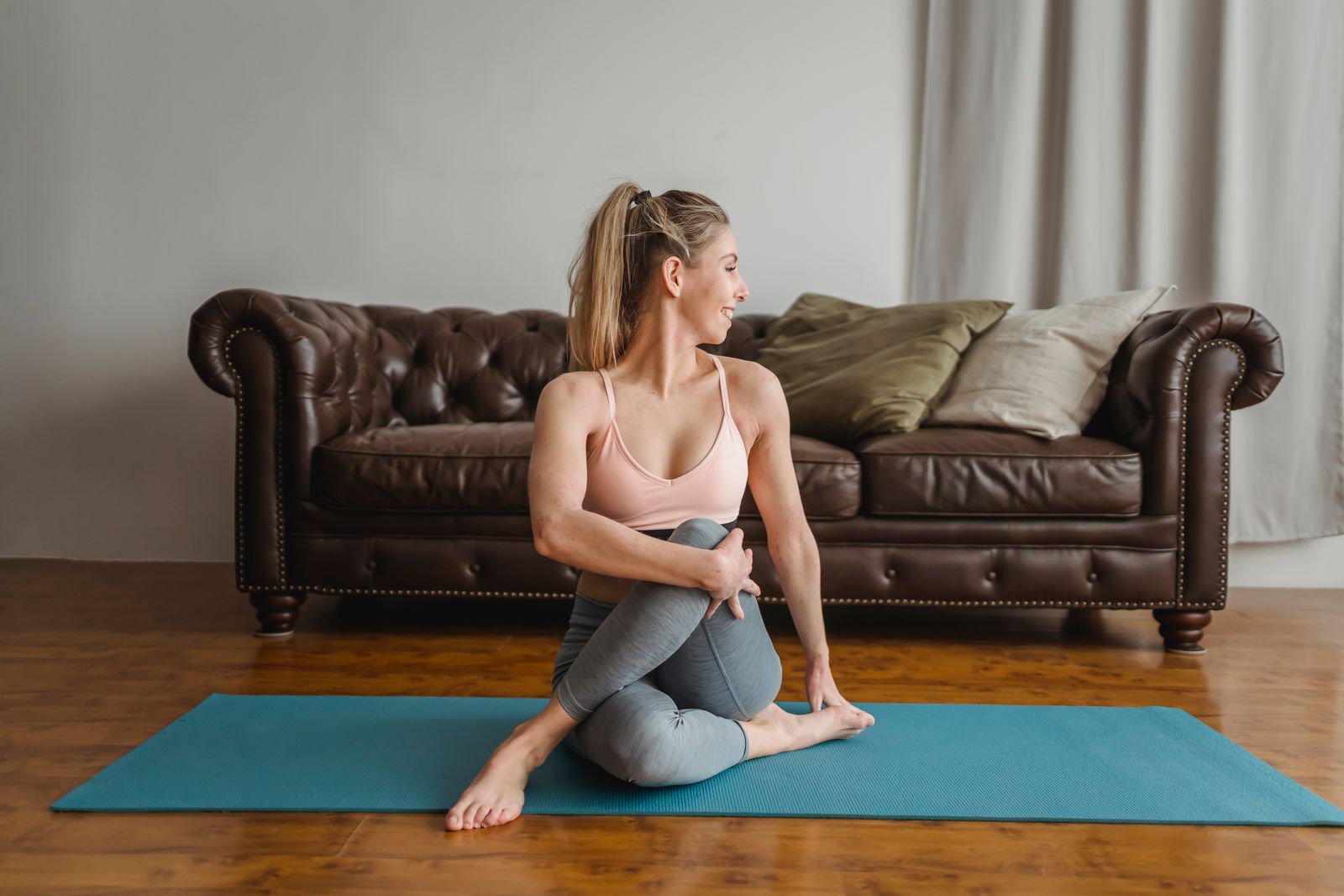
Easy seated twist. Sit on your mat with legs crossed or one leg bent, and lengthen up through the spine on an inhale. On the exhale, turn from the ribs rather than yanking with the arms. Stop at about half your range. If you notice nausea or a rising burning feeling, come out and sit tall in Vajrasana instead. If your lower back is the sore spot, our notes on yoga for back pain explain which twists are kinder to the spine.
Supported Malasana. Stand with feet a little wider than your hips, toes turned out slightly, and lower into a squat with a rolled blanket under your heels. Press palms together at the chest and your elbows lightly against your knees. This position opens the pelvis and is commonly used when gas feels stuck low down. The same squat appears in yoga for piles. Hold for 20 to 30 seconds, breathing into the belly, and stand up slowly.
For bedtime, lie on your back with knees bent and let both knees fall gently to one side for 5 to 8 breaths, then the other. Keep both shoulders on the floor if you can.
Myth: harder twists and forceful breathing clear gas faster
Pressure and force do not mean better results. Gas moves through the gut slowly, and a hard twist or sharp breathing on a full stomach can bring on reflux, cramping or dizziness instead. Gentle, unhurried movement is the safer approach.
- “Kapalbhati clears gas.” Fast, forceful exhales squeeze the belly hard. They are often avoided with high blood pressure, hernia, pregnancy, recent surgery, ulcers or acid reflux, and are best left out while you are gassy or uncomfortable. Stay with slow breathing: in for about 4 counts, out for about 6.
- “Yoga cures gas for good.” It does not. Gas has many causes, from swallowed air and food choices to constipation and medical conditions, so no pose can promise to remove it.
What does a 12-minute after-dinner routine look like?
Start at least 2 hours after dinner. Spend 2 minutes on slow breathing, then move through cat-cow, one-knee Pawanmuktasana, an easy seated twist, supported Malasana and Balasana, and finish with 3 minutes of rest. The whole sequence takes about 12 minutes and needs only a mat and a blanket.
| Minutes | Pose | Cue |
|---|---|---|
| 0 to 2 | Easy sitting or Vajrasana, slow breathing | In through the nose for about 4 counts, out for about 6 |
| 2 to 3 | Cat-cow, 8 rounds | Move slowly, one breath per movement |
| 3 to 5 | One-knee Pawanmuktasana, 2 rounds per side | 20 to 30 seconds each, breathe out as you hug |
| 5 to 7 | Easy seated twist, 5 breaths per side | Half range, tall spine |
| 7 to 8 | Supported Malasana, 2 rounds | Skip it if knees complain |
| 8 to 9 | Balasana | Let the belly soften against your thighs |
| 9 to 12 | Rest on your back or left side | Hands on belly, breathe quietly |
Do it 4 to 5 evenings a week for 2 to 4 weeks and note what changes: how often you feel gas pain, how long it lasts, and what you ate. For a slower wind-down, try yoga nidra. For a wider pose library beyond gas, see yoga for digestion, and if constipation is part of the picture, yoga for constipation goes deeper on that side.
Can food habits and a walk help yoga for gas work better?
Yes, as supportive habits, not a cure. Eating slowly, chewing well, skipping fizzy drinks and taking a 10 to 15 minute easy walk after meals can reduce how much air you swallow and keep your gut moving. They work best alongside gentle poses, and you may need a few weeks to notice anything.
- Slow down. Gulping food, talking while eating, chewing gum and drinking through straws all add swallowed air. Put the spoon down between bites.
- Watch your usual suspects. Rajma, chole, cabbage, cauliflower, raw onion, carbonated drinks and sugar-free sweeteners are common gas triggers for some people. Do not cut out whole food groups on a guess; reduce one item for a week and see.
- Walk. A relaxed 10 to 15 minute walk after lunch and dinner is gentle on a full stomach and a good swap for lying down straight away.
Keep a simple 1 to 2 week food and symptom note. If you suspect lactose, wheat or another food, or you are managing a condition such as diabetes, speak with a registered dietitian rather than self-restricting; our online nutritionist consultation is one way to do that. Where gas goes along with extra abdominal weight, yoga for weight loss and, if a fatty liver has been mentioned by your doctor, yoga for fatty liver cover those angles.
Troubleshooting: when a pose makes things worse
- Burning, sour taste or burping while lying down. You are probably too close to your last meal, or the pose presses too hard. Wait longer, sit upright in Vajrasana, and see a doctor if reflux-like symptoms keep returning.
- Cramping when you hug the knee. Hold the thigh instead of the shin, ease off the pressure, or keep the other leg bent. Stop if the cramp is sharp.
- No change after 3 to 4 weeks. Pushing harder will not help. Review food habits and constipation, and see a doctor if gas is frequent or bothersome.
Who should skip or modify these poses
Talk to your doctor before you try the routine if any of the following apply, and ask a trained teacher to adapt it:
- You are pregnant, or within a few months of giving birth.
- You have had abdominal, pelvic or hernia surgery recently, or you have a hernia.
- You have an active ulcer, severe acid reflux or a gastritis flare. Stay with upright sitting and slow breathing.
- You have high blood pressure, a heart condition or take regular medication. Avoid forceful breathing and breath holds, and do not change any medicine because of yoga.
- You have knee, hip or lower back problems, or a disc injury. Skip Vajrasana, Malasana or twists if they hurt.
- You have sudden severe abdominal pain, fever or vomiting. Do not practise; get medical care.
See a doctor first: when gas is not just gas
Gas and bloating are usually harmless, but the same symptoms can point to something that needs a proper check. Yoga must never delay a diagnosis. See a doctor or registered dietitian promptly if you have any of these:
- Persistent or worsening abdominal pain, or pain that wakes you at night.
- Unexplained weight loss without trying.
- Blood in your stool, or black, tar-like stools.
- Persistent vomiting, trouble swallowing, or feeling full after very little food.
- A change in bowel habits that lasts more than 2 to 3 weeks, or a belly that keeps swelling.
- Fever, yellowing of the skin or eyes, or severe tiredness along with digestive symptoms.
- Chest pain mistaken for gas. Pressure, tightness or burning in the chest, especially with sweating, breathlessness, nausea or pain spreading to the left arm, jaw or back, may be a heart problem. Do not wait it out or try a yoga pose. Call 112 or go to the nearest hospital.
If gas is new after middle age, keeps returning despite changes to food and routine, or simply worries you, book a check-up. Never stop or change any medicine you already take because of this article.
Frequently asked questions about yoga for gas
Which yoga pose helps release trapped wind the quickest?
Many people find Pawanmuktasana, done one knee at a time, the most direct option. Lie on your back, hug one knee towards your chest for 20 to 30 seconds, then switch sides. Results vary from person to person, and the pose should feel like gentle pressure, never a squeeze that hurts.
Can I do yoga for gas straight after eating?
Only Vajrasana, sitting upright on your heels for about 5 to 10 minutes, is commonly used straight after a meal, and only if your knees are comfortable. Keep twists, squats, forward folds and lying poses for roughly 2 hours after a full meal. A slow 10-minute walk is another easy option.
How long does it take for yoga to help with gas?
Some people feel more comfortable within 10 to 15 minutes of a gentle session, while others notice nothing for a while. If gas keeps coming back, give a regular routine about 2 to 4 weeks alongside food changes. If nothing improves, speak to a doctor instead of pushing harder.
Is yoga for gas safe during pregnancy?
Gas and bloating are common in pregnancy, but many standard gas poses, such as hugging both knees, deep twists and deep squats, are not suitable without guidance. Check with your doctor first, and learn modified poses from a teacher trained in prenatal yoga rather than copying a general routine.
Why does gas feel worse at night?
Lying flat, a heavy or late dinner and air swallowed through the day can all make gas pain feel stronger in the evening. An early, lighter dinner, a 10-minute walk and a few gentle poses at least 2 hours after eating may help. If pain wakes you at night, see a doctor.
Next step
Want someone to check your form? Join a beginner-friendly session in Fitstrot’s online yoga classes, and tell your trainer about your gas, your food pattern and any medical conditions before you begin. For more poses and styles, browse types of yoga.


