

Face yoga is a structured set of facial muscle contractions, holds and massage strokes done with your own hands, usually for 10–30 minutes a day. It sits somewhere between physiotherapy and a facial: you are training roughly 40 small muscles that attach directly to skin rather than to bone, which is why working them can change how the overlying skin sits. The honest headline is that the evidence is thin but not empty — one 20-week pilot trial published in JAMA Dermatology in 2018 found middle-aged women were rated about three years younger by blinded dermatologists, while a 2014 systematic review of nine earlier studies concluded the evidence was insufficient to say facial exercises work at all.
This page does three things the average face yoga article refuses to do. It shows you the actual study design and its flaws. It gives you a timed routine with reps, holds and rest, not vague instructions to “lift your cheeks”. And it tells you plainly which of your goals face yoga can realistically touch and which ones it cannot, so you are not doing 20 minutes a day for a result that was never on offer.
What face yoga actually is — and what it cannot do
Face yoga is resistance and mobility training for the muscles of facial expression. You use your fingers as resistance, hold a contraction for 5–20 seconds, release, and repeat. Cleveland Clinic describes the exercises used in research as targeting the underlying muscle of the cheeks, jawline, neck, eyelids and eyebrows. It is not a facelift, it does not tighten loose skin, and it does not remove fat.
The distinction that matters most is muscle versus skin versus fat. Face yoga can plausibly affect muscle tone and the volume that sits on top of those muscles. It cannot replace collagen you have lost to sun exposure, it cannot drain a fat pad, and it cannot change the bone structure of your jaw. Anyone selling a “nose reshaping” or “V-shape” face yoga programme is selling something the anatomy does not support.
One more limit worth stating early. If your face looks puffier than it did a year ago, the cause is far more often sleep debt, salt, alcohol or overall weight change than muscle tone. Fitstrot’s guide to how your face changes with weight loss covers that side of it properly; face yoga is the wrong tool for a problem that is really about body composition.
Does the research back face yoga? Reading the 2018 trial honestly
The strongest evidence for face yoga is a single pilot study: Alam and colleagues, JAMA Dermatology, March 2018. Twenty-seven women aged 40–65 did 30 minutes of facial exercises daily for eight weeks, then every other day to week 20. Sixteen completed it. Blinded dermatologists estimated their age at about 51 at baseline and about 48 at week 20, with fuller cheeks the change most often noted.
Now the flaws, because they are large. Harvard Health’s review of the same paper points out that 11 of 27 participants dropped out and there was no control group, so nothing rules out that the raters simply improved at guessing, or that the women changed other habits over five months. One co-author is the founder of the commercial Happy Face Yoga programme used in the trial — a conflict the journal disclosed and one you should weigh. And the broader literature is weaker still: a 2014 systematic review in Aesthetic Surgery Journal found nine studies, none randomised, none controlled, most assessed subjectively by the authors themselves.
| Source | Year | Design | People | Finding | Main weakness |
|---|---|---|---|---|---|
| Alam et al., JAMA Dermatology | 2018 | Single-group pilot, 20 weeks | 27 enrolled, 16 completed | Rated ~3 years younger; fuller upper and lower cheeks | No control group, no randomisation, 41% dropout, author conflict of interest |
| Van Borsel et al., Aesthetic Surgery Journal | 2014 | Systematic review of 9 reports | Case reports and small series | All 9 reported positive outcomes | No study used a control group or randomisation; assessments mostly unblinded |
| Cleveland Clinic clinical view | Current | Dermatologist commentary | — | Plausible for cheeks, jawline, neck, eyelids, brows | Calls for larger studies before recommending it as an anti-ageing treatment |
| NCCIH evidence summary on yoga | Current | Reviews of yoga generally | 12 studies, 672 people (stress review) | Consistent benefit for perceived stress | Applies to whole-body yoga, not facial exercise specifically |
Read together: a plausible, low-risk practice with one encouraging small trial and no strong confirmation. That is a reasonable thing to spend ten minutes a day on. It is not a reason to skip sunscreen. Cleveland Clinic’s dermatology view is blunt about it: bigger studies are needed before facial exercises can be recommended as a genuine anti-ageing remedy.
Face yoga, facial massage and gua sha are three different things
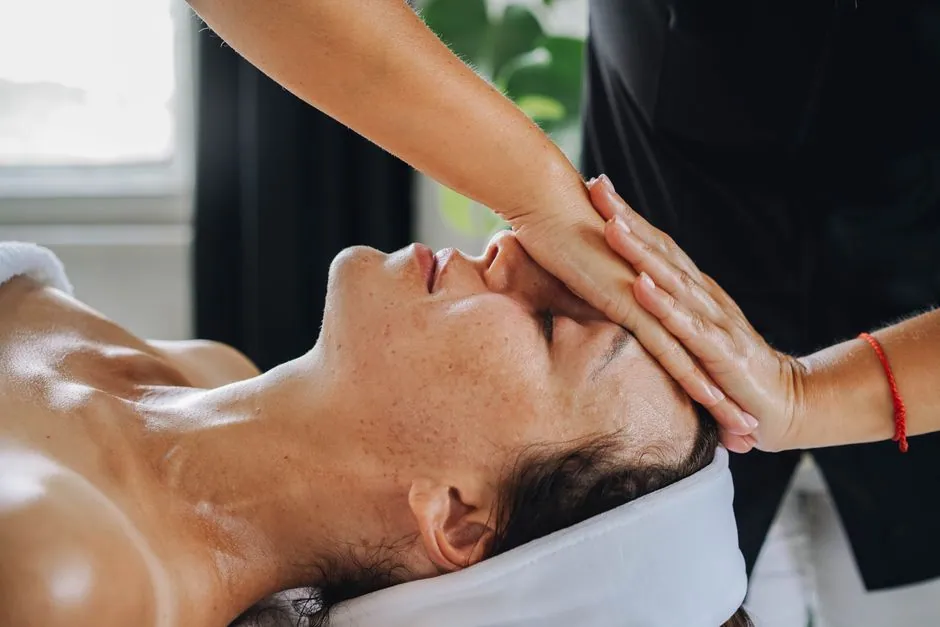
People use these terms interchangeably and then wonder why results do not match the promise. They work through different mechanisms on different timescales. Face yoga is muscle contraction — slow, cumulative, weeks to months. Facial massage moves fluid and releases tension — visible within minutes, gone within hours. Gua sha is tool-assisted massage; Cleveland Clinic notes it may increase microcirculation, while direct evidence for reducing facial puffiness is not established.
| Method | Mechanism | When you notice it | How long it lasts | Best used for | Avoid if |
|---|---|---|---|---|---|
| Face yoga (exercise) | Voluntary muscle contraction against finger resistance | 8–20 weeks of near-daily work | Only while you keep doing it | Cheek fullness, jaw and neck tone | Recent facial surgery or nerve injury without clearance |
| Facial massage | Lymphatic and blood flow, muscle relaxation | Within 5–10 minutes | A few hours | Morning puffiness, jaw clenching, tension headaches | Active acne, redness, open sores or bruising |
| Gua sha | Tool-assisted scraping; increases microcirculation | Immediately, as transient flushing | Hours | Adding glide and pressure control to massage | On blood thinners, pregnant, circulation problems, or if it hurts |
| Whole-body yoga | Breath, movement, stress reduction | Weeks | Sustained with practice | Sleep and stress, which show on the face | Unsupervised practice with recent injury |
A 12-minute face yoga exercise routine, hold by hold
A usable face yoga exercise routine takes 10–12 minutes and covers forehead, eyes, cheeks, mouth and jaw. Do it on clean skin with a few drops of coconut, almond or sesame oil so your fingers glide instead of dragging. Two non-negotiables: never pull skin that does not want to move, and never squeeze your eyes or crease your forehead to create the contraction.
| # | Move | Area worked | Reps × hold | Rest | Form cue |
|---|---|---|---|---|---|
| 1 | Warm-up strokes | Whole face, neck | 1 × 60 sec | — | Upward and outward only, jaw to temple |
| 2 | Brow smoother | Frontalis, glabella | 3 × 10 sec | 10 sec | Fingers pin the brows down; try to lift them anyway |
| 3 | Eye press | Orbicularis oculi | 3 × 8 sec | 10 sec | Index fingers at outer corners; squint gently, no scrunching |
| 4 | Cheek lift | Zygomaticus, buccinator | 3 × 15 sec | 15 sec | Smile with lips closed, knuckles push down under cheekbones |
| 5 | Fish face | Buccinator, orbicularis oris | 3 × 10 sec | 10 sec | Suck cheeks in, try to smile against it |
| 6 | Puffed-cheek shift | Cheeks, lips | 4 × 5 sec each side | 10 sec | Move air left, right, up; keep lips sealed |
| 7 | Chin lift and hold | Platysma, suprahyoids | 3 × 10 sec | 15 sec | Tongue flat on palate, chin slightly up, swallow once |
| 8 | Neck sweep finish | Platysma, jawline | 1 × 60 sec | — | Light downward strokes, collarbone direction |

Face yoga for double chin and a slimmer-looking jawline
Face yoga for double chin targets the platysma and the muscles under the tongue, and it can improve how tightly that sheet of muscle holds. What it cannot do is remove submental fat. If the fullness under your chin is fat, no amount of slim face yoga will shift it, because spot reduction of fat is not physiologically possible anywhere on the body. Two honest wins are available: better tone through moves 7 and 8, and better posture. Sustained forward head position, which most of us hold over a phone for hours, makes any chin look heavier the moment it happens.
Before and after face yoga: what 12 weeks realistically looks like
Expect nothing visible for the first month. The trial that produced the “three years younger” figure ran for 20 weeks at 30 minutes a day for the first eight, and even then the measured change was modest and limited mainly to cheek fullness. Anyone showing you a dramatic before and after face yoga photo at two weeks is showing you lighting, angle and hydration, not muscle.

| Phase | Frequency | What genuinely changes | What does not | How to check |
|---|---|---|---|---|
| Weeks 1–2 | 10 min daily | Jaw feels less clenched; less morning puffiness | Nothing structural | Note tension, not looks |
| Weeks 3–6 | 10–15 min daily | Muscles fatigue less; holds get easier | Wrinkle depth, skin laxity | Time how long you can hold move 4 |
| Weeks 7–12 | 15 min daily | Possible small change in cheek fullness | Fat pads, jaw bone shape | Fixed-angle photo, same light, same time of day |
| Weeks 13–20 | 15 min, alternate days | Whatever you gained is maintained | Anything you stop doing | Compare week 20 to week 1 only |
Track it properly or do not track it at all: same window, same time of morning, no makeup, neutral expression, phone at eye level. Day-to-day variation in facial puffiness easily exceeds anything 12 weeks of exercise will produce, which is exactly how misleading before-and-afters get made.
Face yoga for glowing skin: the four inputs that outrank it
Face yoga for glowing skin works mainly through circulation and stress reduction, and both effects are real but short-lived. If “glow” is your goal, four other inputs move the needle far more, and none of them is optional if you want the exercises to show on a face that is otherwise being damaged daily.

Sun protection. Mayo Clinic recommends broad-spectrum SPF 30 or higher, reapplied every two hours and used every day, year round — including through windows. The NHS adds at least 4-star UVA protection and says to take UV seriously once the index reaches 3. Across most Indian cities the UV index sits well above 3 for a large part of the year, so daily use is not a seasonal decision here.
Not smoking. Mayo Clinic states plainly that smoking damages skin fibres, causing sagging and wrinkles, and that quitting improves skin tone.
Moisturiser. A daily moisturiser traps water in the skin and makes fine lines less noticeable. That effect is immediate and honest — it is also temporary, which is why it has to be daily. Air-conditioned offices make this more important, not less.
Sleep and stress. Puffiness, dullness and a heavier-looking face track sleep and stress far more tightly than muscle tone. This is where the wider practice earns its place: NCCIH’s evidence summary cites a 2020 review of 12 studies and 672 participants showing consistent benefit for perceived stress, and notes yoga has helped sleep in multiple study populations. Ten minutes of daily yoga or a short meditation practice will probably do more for how your face looks at 8am than the facial exercises will. If your skin has changed alongside your diet, a nutrition consultation is a more direct route than any facial routine.
Troubleshooting: wrinkles, dark circles and the mistakes that backfire
Does face yoga for wrinkles actually reduce lines?
Face yoga for wrinkles has the weakest evidence of any claim on this page. Expression lines form where a muscle repeatedly folds the skin above it — which means contracting that same muscle harder, on purpose, is not obviously a fix. The 2018 trial reported no meaningful change in most wrinkle measures; the gains were in cheek fullness. The practical rule: exercises that contract a muscle without creasing skin are fine, and any move that makes you scrunch your forehead or squeeze your eyes shut is worth dropping.
Can face yoga for dark circles help?
Face yoga for dark circles helps only when the cause is fluid. Gentle tapping and outward strokes under the eye can reduce morning puffiness within minutes. But under-eye darkness in Indian skin is very often pigmentation or thin skin showing the vasculature beneath, and neither responds to exercise. If the shadow is there at every hour of the day regardless of sleep, see a dermatologist rather than adding reps.
Do you need a gua sha, roller or any tool?
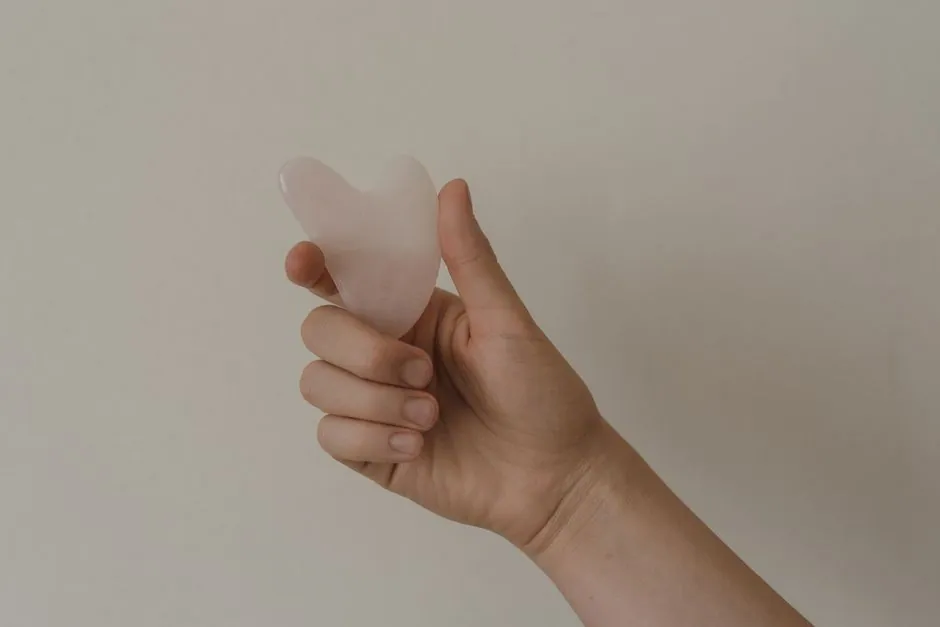
No. Clean hands and a little oil do the job. If you like a tool, use it for glide and even pressure, not force. Cleveland Clinic’s guidance is the one to remember: if it hurts, you are not getting a beneficial treatment. Skip tools entirely if you are pregnant, on blood thinners, have circulation problems, or have active acne, redness or broken skin.
Instead of hunting for a face yoga exercises PDF, use this weekly split
Most people searching for a face yoga exercises PDF want one thing: a schedule they do not have to think about. Monday, Wednesday and Friday, do the full eight-move routine, about 12 minutes. Tuesday and Thursday, do moves 1, 4, 7 and 8 only — cheeks, jaw and neck — about six minutes. Saturday, do massage and tool work with no contractions, giving the muscles a genuine rest day. Sunday, take it off entirely and take your progress photo.
That structure matters more than any downloadable chart, because the single largest predictor of whether this works for you is whether you are still doing it in week 12. Six honest minutes on a Tuesday beats a perfect 30-minute session you abandon in March.
Face yoga for anti ageing after 40, and for men
Face yoga for anti ageing has its clearest rationale in the 40–65 age band, because that is the only group ever studied. Facial volume loss and muscle atrophy both increase with age, so exercise that maintains muscle mass has a plausible mechanism. What it does not do is address the two dominant drivers of visible facial ageing, which are cumulative UV damage and bone remodelling. Treat it as one input among several rather than the whole plan.
For men, the routine is identical — facial anatomy does not differ — with one practical note: do the exercises before shaving rather than after, since freshly shaved skin plus oil and friction is an easy route to irritation.
Two groups should talk to a doctor before starting: anyone with a facial nerve condition such as Bell’s palsy or trigeminal neuralgia, and anyone recovering from facial surgery or a recent injury. If you have had botulinum toxin or fillers, ask the clinician who treated you when it is safe to resume firm massage over treated areas — timing advice varies and only they know what was placed where. Face yoga is not a reason to change or stop any prescribed treatment.
Frequently asked questions about face yoga
How many days does face yoga take to show results?
Plan on 8–12 weeks of near-daily practice before anything is visible in a photo. In the 2018 JAMA Dermatology pilot, participants did 30 minutes daily for eight weeks and then alternate days to week 20, and the rated change was about three years younger with fuller cheeks. Nothing credible happens in two weeks.
Can face yoga reduce a double chin without weight loss?
Only partly. Face yoga for double chin can improve tone in the platysma and the muscles under the tongue, which can tighten how that area sits. It cannot remove submental fat, because spot fat reduction does not work anywhere on the body. If fat is the cause, overall body composition and posture are the levers.
Does face yoga cause wrinkles?
Not if you do it without creasing skin. Expression lines form where skin folds repeatedly over a contracting muscle, so any move that requires you to scrunch your forehead or squeeze your eyes shut is worth avoiding. Use finger resistance to isolate the muscle and keep the skin above it smooth.
Is face yoga safe if I have had Botox or fillers?
Ask the clinician who treated you before resuming, especially firm massage over treated areas. Guidance on timing varies by product and placement, and only the person who performed the procedure knows both. Never stop or alter a prescribed treatment in order to do facial exercises.
Should I use oil, a gua sha or a roller?
A few drops of coconut, almond or sesame oil is enough; tools are optional. Cleveland Clinic notes that gua sha may increase microcirculation but that evidence for reducing facial puffiness is not established, and warns against it if you are pregnant, on blood thinners or have circulation problems. If a tool hurts, you are pressing too hard.
Can face yoga fix dark circles?
Only the fluid-related component. Gentle under-eye tapping can reduce morning puffiness within minutes, but pigmentation and visible blood vessels under thin skin will not respond to exercise. Darkness that is present all day, independent of sleep, should be assessed by a dermatologist.
Is face yoga useful for men?
Yes, and the routine is unchanged, since facial anatomy does not differ by sex. Do it before shaving rather than after to avoid irritating freshly shaved skin. With a beard, prioritise the chin lift and neck sweep, where fingers reach muscle rather than hair.
What is the best time of day to do face yoga?
Morning suits the massage and de-puffing strokes, since fluid has pooled overnight; evening suits the contraction work, when you are less rushed and can hold positions properly. Consistency beats timing — in the only trial with a measurable result, 11 of 27 women dropped out before week 20.
Where to take this next
Give it 12 honest weeks, 12 minutes a day, with a fixed-angle photo on day one and day 84, and judge it on that. Pair it with sunscreen every morning and a breathing or movement practice in the evening, because those two do most of the work face yoga gets credited for. If you want the breathing, posture and stress side taught properly rather than picked up from clips, Fitstrot’s online yoga classes run live with a trainer who can correct you in real time — book a single session first and decide from there.


