
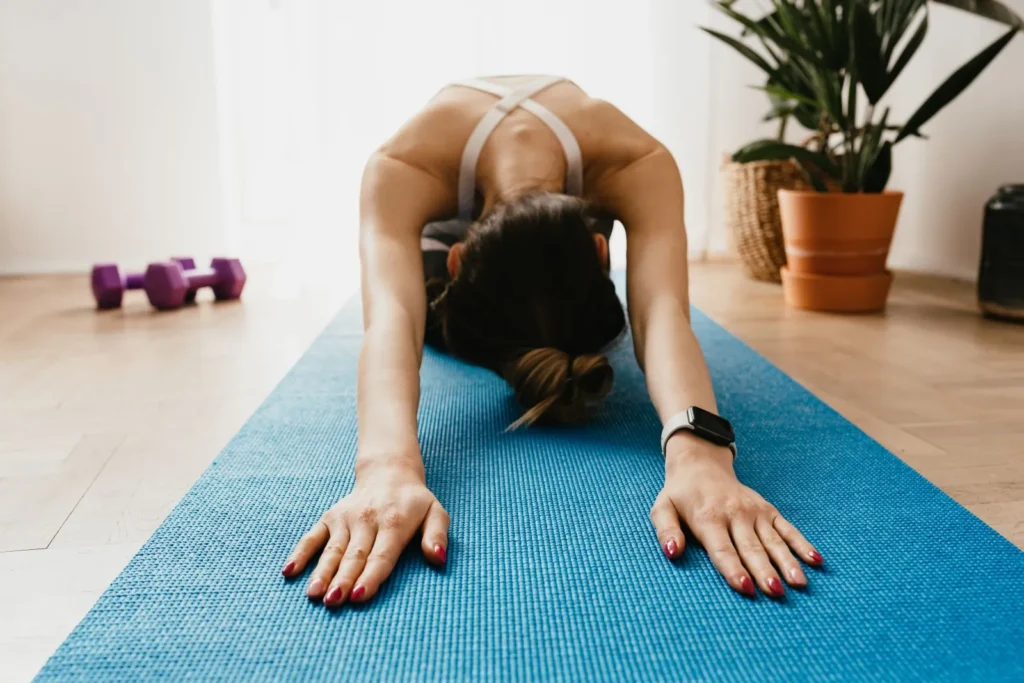
Restorative yoga is the slowest style on any yoga timetable: you settle into about four to six fully supported poses and stay in each for roughly 5 to 20 minutes, while bolsters, blankets and a wall do the holding. There is no stretching to your limit, no sweat and no flow. If you have wondered about the restorative yoga meaning, how it differs from yin yoga, or what you can safely do on a small patch of floor tonight, this guide gives you the poses, the props, a 30-minute home routine and the safety checks that matter.
What is restorative yoga, and what does the name mean?
Restorative yoga is a passive style where props fully support your body in a few poses held for about 5 to 20 minutes each. The word “restorative” describes the aim: helping your nervous system settle from alert and tense to calm and slow, so the body can rest and recover rather than build strength or flexibility.
The prop-based approach grew out of the alignment-focused teaching of B.K.S. Iyengar, who used blocks, belts and bolsters so that students of every ability could hold poses safely. Teachers in the 1970s and 1980s, including Judith Lasater, adapted those props for deep rest instead of alignment work, and the style spread from there. It is a modern therapeutic practice, not an ancient sequence.
What sets it apart is the absence of effort. If you are working to stay in a pose, the pose is not yet supported enough. A good setup lets you breathe slowly, soften your jaw and shoulders, and feel held rather than stretched.
Restorative yoga vs yin yoga vs other styles: a quick comparison
| Style | Main aim | Typical hold | Poses per session | Stretch sensation | Effort level |
|---|---|---|---|---|---|
| Restorative yoga | Deep rest, calming the nervous system | 5-20 minutes | About 4-6 | None, fully propped | Very low |
| Yin yoga | Gentle tension in hips, spine, connective tissue | 3-5 minutes | About 6-10 | Mild, at the edge of comfort | Low to moderate |
| Hatha yoga | Posture, breath, basic strength and flexibility | 30-60 seconds | About 12-20 | Moderate | Moderate |
| Vinyasa yoga | Flowing movement linked to breath, stamina | A few breaths | 20 or more | Moderate to strong | Moderate to high |
The simplest test: if you feel a stretch, you are in yin or hatha territory. If you feel like you could sleep, you are in restorative yoga.
For heat and exertion, look at Ashtanga, Bikram, hot yoga or power yoga. Aerial yoga uses a hammock but still asks for active control, and kundalini yoga mixes movement, breathwork and chanting. None of these replaces the pure rest that restorative yoga offers, and many people pair one active session with one restorative session each week.
Myth check: “If I am not stretching or sweating, nothing is happening”
This is the most common reason people skip restorative yoga, and it mixes up two different goals. Stretching and sweating build fitness and flexibility. Restorative yoga does neither, and it is not meant to. Its job is recovery, and recovery is when tired muscles and a busy mind settle.
Think of it like sleep for your training week. You do not judge sleep by how hard you worked during it. If you finish a session feeling calmer, with a slower breath and looser shoulders, the practice has done its work.
A second myth is that it is “just lying down”. Lying on the floor is easy; building a setup that fully supports your spine, knees and head so that nothing needs to grip is a skill. Small adjustments, such as a folded towel under the back of the neck, change how deeply you can let go.
Restorative yoga poses: props, hold times and setup cues
| Pose | Props | Hold | Setup cue |
|---|---|---|---|
| Supported child’s pose (Balasana) | Bolster or 2-3 stacked pillows, folded blanket | 5-10 minutes | Knees wide, torso on the bolster, head turned to one side; switch sides halfway |
| Reclined bound angle (Supta Baddha Konasana) | Bolster, two blocks or rolled towels for the knees | 8-15 minutes | Soles together, knees resting on supports so the inner thighs feel no pull |
| Legs up the wall (Viparita Karani) | Wall, folded blanket under hips | 5-15 minutes | Hips a hand’s width from the wall, legs relaxed, arms open by your sides |
| Supported bridge | One block or firm cushion | 3-5 minutes | Place the support under the sacrum (the flat bone at the base of the spine), not the lower back |
| Supported side-lying rest | Pillow under head, pillow between knees | 5-8 minutes per side | Hug a pillow to the chest; keep the neck level with the spine |
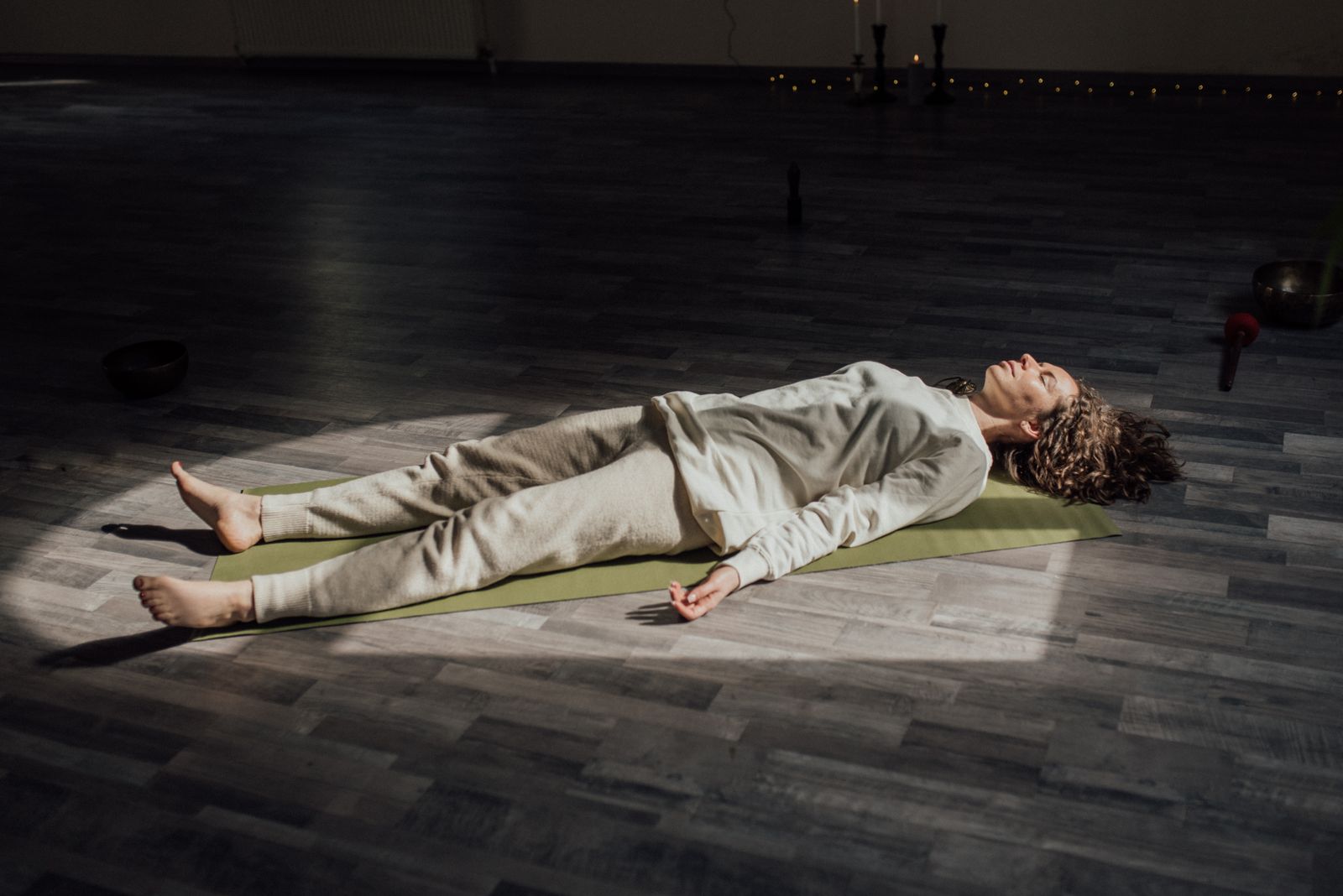
| Savasana with props | Bolster under knees, blanket over body, eye pillow | 5-10 minutes | Cover up, because body temperature drops when you lie still |
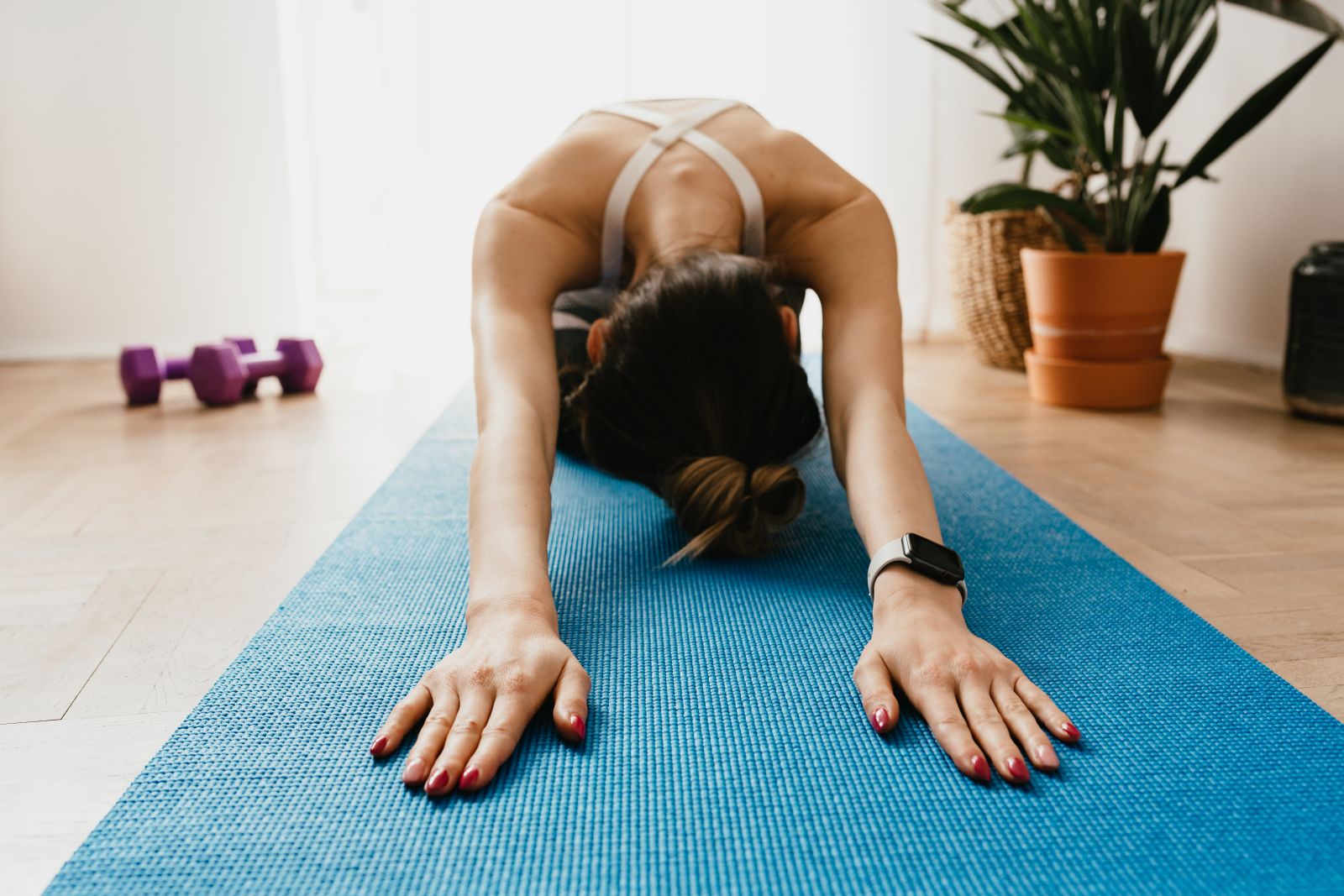
These restorative yoga poses are the usual building blocks, and a session rarely uses more than four or five of them. Fewer poses held longer is the whole idea, so resist the urge to add more.
What can you use instead of a bolster at home?
A firm sofa cushion, two or three stacked bed pillows, or a thick blanket or dari rolled tightly can replace a bolster. Folded bath towels work as blocks and a light shawl as a blanket. Most Indian homes already have everything needed, plus a clear wall and a mat or dari on the floor.
- Bolster: a firm sofa cushion, two or three bed pillows stacked, or a thick blanket or dari rolled tightly and tied with a dupatta.
- Blocks: thick hardback books wrapped in a towel, or folded bath towels.
- Blanket: a light shawl or cotton bedsheet folded in four; add a second one if your ceiling fan is on.
- Eye cover: a clean folded handkerchief or a soft scarf laid over the eyes, kept light.
- Mat: a regular yoga mat or a thick dari on the floor. Avoid slippery tiles without something underneath.
If you want a teacher to check your setup, a live online yoga class is an easy way to learn prop placement without leaving home.
A 30-minute restorative yoga routine at home, minute by minute
Pick a quiet time, ideally at least two hours after a heavy meal. Dim the lights, silence your phone, keep a blanket close, and set a soft timer so you are not watching the clock.
| Minutes | Step | What to do |
|---|---|---|
| 0-2 | Arrive | Lie down on your back, knees bent. Breathe in through the nose for about 4 counts and out for about 6, with no strain |
| 2-7 | Supported child’s pose | Bolster under the chest and head, turn your head to one side at the halfway mark |
| 7-15 | Reclined bound angle | Soles together, knees supported, hands resting on the belly or open at your sides |
| 15-23 | Legs up the wall | Blanket under the hips, eyes closed, let the legs feel heavy |
| 23-30 | Savasana | Bolster under the knees, blanket over you, normal breathing. Come out by rolling to one side and pausing before you sit up |
Start with two or three poses if 30 minutes feels long; a 15-minute version of legs up the wall plus savasana still counts. Do not push through a pose that hurts to complete the timer.
Troubleshooting: when a restorative pose feels wrong
- You feel a stretch or pull. Add more support. Raise the knees on a block, stack another pillow, or bend the knees. A restorative pose should never feel like stretching.
- Your lower back aches in reclined poses. Slide a folded blanket under the knees or bend them, and bring the bolster closer to the hips.
- Your legs tingle in legs up the wall. This is common and usually harmless. Bend the knees, slide down a little further from the wall, or come out and lie flat for a minute. Stop if tingling turns into numbness or pain.
- You cannot stay still or your mind races. That is normal at first. Count your exhales up to ten, then start again. A shorter hold of 3 to 5 minutes works better than forcing 20.
- You fall asleep. Fine at night, and a sign you needed rest. If you want to stay awake, practise earlier in the evening.
- You feel cold or restless. Add a layer or socks. If the room is warm, use a thin cotton sheet.
- You feel dizzy when you come up. Roll to your side, rest for a few breaths, then use your hands to push up slowly.
Can restorative yoga help with sleep and stress?
Restorative yoga can help many people wind down because slow breathing and fully supported rest encourage the body’s relaxation response. A short evening session of 15 to 30 minutes, practised on most days for several weeks, often makes it easier to switch off. It is a helpful habit, not a cure for insomnia or anxiety.
Poses such as legs up the wall and propped savasana suit a pre-bed routine. Pair them with a regular bedtime, a dim room and a phone left outside the bedroom.
If poor sleep, constant worry or low mood has lasted more than a few weeks, or is affecting work and daily life, speak to a doctor or mental health professional. Restorative yoga can sit alongside treatment, but it should not replace it.
Who should try restorative yoga, and who should check with a doctor first?
It suits people with demanding jobs, busy students, those who train hard and need a recovery day, anyone who finds faster classes intimidating, and many older adults. It is not designed for building fitness, so if you want cardio or strength, look at vinyasa or online Zumba classes instead.
See your doctor first if any of these apply, and tell your teacher too:
- Pregnancy. Lying flat on your back for long periods is usually avoided later in pregnancy, and supports need adjusting. Ask your doctor and learn from a teacher trained in prenatal yoga.
- Injuries or recent surgery. Spine, hip, knee, shoulder or neck problems, and any recovery period after an operation, need personal advice on which poses and supports are safe.
- High or low blood pressure. Poses with legs raised above the heart, such as legs up the wall, are not suitable for everyone. If you take blood pressure medication, or have heart disease or glaucoma, ask first. Never change or skip medicines because of yoga.
- Acid reflux, a hiatal hernia, or serious eye or heart conditions. Raised-leg and reclined poses can aggravate symptoms.
Stop and come out slowly if you feel dizzy, short of breath, chest discomfort, sharp pain or numbness. Pain is not part of a restorative pose.
How often should you practise restorative yoga?
Most people do well with restorative yoga 1 to 3 times a week for 20 to 40 minutes, with a short 10 to 15 minute version on busy days. Because it asks for almost no physical effort, you can practise it daily during stressful periods without the recovery limits that apply to harder yoga styles.
It burns little more than resting energy, so do not rely on it for weight loss. Use it to recover from your training days, and keep your calorie-burning work in activities such as brisk walking, strength training or Zumba.
Restorative yoga FAQ
How long should you hold restorative yoga poses?
Most restorative yoga poses are held for about 5 to 20 minutes. Beginners at home can start with 3 to 5 minutes per pose and build up. A full class usually has only 4 to 6 poses, so a 60-minute session spends most of its time on very few shapes.
Can beginners do restorative yoga?
Yes. It needs no flexibility, strength or yoga experience, which makes it a common first class for people who find faster styles daunting. The main skill is learning to be still. Start with two or three poses, use plenty of support, and ask a teacher to check your setup.
Is restorative yoga good for weight loss?
Not on its own. Restorative yoga uses only slightly more energy than lying down, so it will not create a meaningful calorie deficit. It can still help weight management indirectly by improving sleep and lowering stress, as long as you also eat sensibly and stay active with more energetic exercise.
Is restorative yoga safe during pregnancy?
It can be gentle and suitable, but only with your doctor’s approval and the right adjustments. Long periods flat on your back are generally avoided later in pregnancy, and deep twists or compressing the belly should be skipped. Learn from a teacher with prenatal training rather than copying a general video.
Can I do restorative yoga before bed?
Yes, and many people prefer it at night. Try 15 to 20 minutes with legs up the wall and a propped savasana, in a dim room and with your phone away. Keep a blanket handy, avoid a heavy dinner just before, and roll to your side before standing.
Try a guided restorative session
If you would like a teacher to check your props and pacing, join a guided session through Fitstrot online yoga classes and ask for a restorative or gentle class suited to your needs and any health conditions.


