

Ashtanga yoga is one of the most searched yoga terms in India, and one of the most confused. Type it into Google and you get two different answers. One is Maharishi Patanjali’s eight-limbed path from the Yoga Sutras. The other is the sweaty, breath-linked sequence taught in Mysore by K. Pattabhi Jois. Both are called “Ashtanga”, and both matter. This guide separates the two, walks through the Primary Series, shows what research does and doesn’t prove, and gives you a safe 8-week starting plan.
What Is Ashtanga Yoga, and Why Are There Two Answers?
Ashtanga yoga means “eight-limbed yoga”. In its original sense it is Patanjali’s framework of eight practices, from ethics (yama) to absorption (samadhi), set out in the Yoga Sutras. In modern studios it usually means Ashtanga Vinyasa Yoga, a fixed, breath-synchronised pose sequence popularised by K. Pattabhi Jois in Mysore from 1948.
The second borrows its name from the first: Pattabhi Jois taught the sequence as the third limb (asana), practised so that it trains breath, focus and concentration. When a teacher in Bengaluru says “Ashtanga class”, they mean mats and sun salutations. When a Class 11 physical-education textbook says “Ashtanga yoga”, it means the eight limbs. Neither is wrong.
| Feature | Patanjali’s Ashtanga (eight limbs) | Ashtanga Vinyasa Yoga (Mysore system) |
|---|---|---|
| Source | Yoga Sutras, Sutra 2.29 (roughly 2,000 years old; exact dating debated) | K. Pattabhi Jois, student of T. Krishnamacharya; taught in Mysore from 1948 |
| What it is | A step-by-step path for the mind: ethics, discipline, posture, breath, withdrawal, concentration, meditation, absorption | Six fixed series of postures linked by breath (Primary, Intermediate, four Advanced) |
| Physical content | Asana is one limb of eight; posture only needs to be “steady and comfortable” (Sutra 2.46) | Physically demanding; the Primary Series alone takes about 90 minutes |
| Where you meet it | School syllabi, competitive exams, philosophy courses, meditation retreats | Yoga shalas, Mysore-style rooms, led classes, online live classes |
| Goal | Stilling the fluctuations of the mind (Sutra 1.2) | Strength, flexibility and focus used as a doorway to the same inner goal |
| Who it suits | Anyone, at any fitness level, including people with limited mobility | Healthy adults willing to practise 3 to 6 days a week and progress slowly |
The 8 Limbs of Ashtanga Yoga, Translated for Daily Life
The 8 limbs of Ashtanga yoga are yama (ethical restraints), niyama (personal observances), asana (posture), pranayama (breath regulation), pratyahara (withdrawing the senses), dharana (concentration), dhyana (meditation) and samadhi (absorption). Patanjali lists them in Yoga Sutra 2.29. The first five are “external” practices; the last three are internal states.
Most people only touch limb three. Here is what each looks like on an ordinary weekday.
| # | Limb | Meaning | Parts | What it looks like on a Tuesday |
|---|---|---|---|---|
| 1 | Yama | Ethical restraints toward others | Ahimsa (non-harm), Satya (truth), Asteya (non-stealing), Brahmacharya (moderation), Aparigraha (non-greed) | Not forcing a tight hamstring deeper (ahimsa applies to you too) |
| 2 | Niyama | Personal observances | Shaucha (cleanliness), Santosha (contentment), Tapas (discipline), Svadhyaya (self-study), Ishvara pranidhana (surrender) | Showing up at 6 am on a mat you unrolled the night before (tapas) |
| 3 | Asana | Steady, comfortable posture | Sthira (steadiness) + sukha (ease) | Your 30-minute practice, or simply sitting upright at your desk |
| 4 | Pranayama | Regulation of breath | Inhale, exhale, retention | Five slow breaths before a difficult work call |
| 5 | Pratyahara | Withdrawing the senses | Turning attention inward | Phone face-down and notifications off during practice |
| 6 | Dharana | Concentration on one point | Single-pointed focus | Keeping your gaze on the drishti point for a full five breaths |
| 7 | Dhyana | Meditation | Unbroken flow of attention | A 10-minute sit where focus holds without effort |
| 8 | Samadhi | Absorption | Observer and object merge | The goal of the path, not a weekly target |
A 2022 Indian randomised trial took this philosophy seriously. Researchers gave 62 adults with abdominal obesity the same 12-week yoga protocol, but one group also received fortnightly sessions on Ashtanga principles such as yama and niyama. That group showed significantly better changes in BMI and hip circumference and improved quality-of-life scores (Mewada et al., International Journal of Yoga, 2022).
How Does the Mysore Method Actually Work?
In Ashtanga Vinyasa Yoga, every movement is paired with one breath, poses are held for about five breaths, and the sequence never changes. Students either follow a teacher’s count in a “led class” or practise from memory at their own pace in a “Mysore-style” room, where the teacher adjusts each person and adds new poses one at a time.
Pattabhi Jois called the three anchors of practice tristhana: breath, bandha and gaze.
Ashtanga yoga vinyasa: breath, bandha and drishti
- Vinyasa (breath-linked movement): each transition has a numbered breath. Surya Namaskar A has 9 vinyasas; B has 17. Inhale to lift, exhale to fold.
- Ujjayi breathing: slow, audible breath through the nose with a slight constriction in the throat. Aim for inhales and exhales of equal length, around 4 to 5 seconds each.
- Bandhas: gentle engagement of the pelvic floor (mula bandha) and lower abdomen (uddiyana bandha). Think of it as a light brace, not a crunch.
- Drishti: a fixed gaze point for every pose, such as the nose, thumb or navel. There are nine in total. It trains dharana, the sixth limb, while you move.

Sun salutation in Ashtanga yoga: A and B
Every Ashtanga practice starts with sun salutations: traditionally 5 rounds of Surya Namaskar A and 3 to 5 rounds of Surya Namaskar B. A is the familiar forward fold, plank (Chaturanga), upward dog and downward dog sequence. B adds Utkatasana (chair) and Virabhadrasana A (warrior I) on each side, which makes it noticeably harder on the thighs and shoulders. Managing only 3 rounds of A in week one is normal; add rounds over time.
Mysore-style vs led class
In a led class, the teacher counts the vinyasas out loud in Sanskrit and everyone moves together. Good for learning rhythm. In Mysore style, everyone practises their own point in the sequence silently, and the teacher walks the room. Slower, but far more individual. Traditional shalas practise six days a week, rest on Saturdays, and skip full-moon and new-moon days.
Ashtanga Yoga: The Primary Series at a Glance
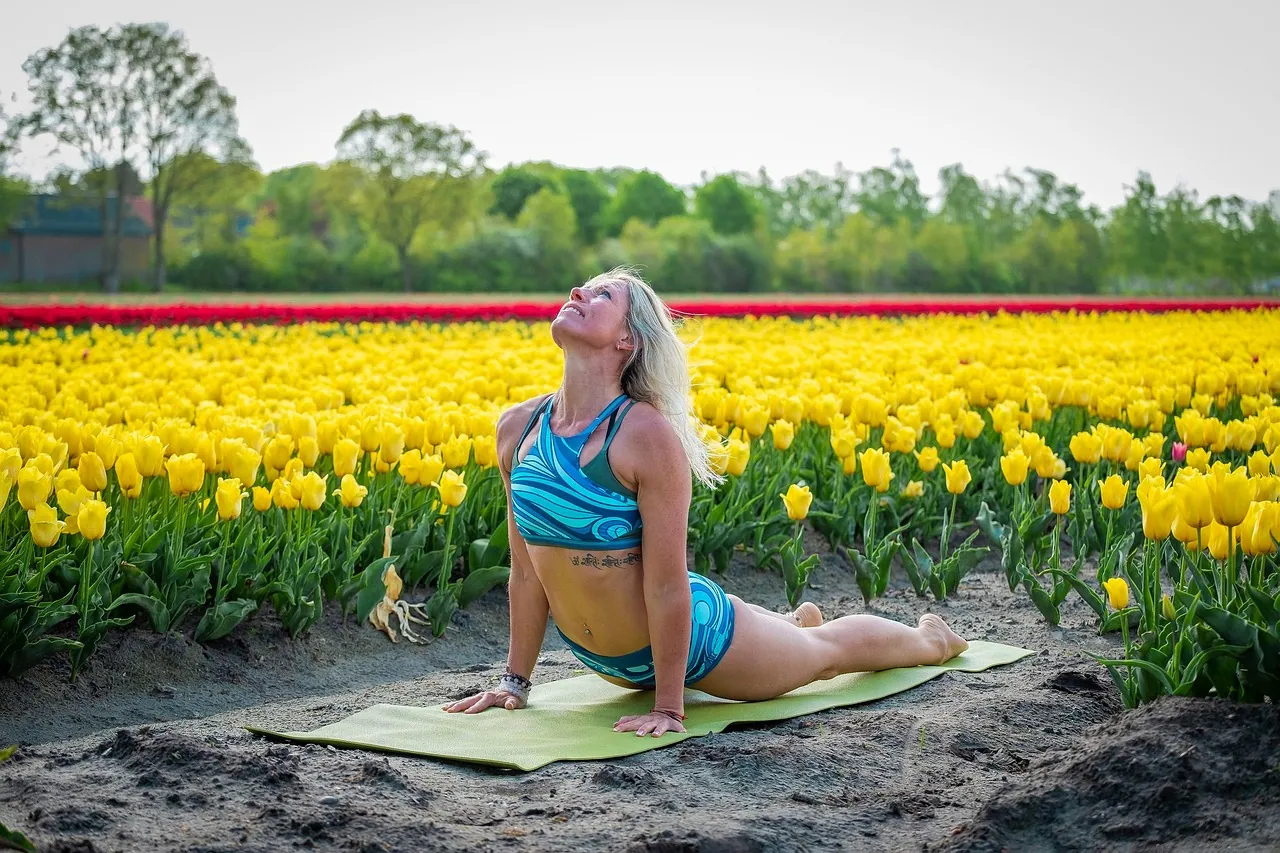
The first series is called Yoga Chikitsa, which means “yoga therapy”. It is built around forward bends and hip openers meant to realign the spine and detoxify the body. Cleveland Clinic describes Ashtanga as “an intense form of yoga” with a fixed order of poses, and notes the Primary Series takes about 90 minutes (Cleveland Clinic). Most beginners start with a 45 to 60-minute “half primary”.
| Section | Key poses | Approx. time | What it trains | Beginner modification |
|---|---|---|---|---|
| Opening | Opening mantra, Surya Namaskar A (x5), Surya Namaskar B (x3–5) | 10–15 min | Heat, breath rhythm, shoulder and core endurance | Knees down in Chaturanga; step back instead of jumping |
| Standing | Padangusthasana, Trikonasana, Parsvakonasana, Prasarita Padottanasana A–D, Parsvottanasana, Utthita Hasta Padangusthasana | 15–20 min | Hamstring length, hip stability, balance | Bend knees in folds; use a block under the hand in triangle |
| Standing finish | Ardha Baddha Padmottanasana, Utkatasana, Virabhadrasana A and B | 5 min | Quad and glute strength, ankle stability | Skip half-lotus; do a tree-pose foot position instead |
| Seated | Dandasana, Paschimottanasana, Purvottanasana, Janu Sirsasana A–C, Marichyasana A–D, Navasana | 20–25 min | Forward bending, twisting, core strength | Strap around feet; sit on a folded blanket; skip lotus variations |
| Advanced seated | Bhujapidasana, Kurmasana, Supta Kurmasana, Garbha Pindasana, Baddha Konasana, Upavistha Konasana, Supta Padangusthasana, Setu Bandhasana | 15–20 min | Deep hip opening, arm balance, neck strength | Usually added only after months of consistent practice |
| Closing | Urdhva Dhanurasana, shoulder stand, Halasana, Matsyasana, Sirsasana, Padmasana, Utpluthih | 15–20 min | Backbend, inversion, calming the nervous system | Bridge instead of wheel; legs up the wall instead of shoulder stand and headstand |
| Rest | Savasana (Sukhasana) | 5–10 min | Recovery, pratyahara | Never skip it |
For step-by-step alignment of the individual postures in the table, our guide to common yoga poses breaks down form cues, props and mistakes for each.
Ashtanga Yoga Benefits: What the Research Actually Shows
Ashtanga has fewer trials than yoga in general, so Ashtanga-specific evidence comes first.
Strength: measurable gains in legs
In a randomised controlled trial, 34 premenopausal women aged 35 to 50 did 60-minute Ashtanga sessions twice a week for 8 months. The yoga group’s leg-press strength rose by 11.4%, while the control group’s dropped by 6.5% (Kim et al., Journal of Sports Science and Medicine, 2012). Arterial stiffness did not change.
Bone health: marker improved, density didn’t
The same research group found that a bone-formation marker (bone ALP) rose 9.1% in the Ashtanga group and fell 7.1% in controls over 8 months. But bone mineral density itself did not increase (Kim et al., 2015). A mixed result: it may support bone turnover, but it is not an osteoporosis treatment.
Balance
A 2015 pilot randomised trial gave legally blind adults (mean age 55) an 8-week Ashtanga-based programme. They showed significant improvements in postural stability on unstable surfaces compared with baseline (Jeter et al., PLOS ONE, 2015). The sample was only 21 people, so treat this as promising, not proven.
Stress, mood and blood pressure
For yoga in general, the US National Center for Complementary and Integrative Health reports that a 2020 review of 12 studies (672 participants) found benefits for stress, and a 2019 review of 38 studies found improvements in anxiety (NCCIH). Harvard Health notes that the slow, deep breathing practised in yoga can lower blood pressure by an average of about 5 points after a few months. It also classifies vigorous styles such as vinyasa and power yoga as moderate-intensity exercise (Harvard Health Publishing).
Does it count towards your weekly exercise target?
WHO recommends at least 150 minutes of moderate-intensity activity a week, and reports that 31% of adults worldwide (about 1.8 billion people) didn’t meet that level in 2022 (WHO physical activity fact sheet). Three 60-minute Ashtanga sessions a week gives you 180 minutes of mostly moderate effort, plus the muscle-strengthening work WHO also recommends.
Myth vs Reality: What People Get Wrong About Ashtanga
- Myth: “Ashtanga is only for flexible people.” Reality: the sequence builds flexibility over years, taught one pose at a time.
- Myth: “Patanjali invented the Primary Series.” Reality: Patanjali’s Sutras describe posture in just three short verses and name no specific poses. The sequences come from the 20th-century Mysore lineage.
- Myth: “If it doesn’t hurt, you’re not trying.” Reality: ahimsa, the very first yama, means non-harm. Joint pain or numbness means stop.
- Myth: “Ashtanga is a fast weight-loss workout.” Reality: it builds strength, but no trial shows dramatic weight loss from Ashtanga alone. Pair it with food changes. Our online nutritionist consultation handles that side.
Ashtanga Yoga Step by Step: An 8-Week Beginner Ramp
A safe way to start Ashtanga is to practise 3 days a week for the first 4 weeks, building from sun salutations and standing poses (about 30 minutes) to a 45 to 60-minute half primary by week 8. Add only one or two new poses a week, and skip lotus and headstand until a teacher has checked your form.
Practise on an empty stomach, 2 to 3 hours after eating; an early slot before chai and poha works well.
| Week | Sessions / week | Sequence | Rounds / holds | Rest | Form cue |
|---|---|---|---|---|---|
| 1 | 3 | Surya Namaskar A + 4 standing poses + Savasana (20 min) | 3 rounds A; hold poses 5 breaths | 1 full day between sessions | Knees down in Chaturanga; elbows track back, not out |
| 2 | 3 | Add Surya Namaskar B (25 min) | 4 rounds A, 2 rounds B | Child’s pose for 5 breaths between A and B | In Utkatasana, weight in the heels and knees behind toes |
| 3 | 3 | Full standing sequence to Parsvottanasana (30 min) | 5 A, 3 B; 5 breaths each pose | Rest day after each session | Soften knees in every forward fold; lengthen before folding |
| 4 | 3–4 | Add Utkatasana, Warrior A and B + closing (35 min) | 5 A, 3 B | Legs-up-the-wall 3 min before Savasana | Warrior A: back heel down, hips square |
| 5 | 4 | Add Dandasana, Paschimottanasana, Purvottanasana (40 min) | Seated holds 5 breaths | Take a half vinyasa (skip jump-throughs) | Fold from the hips; strap around feet if you round your back |
| 6 | 4 | Add Janu Sirsasana A and Marichyasana A (45 min) | 5 breaths each side | Sit on a folded blanket | Bent knee points out to the side, never forced down |
| 7 | 4 | Add Marichyasana C (twist) and Navasana (50 min) | Navasana 3–5 rounds of 5 breaths | Cross legs and lift through between rounds | Navasana: knees bent, chest lifted; spine long over leg height |
| 8 | 4–5 | Half primary: standing + seated to Navasana + closing (55–60 min) | Full breath count | At least 1 full rest day a week | Breath stays smooth; if ujjayi turns ragged, pause in child’s pose |
Repeat a week if any pose causes joint pain or your breath won’t settle.
Is Ashtanga Yoga Right for You?
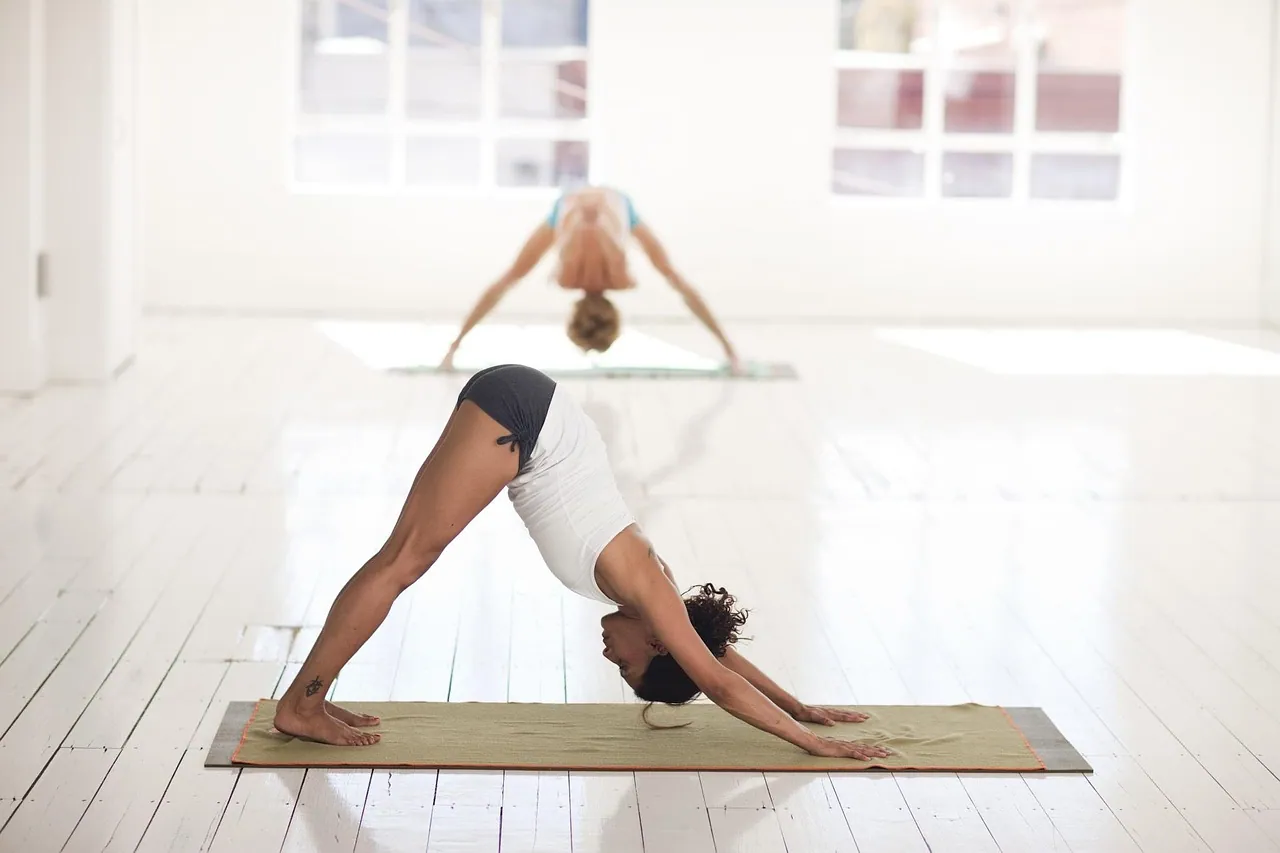
Ashtanga suits healthy adults who like structure, enjoy a physical challenge and can commit to at least 3 sessions a week. It is a poorer first choice for people with acute joint injuries, uncontrolled high blood pressure, glaucoma or balance problems, or during pregnancy without prior experience. These groups often do better with gentler hatha or restorative classes first.
- Good fit: runners and gym-goers wanting mobility, desk workers who like routine, anyone wanting a moving meditation.
- Proceed with a teacher: beginners over 50, people with past knee, wrist or lower-back injuries, and anyone with hypermobile joints (flexibility isn’t the same as stability).
- Check with your doctor first: NCCIH lists pre-existing knee or hip injuries, lumbar spine disease, severe high blood pressure, balance problems, glaucoma and pregnancy as situations where yoga needs modification (NCCIH).
Difference between hatha and Ashtanga yoga
Hatha is the umbrella term for physical yoga. Classes usually hold poses for several breaths, vary the sequence, and rest between poses. Cleveland Clinic calls it “excellent for beginners”. Ashtanga is a specific hatha lineage with a fixed order, continuous vinyasas and no pauses except Savasana. If you’re completely new, or recovering from injury, 4 to 8 weeks of hatha first builds the base Ashtanga assumes. If you’re already active and want a structured challenge, you can start Ashtanga directly with the modifications above.
When Something Hurts: Troubleshooting Common Ashtanga Problems
Injuries happen in yoga, but most are mild. A 2018 systematic review of 9 studies covering 9,129 practitioners found a 12-month prevalence of adverse events of 4.6%, with serious events in 1.9%. Sprains and strains were most common, and yoga practitioners had a higher risk of meniscus injury (odds ratio 1.72) than non-practitioners (Cramer et al., Journal of Science and Medicine in Sport, 2018). The meniscus finding matters for Ashtanga, which has many lotus and half-lotus variations.
- Wrist pain after vinyasas: spread your fingers wide and press through the knuckles at the base of your index finger. Keep knees-down Chaturanga for longer than you think.
- Knee pain in half-lotus or Marichyasana: the rotation should come from the hip, never the knee. If your foot won’t rest high on the opposite thigh without knee pressure, use a tree-pose or cross-legged position instead.
- Pulling at the sitting bone (hamstring attachment): this is a classic Ashtanga overuse injury from daily deep forward folds. Bend your knees in every fold for 2 to 4 weeks, cut back to 3 sessions a week, and see a physiotherapist if it lasts beyond a month.
- Lower-back ache: usually from rounding the spine to reach your toes in Paschimottanasana. Use a strap, keep the chest long, and let the hips do the folding.
- Plateau: normal. A 1-on-1 personal trainer can build the shoulder and core strength that jump-throughs and arm balances need.

Frequently Asked Questions About Ashtanga Yoga
What is Ashtanga yoga in simple words?
Ashtanga yoga means “eight-limbed yoga”. Traditionally it refers to Patanjali’s eight steps, from ethical living to deep meditation. Today it also means Ashtanga Vinyasa Yoga, a fixed sequence of poses linked with breath, taught by K. Pattabhi Jois in Mysore from 1948.
Who is the father of Ashtanga yoga?
Maharishi Patanjali is credited with the eight-limbed Ashtanga framework in the Yoga Sutras. The modern physical style, Ashtanga Vinyasa Yoga, was developed and popularised by K. Pattabhi Jois (1915–2009), a student of T. Krishnamacharya, at his Mysore institute.
How many days a week should a beginner practise Ashtanga?
Start with 3 sessions a week of 20 to 30 minutes, with a rest day between each. Build to 4 or 5 sessions and a 45 to 60-minute half primary over about 8 weeks. Traditional six-day practice is a long-term goal, not a starting point.
Is Ashtanga yoga good for beginners?
It can be, if you start with sun salutations and standing poses, use modifications and add poses slowly. Complete beginners with injuries or low fitness often do better with 4 to 8 weeks of hatha first, then move to Ashtanga.
How long does the Ashtanga Primary Series take?
The full Primary Series takes about 90 minutes at a traditional breath count. Many practitioners do a “half primary” of 45 to 60 minutes on weekdays, stopping after Navasana and moving straight to the closing sequence.
Can Ashtanga yoga help with weight loss?
Ashtanga is vigorous enough to count as moderate-intensity exercise and builds strength, but no trial shows large weight loss from Ashtanga alone. Combine regular practice with a calorie-appropriate diet if fat loss is your goal.
Is Ashtanga yoga safe for people with knee problems?
Only with modifications and medical clearance. A 2018 review found yoga practitioners had a 72% higher odds of meniscus injury than non-practitioners. Avoid forcing lotus and half-lotus, rotate from the hip, and use cross-legged alternatives.
Want to learn the Primary Series with a teacher who can see your form? Fitstrot’s live online yoga classes start beginners on sun salutations and standing poses, with modifications for wrists, knees and tight hamstrings. Book a trial session from home. If you’re still comparing options, see our round-up of the best online yoga classes first.


