
Most articles on the history of yoga open with the same sentence: “yoga is 5,000 years old.” It is repeated so often that it feels like a fact. It is actually an estimate stretched across a gap in the evidence — and the more interesting story is what we can date, text by text, century by century.
This page lays out the history of yoga the way a careful reader would want it: a timeline with the confident dates separated from the contested ones, the specific texts that changed what the word meant, the point at which physical postures moved to the centre of practice, and how 21 June ended up on the United Nations calendar. Where scholars disagree, we say so rather than picking the version that sounds most impressive. Every number below is attached to a source you can open.
How old is yoga, actually?
The oldest securely dated evidence for yoga is textual, not archaeological. References to yogic ideas appear in Vedic and Upanishadic literature composed roughly between 1500 and 500 BCE, and the first systematic manual — Patanjali’s Yoga Sutras — is dated by Britannica to either the 2nd century BCE or the 5th century CE. So yoga as a named discipline is roughly 2,000 to 3,500 years old, not 5,000.
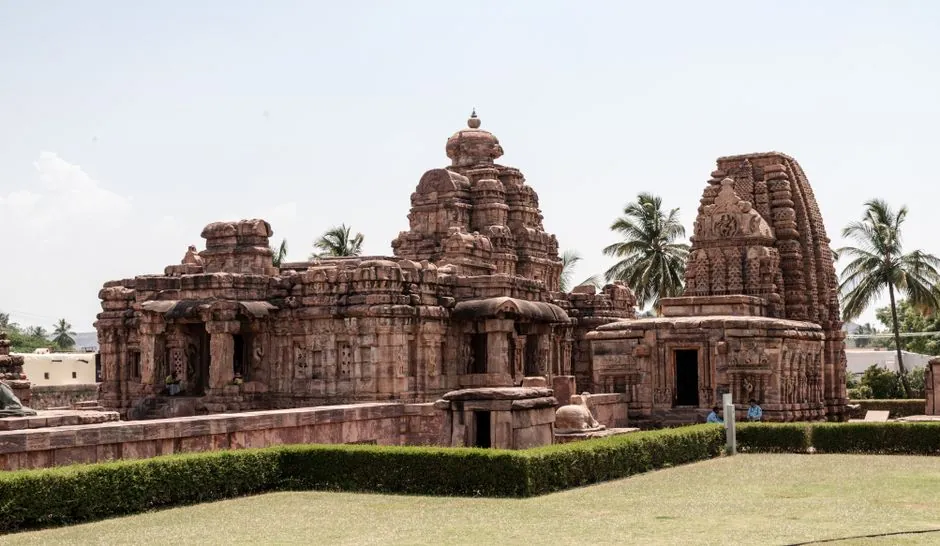
The 5,000-year figure comes from a different source entirely: seals excavated at Indus Valley sites, some showing a seated figure with legs folded and heels together. The Indus civilization’s core dates are about 2600–1900 BCE, which is where “5,000 years” comes from. The problem is not the date — it is the inference. A seal showing someone sitting cross-legged is evidence that people sat cross-legged. Nothing on the seal tells us they were practising a discipline with a name, a goal and a method. Serious historians treat it as suggestive, not decisive, and the honest version of the claim is: yoga’s possible roots reach back four to five millennia; its documented history begins with the Vedas.
The origin and history of yoga: a dated timeline you can check
The table below separates what is firmly dated from what is conventionally assumed. The “confidence” column is the part most timelines leave out, and it is the part that makes this one usable for a school project or a teacher-training assignment.
| Era | Approximate dates | What changed | How confident is the dating? |
|---|---|---|---|
| Indus Valley seals | c. 2600–1900 BCE | Seated, cross-legged figures appear on carved seals | Dates firm; the yoga interpretation is contested |
| Vedic period | c. 1500–500 BCE | Earliest references to yogic ideas; yoke/discipline framed around ritual | Broad range accepted; exact composition dates debated |
| Upanishadic period | c. 800–200 BCE | Shift from outer ritual to inner enquiry, breath and consciousness | Relative order clearer than absolute dates |
| Classical period (Patanjali) | 2nd century BCE or 5th century CE | The eight-limbed system is codified in the Yoga Sutras | Genuinely contested — a 700-year spread |
| Tantric and early hatha period | c. 8th–13th century CE | The body becomes the vehicle; energy channels, bandhas, kriyas | Texts survive; authorship often legendary |
| Classical hatha manuals | c. 15th century CE | Hatha Yoga Pradipika compiles postures, pranayama and cleansing | Conventional dating; no manuscript carries a date |
| Colonial-era revival | Late 1800s – 1940s | Yoga reframed for public teaching, schools and physical culture | Well documented |
| Global posture era | 1950s – present | Named styles, studios, teacher training, online classes | Well documented |
Read down the “confidence” column and a pattern appears. Yoga’s philosophy is old and traceable. Yoga’s posture sequences — the part most people mean when they say “yoga” today — are the newest layer of all.
Four claims about yoga’s history that don’t survive scrutiny
“Yoga is exactly 5,000 years old.” No text supports a precise figure. The number is reverse-engineered from Indus-era archaeology and then quoted as though it were a birth certificate. A defensible statement is “over 2,500 years of documented practice, with possible roots considerably older.”
“Patanjali invented yoga.” He systematised it. The Yoga Sutras run to 196 sutras arranged in four chapters, and they organise ideas that were already circulating. Patanjali is better described as yoga’s great editor than its inventor.
“The Yoga Sutras are a posture manual.” They are not. Of the eight limbs Britannica lists — ethical restraints, disciplines, asana, pranayama, pratyahara, dharana, dhyana and samadhi — only one is posture, and the text says little about which postures. The word asana there means a steady seat for meditation, not a sequence of standing poses. If you want the philosophical core, our explainer on chitta vritti covers the definition the sutras actually open with.
“Modern styles are unchanged ancient practice.” Every widely taught style today was shaped in the twentieth century, often deliberately, for classrooms and public demonstration. That does not make them inauthentic — traditions have always adapted — but it does make the “unbroken 5,000-year lineage” marketing line false.
The history of yoga in India: the texts that moved the definition
You can track the history of yoga in India by watching one question get answered differently across six texts: what is the practice actually for? Each answer reshaped the method.
| Text | Approx. period | What it added | Where you still see it |
|---|---|---|---|
| Rig Veda and later Vedas | c. 1500–900 BCE | The root yuj — to yoke, to join; discipline tied to ritual | The word “yoga” itself; chanting practices |
| Principal Upanishads | c. 800–200 BCE | Turn inward: breath, senses, the self behind thought | Pranayama; the rationale for meditation |
| Bhagavad Gita | c. 2nd century BCE (within the Mahabharata) | Yoga as several valid paths — action, knowledge, devotion | Karma, jnana and bhakti yoga as living categories |
| Patanjali’s Yoga Sutras | 2nd c. BCE or 5th c. CE | 196 sutras; the eight-limbed method; a defined goal | Ashtanga’s ethical framework; teacher-training syllabi |
| Hatha and tantric texts | c. 11th–15th century CE | The physical body as the instrument; locks, cleansing, energy work | Bandhas, kriyas, most pranayama taught today |
| Hatha Yoga Pradipika | c. 15th century CE | A compiled, teachable manual of postures and breath | The direct ancestor of studio hatha classes |
Two of those branches are still taught as complete paths in their own right. If the Gita’s framing interests you, our guides to jnana yoga and karma yoga take each one on its own terms rather than as a footnote to posture practice.

The history of yoga asanas: when did postures take over?
Postures moved to the centre of yoga in the hatha period, roughly the 11th to 15th centuries CE, and became the dominant form only in the twentieth century. Britannica traces hatha yoga especially to Gorakhnath, the legendary 11th-century founder of the Kanphata Yogis. Before that period, yoga texts are overwhelmingly about mind, breath and ethics.
The hatha tradition made a specific philosophical move: instead of treating the body as an obstacle to be transcended, it treated the body as the instrument through which transcendence becomes possible. That reframing is what made postures worth cataloguing. The Hatha Yoga Pradipika, conventionally dated to around the 15th century, is the best-known compilation — and even it lists far fewer postures than a modern beginner class covers in a month.
The expansion to hundreds of named asanas is recent. Through the early twentieth century, teachers in Mysore and elsewhere built systematic, repeatable sequences suitable for young students and public demonstration, drawing on hatha material, Indian wrestling and gymnastic drill, and European physical culture. B.K.S. Iyengar (1918–2014) then did something no earlier teacher had: he introduced props — blocks, chairs, straps, blankets — so that a stiff or injured body could hold a precise shape rather than skip it. That single decision is why yoga is teachable to a 60-year-old with knee pain and a 25-year-old athlete in the same room.
| Style | Emerged from | What it emphasises | Typical session | Suits |
|---|---|---|---|---|
| Hatha | Medieval hatha manuals | Held postures, breath, slow transitions | 45–60 min | Beginners; anyone learning alignment |
| Iyengar | 20th-century Pune teaching | Precision, long holds, props | 60–90 min | Stiffness, injury history, older adults |
| Ashtanga | 20th-century Mysore teaching | Fixed sequence, breath-linked movement | 60–90 min | Consistent practitioners who like structure |
| Vinyasa / flow | Ashtanga, loosened | Varied sequences, continuous movement | 45–60 min | Fitness-oriented practitioners |
| Yin / restorative | Late 20th century | Passive holds of 2–5 minutes, props | 45–75 min | Stress, recovery days, poor sleep |
| Classical / meditative | Upanishadic and sutra tradition | Seated practice, pranayama, concentration | 20–45 min | Anyone wanting the non-posture limbs |
If the fixed-sequence approach appeals to you, our breakdown of ashtanga yoga explains both the eight-limbed framework and the modern series that borrowed its name.
How yoga left India in 1893 — and what came back
The usual starting point is Swami Vivekananda’s appearance at the 1893 World’s Parliament of Religions in Chicago, where a Hindu monk advocating Vedanta philosophy reached a mass Western audience for the first time. What he exported was overwhelmingly philosophical — raja yoga, meditation, the nature of the self. Postures barely featured.
The posture wave arrived later, carried by twentieth-century Indian teachers who travelled, wrote and taught in English. Iyengar’s Light on Yoga, with its hundreds of photographed poses, turned yoga into something a reader anywhere could attempt without a teacher in the room.
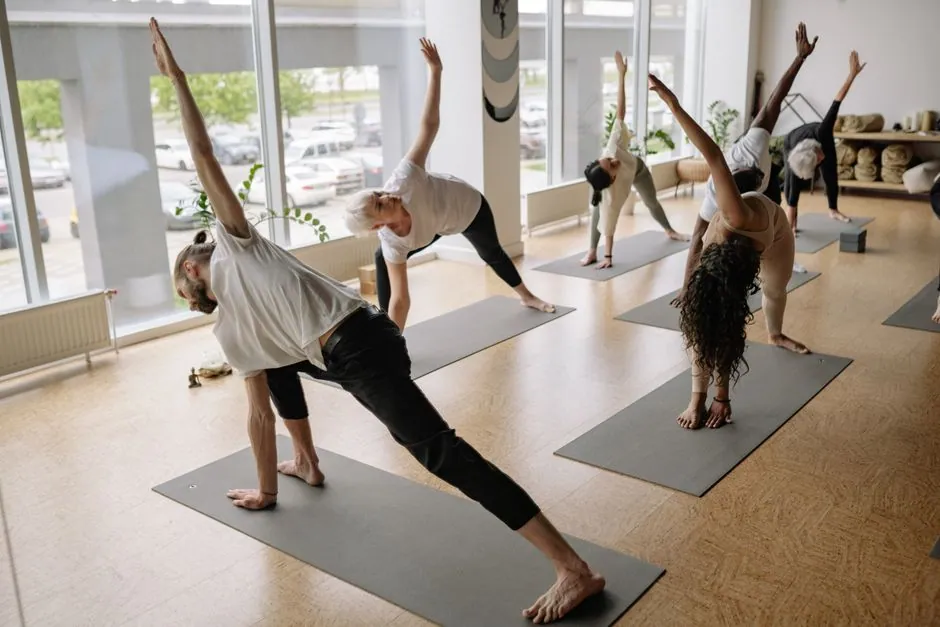
Then the traffic reversed. Yoga came back to India repackaged as a studio product, with mats, memberships and a vocabulary borrowed from fitness. The scale of the global shift is measurable: the share of US adults practising yoga rose from 5.0% in 2002 to 15.8% in 2022, with 8.4% of US children aged 4–17 practising in 2017. A discipline that was transmitted guru to student for centuries became, within two generations, a mass activity taught in halls, apps and video calls.
The history of yoga day: how 21 June became an international date
The International Day of Yoga was created by UN General Assembly resolution 69/131, adopted on 11 December 2014, after India proposed it at the opening of the 69th session. A record 175 member states co-sponsored it, and 21 June — the northern summer solstice — was set as the annual date. The first observance followed in June 2015.
Two years later came the more durable recognition. In 2016, UNESCO inscribed yoga on the Representative List of the Intangible Cultural Heritage of Humanity, describing a practice of poses, meditation, controlled breathing and chanting traditionally transmitted through the guru–shishya model, and noting that it is now taught through ashrams, schools, community centres and digital platforms.
That last phrase matters for the history of yoga day as a living event rather than a ceremony. UNESCO’s own description treats online transmission as part of the tradition’s continuity, not a departure from it.
History of yoga in physical education: what Indian students are examined on
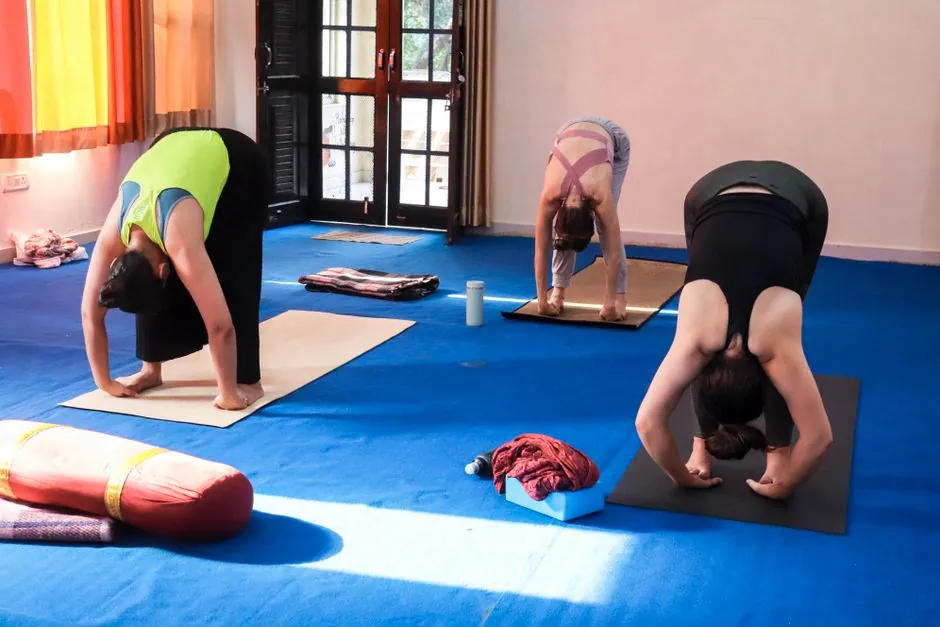
Yoga sits inside the Indian school physical-education syllabus as both theory and practical, which is why “history of yoga” searches spike around exam season. The history component is usually assessed as a short structured answer rather than an essay, and examiners reward periodisation — the ability to name eras in order and say what each contributed.
What the history of yoga class 11 syllabus expects
For the history of yoga class 11 and class 12 physical-education papers, a complete answer typically covers five stages: the pre-Vedic or Indus period, the Vedic period, the classical period built around Patanjali, the post-classical hatha period, and the modern period including the International Day of Yoga. Marks are usually lost for two things — giving no dates at all, or giving a single unqualified “5,000 years old” figure with nothing behind it. Writing “documented from roughly 1500 BCE, with contested earlier archaeological evidence” shows you understand the evidence, not just the slogan.
Writing a history of yoga essay or building your own history of yoga PDF
If you need a history of yoga essay or a history of yoga PDF for a project file, the timeline table above is the spine — copy it, then write one short paragraph under each row. A workable 500-word structure: two sentences defining yoga from the root yuj; one paragraph per era from the table; one paragraph on Patanjali’s eight limbs; one paragraph on the twentieth-century posture shift; a closing paragraph on 2014’s UN resolution and 2016’s UNESCO inscription. Cite the era dates rather than asserting them, and flag the Patanjali dating spread — that single sentence separates a copied answer from a researched one. Print the page to PDF once you have added your own notes, so the sources travel with the file.
What this history should change about your own practice
Knowing the sequence changes what you expect from a class. If postures are the newest layer, then a practice that is only postures is the shallowest version of a deep tradition — and the breath work, concentration and ethical framing are not optional extras added by modern teachers, they are the older material.
It should also make you sceptical of health claims dressed in antiquity. Age is not evidence. What the evidence actually supports is narrower and still worth having: the US National Center for Complementary and Integrative Health notes benefit for low-back pain, neck pain, balance, sleep quality and symptoms of anxiety and depression, while being explicit that yoga is not a treatment for underlying disease. Harvard Health reports that in one cohort, people practising at least 30 minutes a week over four years gained less weight in middle adulthood, and that eight weeks of twice-weekly practice — around 180 minutes total — improved strength, flexibility and cardiorespiratory fitness in previously sedentary people.
For general health, yoga also counts toward movement targets. The WHO recommends adults aged 18–64 get at least 150 minutes of moderate-intensity activity a week, and reports that 31% of adults worldwide — about 1.8 billion people — were insufficiently active in 2022. A 30-minute practice five days a week clears that bar. Gentler styles may sit below moderate intensity, so pair them with walking rather than assuming the mat covers everything.
Two honest cautions. Yoga will not cure thyroid disease, PCOS, diabetes or hypertension, and any teacher who promises that is selling something. And if you have glaucoma, uncontrolled blood pressure, recent surgery, advanced osteoporosis or a disc injury, speak to your doctor before starting, and tell your teacher — inversions and deep backbends are the usual problem poses, and a good instructor will substitute them without fuss.

Questions readers ask about yoga’s history
What is the history of yoga in short?
Yoga’s documented history begins with Vedic and Upanishadic texts composed roughly 1500–500 BCE, is systematised in Patanjali’s 196-sutra Yoga Sutras (2nd century BCE or 5th century CE), becomes body-centred in the hatha period from about the 11th–15th centuries CE, and turns global in the twentieth century, gaining a UN day in 2014 and UNESCO heritage status in 2016.
Is yoga really 5,000 years old?
Not in any documented sense. The figure comes from Indus Valley seals dated around 2600–1900 BCE showing seated cross-legged figures. Those seals are genuine, but nothing on them proves an organised practice called yoga. Yoga’s traceable textual history spans roughly 2,500 to 3,500 years, which is remarkable enough without inflation.
Who is called the father of yoga?
Patanjali is conventionally called the father of yoga because the Yoga Sutras gave the tradition its first systematic framework — 196 aphorisms in four chapters setting out the eight limbs. He did not invent the practices; he organised existing ideas into a method. Scholars also note the attribution itself is uncertain, since the sutras’ author may not be the grammarian of the same name.
What is the ancient history of yoga before the Vedas?
Everything before the Vedas is inference. The ancient history of yoga in the pre-Vedic period rests on archaeology — seals, figurines and seated postures from Indus Valley sites dated about 2600–1900 BCE. There are no readable texts from that period describing a practice, so honest accounts label this stage “possible roots” rather than documented history.
Where can I read the history of yoga in Hindi?
The history of yoga in Hindi is usually titled योग का इतिहास, and Hindi-medium NCERT physical-education material and Ministry of AYUSH publications both cover the standard five-period framework. The era names translate directly — वैदिक काल, शास्त्रीय काल, हठयोग काल — so the timeline table on this page maps onto Hindi coursework without changes.
When did yoga become popular outside India?
Philosophical yoga reached Western audiences through Swami Vivekananda’s 1893 appearance at the World’s Parliament of Religions in Chicago. Posture-based yoga spread much later, from the 1950s onward. The growth is measurable: US adult participation rose from 5.0% in 2002 to 15.8% in 2022 according to national survey data.
Does knowing the history make yoga more effective?
Not physically — your hamstrings do not care. It changes what you practise, though. Knowing that breath work, concentration and ethical discipline predate the posture system usually pushes people to add 5–10 minutes of pranayama or seated practice, which is where most of the reported benefit for stress and sleep sits.
Want the history to turn into a habit rather than a browser tab? Start with two 30-minute sessions a week and a five-minute seated practice on the days between — our online yoga classes are built around exactly that structure, with a teacher watching your alignment on video instead of a book of photographs.


