

Zumba vs aerobics is one of the most common choices people face when they want a fun, no-equipment cardio class. Both raise your heart rate, both can be done in a living room with a laptop, and both can fit into a busy Indian weekday. The real differences are in choreography, music, impact and how forgiving each format is when you miss a step. This guide compares them fairly so you can pick one, or mix both, without guessing.
What is the real difference between Zumba and aerobics?
Zumba is a dance-fitness format built on Latin and world rhythms such as salsa, merengue, reggaeton and bhangra-style fusions, with tempo changing from song to song. Aerobics is a structured cardio class of repeated step-and-arm combinations, usually set to a steady fast beat. Both are aerobic exercise; the feel and the way you learn the moves differ.
Think of Zumba as following a dance floor and aerobics as following a drill. In Zumba the instructor shows a move, repeats it for a verse or chorus and then flows into the next one, and you are allowed to be a little messy. In a classic aerobics class the combinations are counted in blocks of eight, built up layer by layer, and the class is usually more precise and more cue-driven.
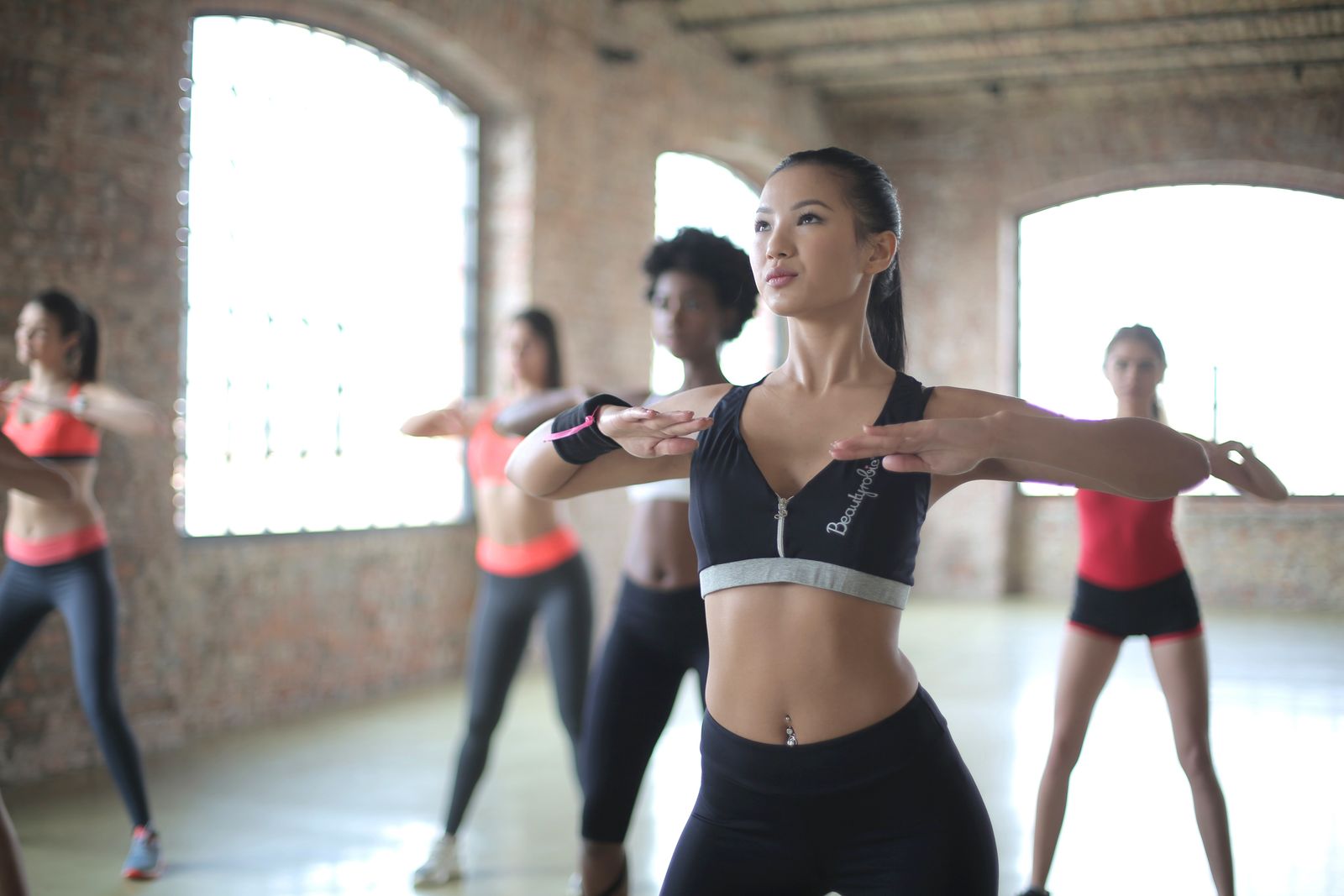
Zumba vs aerobics side by side
The table below compares the two formats on the points that actually decide whether you will enjoy a class and keep coming back. Treat the entries as typical, not universal, because a good instructor in either format can make a class easier or tougher.
| Factor | Zumba | Aerobics |
|---|---|---|
| Choreography | Dance-based, repeated phrases, flows with the song | Counted combinations in blocks of eight, built up step by step |
| Music | Latin and world rhythms, tempo shifts between songs | Steady, fast pop or dance beat through most of the class |
| Intensity | Comes in waves, easy songs followed by high-energy ones | More constant, set by the beat and the chosen impact level |
| Impact | Moderate, with low-impact options for most moves | Ranges from low-impact (one foot on the floor) to high-impact jumping |
| Skill curve | Gentle at first, hip and footwork rhythm takes a few weeks | Counting and coordination can feel sharp in week one, then settle |
| Atmosphere | Social, party-like, forgiving of mistakes | Focused, drill-like, more about precision |
| Who it suits | People who dislike counting and want to enjoy the music | People who like clear structure, repetition and cues |
Which burns more calories, Zumba or aerobics?
Both burn a similar amount when effort is matched. A 65 kg adult usually burns about 250 to 400 kcal in a 45-minute class of either format, and a high-impact session or a very energetic Zumba class can sit at the top of that range. Your body weight and effort matter more than the label.
You will see claims that one format beats the other by a fixed number of calories, but the honest answer is that it depends on the class, the instructor and how hard you move. The figures below are rough estimates for a 45-minute session, not measurements.
| Session type | Effort level | Rough kcal for a 65 kg adult (45 min) |
|---|---|---|
| Low-impact aerobics | Moderate | About 230 to 300 |
| High-impact aerobics | Vigorous | About 330 to 420 |
| Beginner Zumba, mostly low-impact moves | Moderate | About 230 to 320 |
| Full-effort Zumba with big arm and leg movement | Moderate to vigorous | About 300 to 420 |
If you weigh more, the numbers rise; if you weigh less, they drop. For a deeper breakdown by body weight and class length, see our guide to Zumba calories burned. And if you are wondering whether a dance class counts as proper cardio at all, is Zumba cardio explains the intensity zones in plain language.
Two myths worth dropping
Myth: Zumba is just dancing, so it is not a real workout. A full-effort class keeps you moving for 45 to 60 minutes, often with squats, lunges and quick direction changes hidden inside the dance steps. If you can talk in full sentences all through the class, you are probably moving below your potential, and you can fix that by making your movements bigger, not by switching formats.
Myth: Aerobics is outdated and Zumba has replaced it. Step and low-impact aerobics classes are still excellent for people who like structure, and many gyms still run them. Formats come and go in popularity, but the physiology is the same: sustained rhythmic movement raises your heart rate and builds stamina. The best format is the one you will actually attend three times a week.

Which is easier on the knees and joints?
Low-impact aerobics and beginner Zumba are both gentle, because one foot stays on the ground and landings are soft. High-impact aerobics, with repeated jumps, puts the most load on knees, ankles and shins. In either format, wear cushioned shoes, exercise on a non-slip surface, and swap jumps for steps whenever your joints complain.
Zumba adds a twist factor: quick turns and hip movements can bother a sensitive knee if you pivot on a planted foot. Lift your heel and let the foot turn with you instead of grinding it into the floor. In aerobics the main joint risk is repeated jumping on a hard floor, so a yoga mat under a thin carpet is not a substitute for proper footwear and a decent surface.
If you have a long-standing knee, hip or back problem, or are recovering from an injury, check with your doctor or physiotherapist before starting either format. That is a sensible step for anyone with a medical condition, not a sign that you cannot exercise.
Which one suits you? A quick audience guide
- Complete beginners: Both work. Choose Zumba if counting makes you anxious, aerobics if you like being told exactly what to do and when.
- Office workers with desk-heavy days: A 30 to 45 minute evening class of either format helps undo hours of sitting. Zumba tends to feel more like a mood reset after a stressful day.
- Weight-loss goals: Either format helps when you do it three to five times a week and keep your food choices steady. Neither works as a stand-alone fix, and spot-reduction of belly or thigh fat does not exist.
- Parents and homemakers with fixed gaps in the day: Short online classes at home beat a long class you never reach. Pick whichever format you can start without travel time.
- People who get bored easily: Zumba changes rhythm every song, so it usually holds attention better. Aerobics can feel repetitive unless the instructor varies the choreography.
- People who want strength as well: Neither replaces resistance training. Add two strength sessions a week, or compare formats in Zumba vs gym and Zumba vs cardio and HIIT.
Struggling to follow either class? Quick fixes
Most beginners feel lost for the first two or three classes, and that is normal. These adjustments help in both formats.
- Lost the count or the step: Keep marching or stepping to the beat and rejoin at the next phrase. A steady beat matters more than perfect steps.
- Out of breath in the first 10 minutes: Lower the arm height, shorten the steps and take the low-impact option. Build the intensity over two to three weeks.
- Sore calves or shins the next day: Check your shoes, soften your landings and add five minutes of gentle stretching after class.
- Feeling self-conscious on camera: Turn your video off for the first week, or stand at the back of the room. You can bring the camera on later.
- Dizzy or unwell during class: Stop, sit down and sip water. If it happens again, speak to your doctor before continuing.
A live trainer who can see you and correct your form makes this much easier. Fitstrot’s Zumba classes are led by Yash Pathak, our lead Zumba trainer, who is ZIN Licensed, ACE Certified and Strong Nation Certified. That means a licensed, certified instructor is cueing the class, not just a video playing in the background.
A sample week mixing both formats
You do not have to choose one forever. Alternating gives you variety, spreads the impact on your joints, and keeps the week from feeling like a routine. Here is one balanced pattern for a beginner who can train five days a week, with each class around 40 to 45 minutes.
| Day | Session | Effort | Notes |
|---|---|---|---|
| Monday | Zumba | Moderate | Learn the basic steps, keep moves small |
| Tuesday | Rest or a 30 minute walk | Easy | Light stretching, drink enough water |
| Wednesday | Low-impact aerobics | Moderate | Focus on counting and coordination |
| Thursday | Strength work at home | Moderate | Squats, lunges, push-ups, plank, 2 to 3 sets |
| Friday | Zumba | Moderate to vigorous | Make the arm and leg movements bigger |
| Saturday | Aerobics or an easy Zumba | Your choice | Pick whichever sounds fun that day |
| Sunday | Rest | None | Sleep and recovery |
For frequency advice that goes beyond this sample, our guide to how often you should do Zumba covers weekly limits and recovery. If you are comparing Zumba with other dance-based formats too, read Zumba vs dance fitness.
Which one should you start with?
Start with the one you are more likely to look forward to. If you love music and dislike counting, begin with Zumba. If you like structure and clear cues, begin with a low-impact aerobics class. Give either one at least three weeks before judging it, then add the other if you want variety.
If your main aim is losing weight, pair your classes with an eating plan you can follow in your own kitchen, not a crash diet. An online weight loss trainer can set a realistic pace, and if you want exercise tailored to your body, 1-1 personal training lets a coach design the plan around your schedule and any limitations. Realistic fat loss is usually about 0.25 to 0.5 kg a week, and anyone promising faster is selling something.
Frequently asked questions about Zumba vs aerobics
Does Zumba burn more calories than aerobics?
Not by a fixed margin. When effort is similar, both burn roughly 250 to 400 kcal in a 45-minute class for a 65 kg adult. A high-impact aerobics class and a full-effort Zumba class can come out about the same. Your weight, how hard you move and how long you stay active matter more than the format name.
Is Zumba easier to follow than aerobics for beginners?
For many people, yes, because Zumba is forgiving: you repeat simple steps to the music and mistakes blend into the dance. Aerobics relies on counted combinations, so the first week can feel more demanding. Neither is hard once you have attended three or four classes, and low-impact options exist in both.
Which is better for weight loss, Zumba or aerobics?
Either can support weight loss when you attend three to five times a week and keep your eating steady. The better choice is whichever you will keep doing. Exercise alone rarely produces large changes, so pair your classes with balanced meals and enough sleep. A realistic target is about 0.25 to 0.5 kg a week.
Can I do Zumba and aerobics in the same week?
Yes. Alternating them is a sensible way to add variety, share the load across different movement patterns and avoid boredom. Keep at least one rest day a week, and add two short strength sessions if you can. Pick the harder class on the day you feel freshest, not after a poor night’s sleep.
Is aerobics or Zumba safer for knees?
Low-impact versions of both are generally gentle. High-impact aerobics, with repeated jumps, loads the knees most. In Zumba, pivoting with a planted foot is the usual risk. Use cushioned shoes, skip jumps, and see your doctor or physiotherapist first if you have existing knee, hip or back pain.
Try a class and decide for yourself
The fastest way to settle zumba vs aerobics is to feel both. Book a live session with Fitstrot’s online Zumba classes and compare it with your last aerobics class. Prefer to browse first? Our online Zumba classes guide explains how a typical class runs.


