
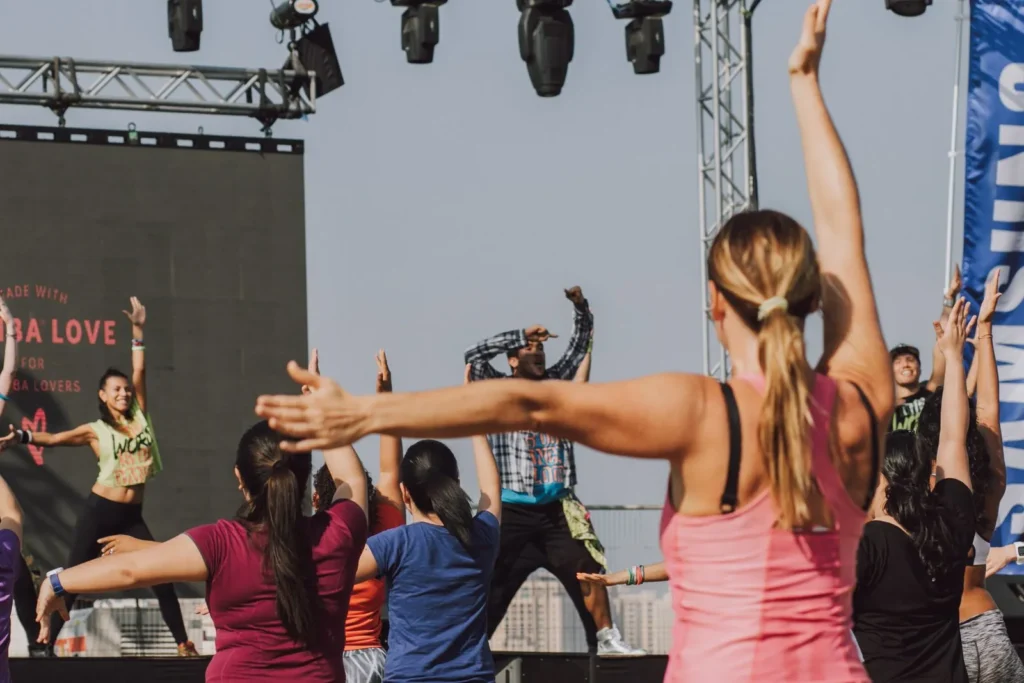
Zumba for women is one of the easiest ways to make exercise something you look forward to: an hour of Latin, pop and Bollywood-style dance, no equipment, and a room (or a screen) full of people moving at different levels. It suits college students, new mothers, working professionals and women well past menopause, but the right format and intensity change at each stage of life. This guide covers who benefits, which class to pick, a gentle four-week start, common problems and the safety lines you should not cross.
Is Zumba good for women?
Yes, for most healthy women. A 45 to 60 minute Zumba class is moderate-intensity cardio that lifts your heart rate and works the legs, hips and core. It is also easier to stick with than many solo workouts, because the music and the group carry you. It does not replace strength training, and some conditions need a doctor’s go-ahead first.
What women usually notice first is stamina: climbing stairs, carrying shopping or keeping up with children gets easier. Coordination and balance improve as the choreography becomes familiar, and because most steps are done on your feet, the legs and hips take regular weight-bearing load, which is good for bone health. Zumba builds only modest muscle, so if you can, add two short strength sessions a week (squats, glute bridges, wall push-ups) alongside it.
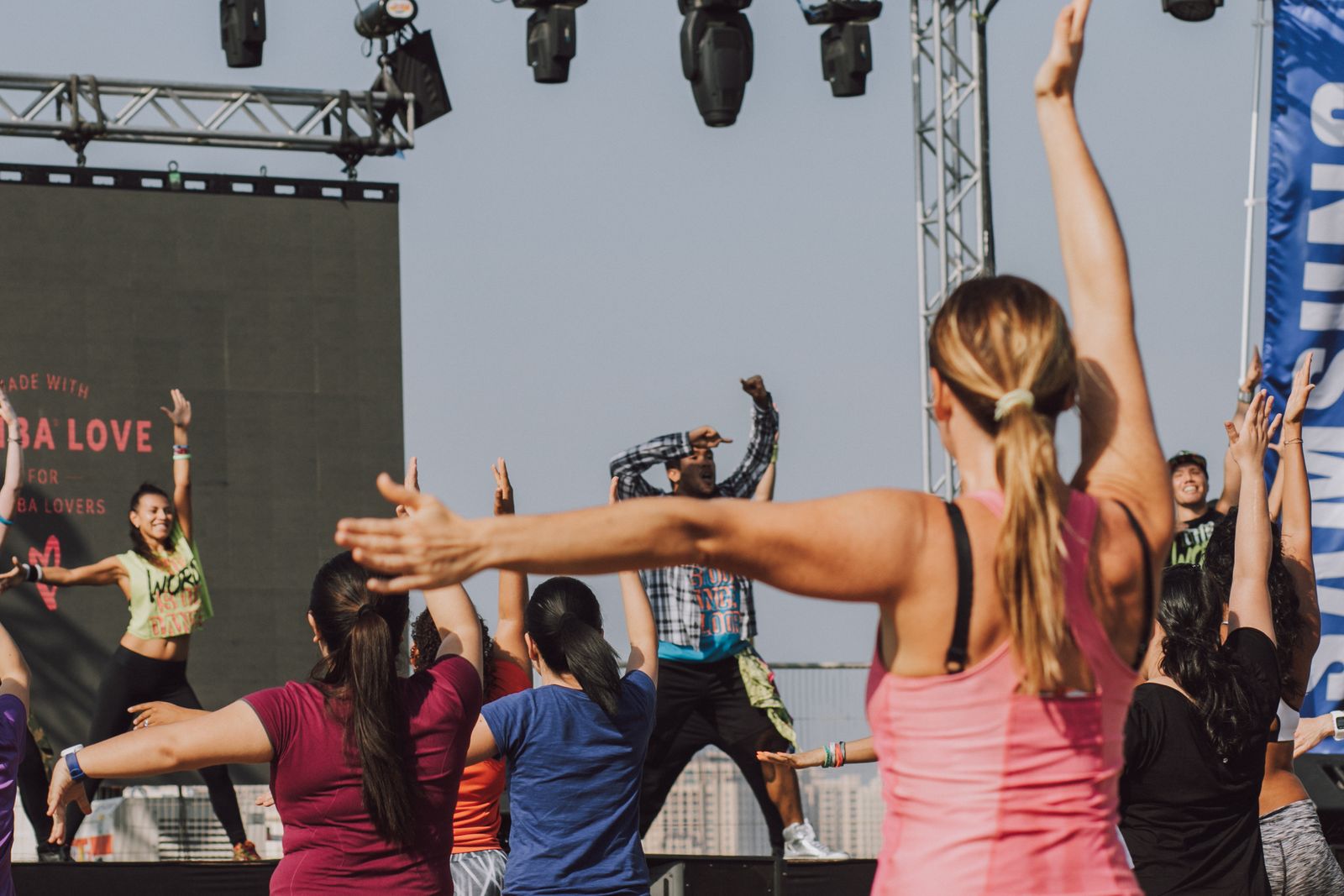
Which Zumba format suits which stage of life?
Standard Zumba suits most healthy women under 40 who want a full workout. Zumba Gold is slower and lower-impact, so it suits women over 50, returning exercisers and anyone with sore joints. Zumba Toning adds light weights, and Aqua Zumba is the gentlest on knees. Pregnancy and early postpartum need a doctor’s approval and lower intensity first.
| Stage | Best-fit format | Intensity | What to watch |
|---|---|---|---|
| Teens and early 20s | Standard class; see our Zumba for teens guide | Moderate to high | Warm up properly, wear cushioned shoes |
| 20s to 30s, desk job | Standard or Zumba Toning | Moderate to high | Add strength work; do not skip rest days |
| Pregnancy | Only with your gynaecologist’s approval, usually a modified low-impact class | Low to moderate | No jumping, no overheating, stop if unwell |
| Postpartum | Gentle class after medical clearance | Low, building slowly | Pelvic floor, C-section scar, tiredness |
| 40s (perimenopause) | Standard at your own pace, or Gold | Moderate | Joint comfort, recovery between sessions |
| 50+ and after menopause | Zumba Gold | Low to moderate | Balance, knees, blood pressure |
| Joint pain or higher body weight | Gold, or standard with low-impact versions of every move | Low to moderate | Keep one foot on the floor, avoid deep twists |
A gentle four-week start for beginners
If you have been inactive, start below your ego. Your effort should pass the talk test: you can say a short sentence between songs but could not sing. Keep at least one rest day between sessions in the first two weeks, and skip any jumping until your feet and knees feel comfortable doing the step without it. This is zumba for beginners at its simplest: show up, move at half speed, add intensity only when the steps stop feeling new.
| Week | Sessions | Length | Focus |
|---|---|---|---|
| 1 | 2 | 20 to 30 min | Learn the basic steps at half intensity; no jumps; small arm movements |
| 2 | 3 | 30 to 40 min | Add full arm movements; stay at talk-test effort |
| 3 | 3 | 40 to 45 min | Join a full class; try one or two higher-energy songs, low-impact version still fine |
| 4 | 3 to 4 | 45 to 60 min | Full class plus one short strength day (squats and glute bridges, 2 sets of 10 to 12) |
Keep a simple note after each session: how you felt, any pain, and how hard it was on a 1 to 10 scale. If a session is a 9 or 10 for a beginner, drop back a week.
How many calories does Zumba burn, and does it reduce belly fat?
Roughly 300 to 500 kcal per hour for many women, depending on body weight, how fully you move and how intense the class is. Lighter or newer dancers sit near the low end. That is an estimate, not a promise. Zumba cannot target belly fat; fat loss comes from a sustained calorie gap across the whole week, and food does most of that work.
To keep it in perspective, a fried samosa is often around 250 kcal, so one class can be cancelled out by a single snack. Treat Zumba as the habit that builds fitness, mood and consistency, and treat your plate as the lever for weight. If weight loss is your main goal, an online nutritionist consultation will move the needle more than adding a fourth class.
Four Zumba myths worth dropping
“I need to know how to dance.” You do not. Instructors repeat basic steps and you can always do a smaller, simpler version. Nobody is graded.
“It is too light to count as real exercise.” A full class is moderate-intensity cardio for most people, and the intensity is yours to set. If your breathing is deep and your heart rate is up, it is real exercise.
“It will make my legs bulky.” Zumba does not build large muscle. Visibly bulkier legs need heavy resistance training and eating in a calorie surplus. Many women instead find their legs look firmer as stamina and tone improve; our guide to Zumba Toning covers the weighted version.
“It will fix my hormones.” Regular exercise supports hormonal health, but Zumba is not a treatment for any condition. The next section explains where it helps and where it does not.
Can Zumba help with periods and PCOS?
Regular moderate exercise like Zumba can improve mood, sleep and insulin sensitivity, which many women with PCOS find helpful alongside medical care and a sensible diet. It is not a treatment, and it does not guarantee a regular cycle. On period days, light to moderate Zumba is fine for most women if you feel up to it.
If you have PCOS, consistency matters more than intensity: three moderate sessions a week beat one exhausting one. Read does Zumba help PCOS for the full picture, and Zumba during periods for cramps, heavy-flow days and what to skip. See your doctor if your cycles are very irregular, unusually painful or very heavy, or if you have missed periods for months, rather than hoping exercise will sort it out.
Zumba for women over 40 and after menopause
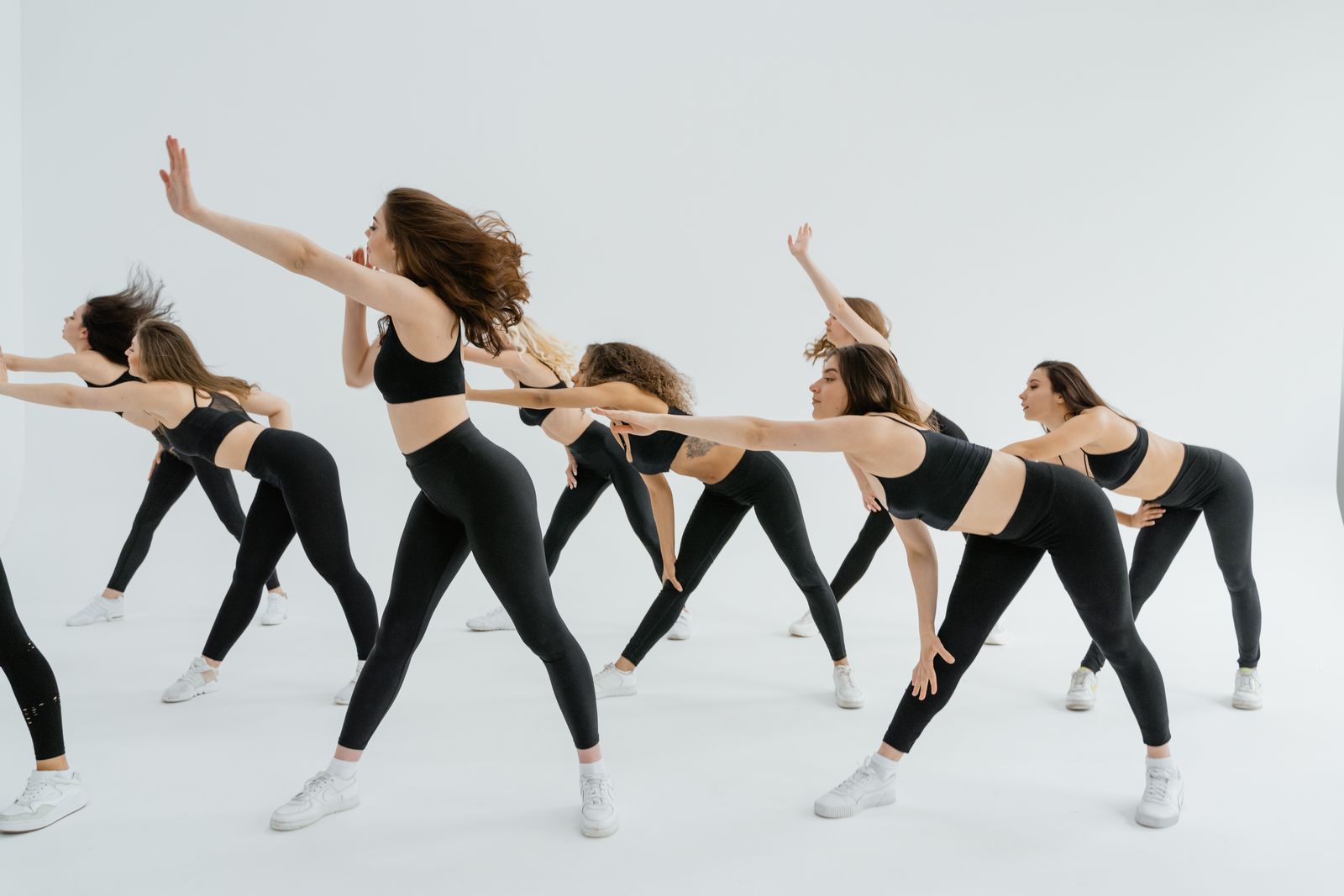
Zumba for women over 40 works well when you respect recovery. In perimenopause, many women notice poorer sleep, stiffer joints and lower energy, so the aim is steady, repeatable sessions rather than all-out effort. After menopause, bone density falls more quickly, which makes regular weight-bearing activity valuable, and dance-based exercise counts as weight-bearing because you carry your body weight on your feet.
Zumba Gold keeps the music and the fun while trimming the jumping and speed, and you can do standard classes with low-impact versions of each move. Our Zumba Gold guide explains how those classes run. Pair dance with calcium-rich foods such as curd, milk, paneer or ragi, and ask your doctor about vitamin D if you rarely get sunlight.
See your doctor before starting if you have osteoporosis, high blood pressure that is not controlled, heart disease, or dizziness and chest discomfort on effort. Stop a session if you feel chest pain, severe breathlessness, or faintness.
Pregnancy and postpartum: the safety lines
Do not start Zumba, or change your routine, in pregnancy without your gynaecologist’s approval. If you are cleared, keep the class low-impact, avoid jumping and spinning, stay cool and hydrated, and stop if you feel dizzy, have pain, bleeding or fluid leakage, or contractions. Our guide to Zumba during pregnancy goes through what is generally considered fine and what is not.
After delivery, wait for your doctor’s clearance, which usually comes at the check-up some weeks after a normal delivery and later after a C-section or complications. Restart at the week-one level of the plan above, not where you left off before pregnancy.
What to eat and drink around class
You do not need special products. Eat something light 60 to 90 minutes before a session, and have some protein afterwards. Practical Indian options:
- Before: a banana, two dates, or a small bowl of poha (about 30 to 40 g dry), with water
- After: two eggs (about 12 g protein), 100 g paneer (about 18 g), two moong dal chillas (about 10 to 12 g) or a katori of curd (about 5 to 6 g) with roti or rice
- Water: a glass in the hour before class, then small sips every 15 to 20 minutes; more in hot, humid weather
If you eat vegetarian or have a condition such as anaemia, thyroid or diabetes, a personalised plan is better than generic advice; a dietitian can set it up in one consultation.
Stress, mood and the group effect
Dancing to music you enjoy is hard to do while ruminating. Many women find the hour a break from work and home pressure, and the group format makes it easier to keep going on days you would otherwise skip. It will not replace therapy or medical care for anxiety or depression, but it is a genuinely useful support; see Zumba for mental health for the details.
Troubleshooting: when Zumba does not feel right
| Problem | Likely cause | Fix |
|---|---|---|
| Knee pain after class | Too much jumping, locked knees, hard floor or worn shoes | Switch to low-impact versions, soften knees on every landing, use shoes with cushioning; see a doctor if pain persists |
| Out of breath within 10 minutes | Starting too fast, or low base fitness | Halve the range of movement and drop the arms; build back up over two weeks |
| Cannot follow the steps | Choreography is new and fast | Repeat the same class two or three times; follow the instructor’s feet first, arms later |
| Sore arches or shins | Barefoot or flat-soled shoes on hard flooring | Wear supportive non-grip trainers or dance sneakers on a mat or smooth surface |
| Dizzy or lightheaded | Skipped meal, dehydration, or standing up too fast | Eat a light snack beforehand, sip water, slow down; seek medical advice if it recurs |
| No change after a month | Too few sessions, or food intake not changing | Aim for three sessions a week and track waist, energy and stamina along with the scale |
Studio or online: choosing a class that fits your day
Online classes remove the commute, let you fit dance around the school run or office hours, and give you privacy while you learn the steps, which matters to many women starting out. Check that you have about two metres of clear floor, a camera angle that lets the trainer see your feet, and a live session rather than a recording alone so you get corrections.
Fitstrot’s online Zumba classes are led by Yash Pathak, Fitstrot’s lead Zumba trainer, who is ZIN Licensed, ACE Certified and Strong Nation Certified. If you want to see how the format works before you pick, read our overview of online Zumba classes. On rest days, a short session of online yoga helps with the stiffness that regular dancing can leave in hips and calves.
Questions women ask about Zumba
Is Zumba good for women over 40?
Yes, for most women. Start with Zumba Gold or a standard class at lower intensity, two or three sessions a week, with a rest day between. Dance counts as weight-bearing exercise, which supports bones. See your doctor first if you have osteoporosis, uncontrolled blood pressure, heart disease, or chest discomfort or dizziness on exertion.
How many calories does Zumba burn for women?
Roughly 300 to 500 kcal per hour for many women, depending on body weight, effort and class style. Treat this as an estimate, not a guarantee. Weight change depends on your overall food intake and consistency across weeks, not on a single class.
Can I do Zumba during my period?
Usually yes, if you feel well. Many women find light to moderate dance eases cramps and lifts mood. Choose a lower-intensity class on heavy-flow or high-fatigue days, drink water, and skip it if you have severe pain, dizziness or unusually heavy bleeding, and speak to a doctor about those.
Is Zumba safe during pregnancy?
Only with your gynaecologist’s approval. If cleared, choose a low-impact, modified class with no jumping or spinning, stay cool and hydrated, and stop immediately for pain, bleeding, dizziness, fluid leakage or contractions. Do not begin a new, intense routine in pregnancy on your own.
Do I need dance experience to start Zumba?
No. Classes are built around repeated basic steps, and beginners can use smaller, simpler versions of every move. Start with two sessions a week at half intensity, follow the instructor’s feet before the arms, and repeat the same class a few times until the pattern feels familiar.
Pick a live Zumba class that matches your stage of life, then use the week-one plan above to start: book your first online Zumba class with Fitstrot this week.


