
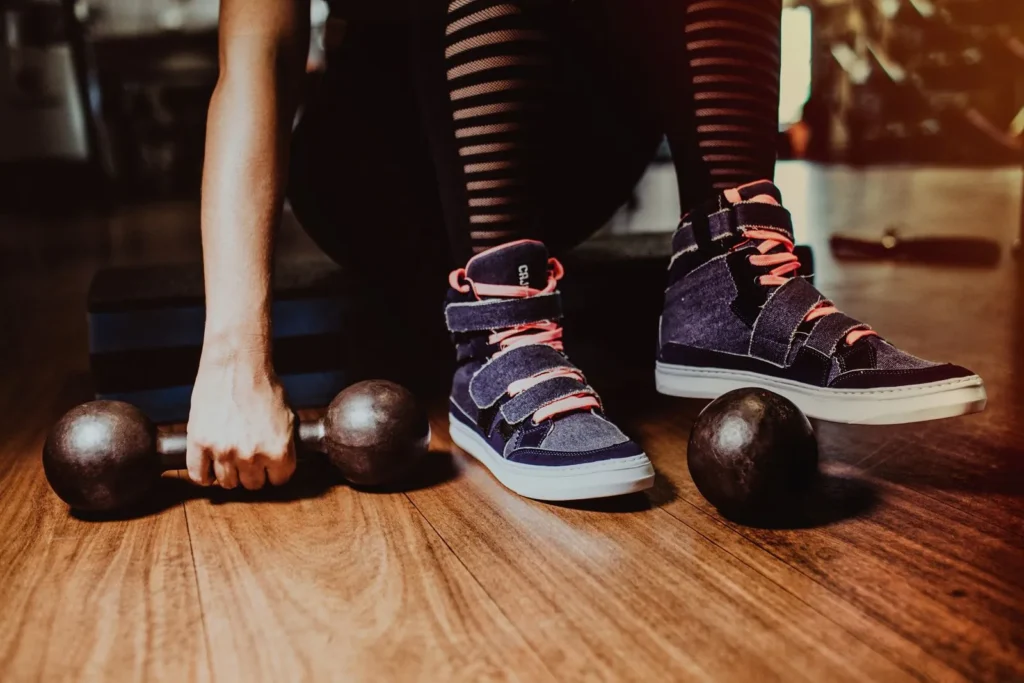
If you are wondering what to wear for zumba, the short answer is a breathable, close-fitting top, leggings or fitted shorts, a supportive sports bra and light cross-training or dance sneakers that let your foot pivot. The shoes deserve the most thought, because the wrong pair can load your knees every time you turn. This guide covers each layer, Indian weather, home classes and a two-minute shoe test.
A typical Zumba class runs about 45 to 60 minutes of continuous pivots, hops, squats and arm work, so your clothes are doing real work. You do not need branded dancewear or a big budget. You need fabric that handles sweat, a fit that stays put, and one good pair of shoes.
What should you wear to a Zumba class?
For a Zumba class, wear a moisture-wicking fitted top, stretchy leggings or fitted shorts that stay put when you squat, a high-support sports bra, and lightweight sneakers with arch support and a sole that pivots smoothly. Skip heavy cotton, loose dupattas and running shoes with deep grip, as they restrict movement or catch the floor.
Think of your outfit as four decisions: shoes, bottoms, top and support. The table below gives you the full picture at a glance, including what to leave at home.
Zumba outfit cheat sheet: pick, avoid and why
| Item | Good choice | Avoid | Why it matters |
|---|---|---|---|
| Shoes | Light cross-trainers or dance sneakers with arch support | Deep-tread running shoes, flip-flops, heavy gym boots | Pivots need a sole that turns, not one that grips and twists the knee |
| Bottoms | Stretch leggings, capris, or fitted shorts with a snug waistband | Jeans, loose pyjamas, long flared pants | Squats, lunges and high knees need full range, and hems should not catch your feet |
| Top | Moisture-wicking tank or fitted T-shirt, shorter than mid-hip | Oversized tees, long kurtas, heavy cotton | Loose fabric flaps during arm work and soaks up sweat |
| Support | High-support sports bra that does not ride up | Everyday or padded fashion bras | Jumping and bouncing need firm, even support |
| Extras | Hair tie, small towel, water bottle, light socks | Dangling earrings, bangles, long necklaces | Jewellery swings, snags and can hurt during turns |
Why shoes matter more than anything else you wear
Zumba shoes matter because choreography is full of pivots and side steps. A sole that grips the floor stops your foot from turning while your hips and knee keep rotating, which twists the knee joint. A lightweight shoe that glides slightly through a turn spreads that rotation across your whole leg instead.
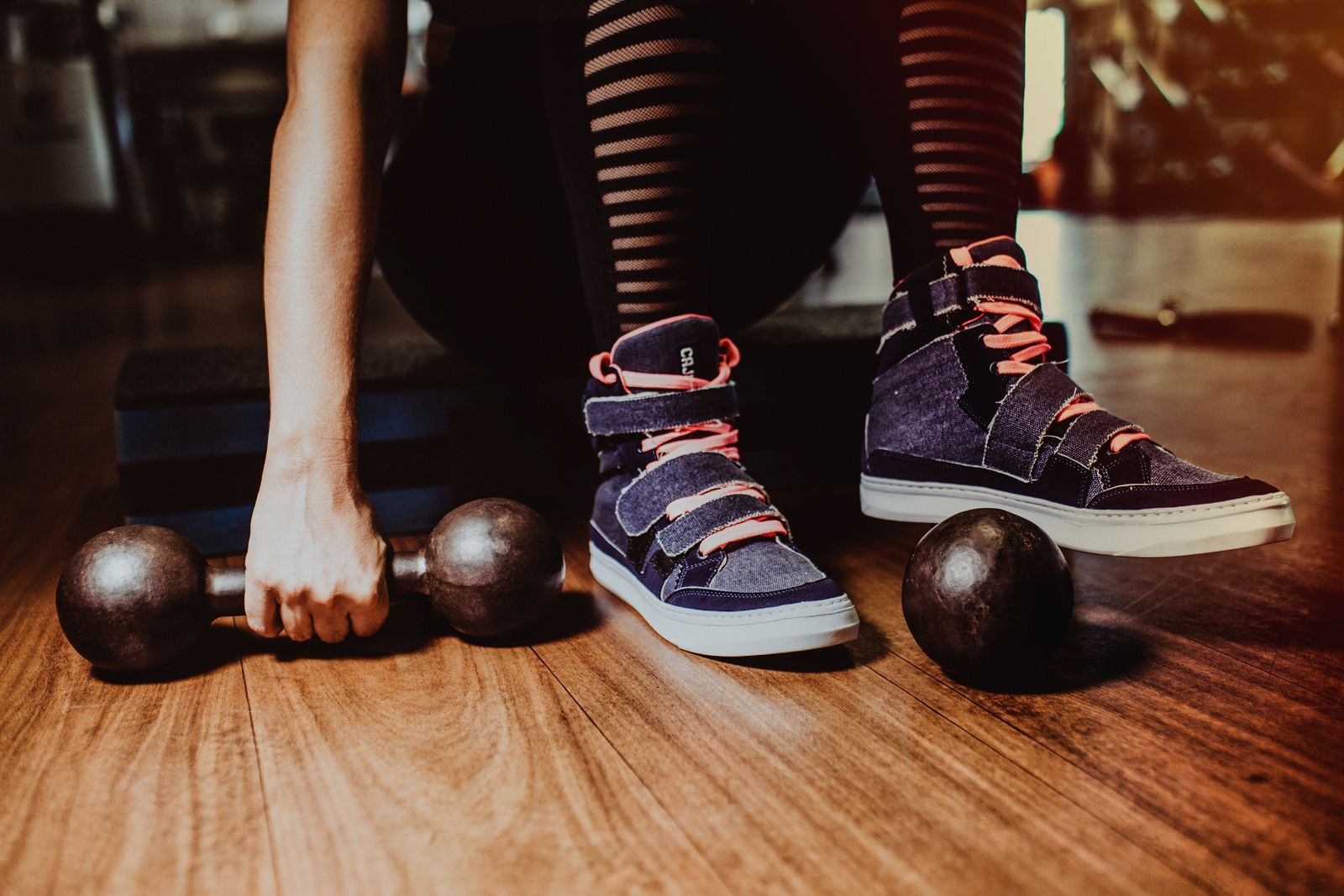
This twisting load is the mechanism behind many of the knee complaints people report after starting the format. Our guide to Zumba side effects explains how it happens and what to do if your knees already hurt. Choosing the right footwear is the simplest way to lower that risk before you take a single step.
Myth check: any gym shoe will do
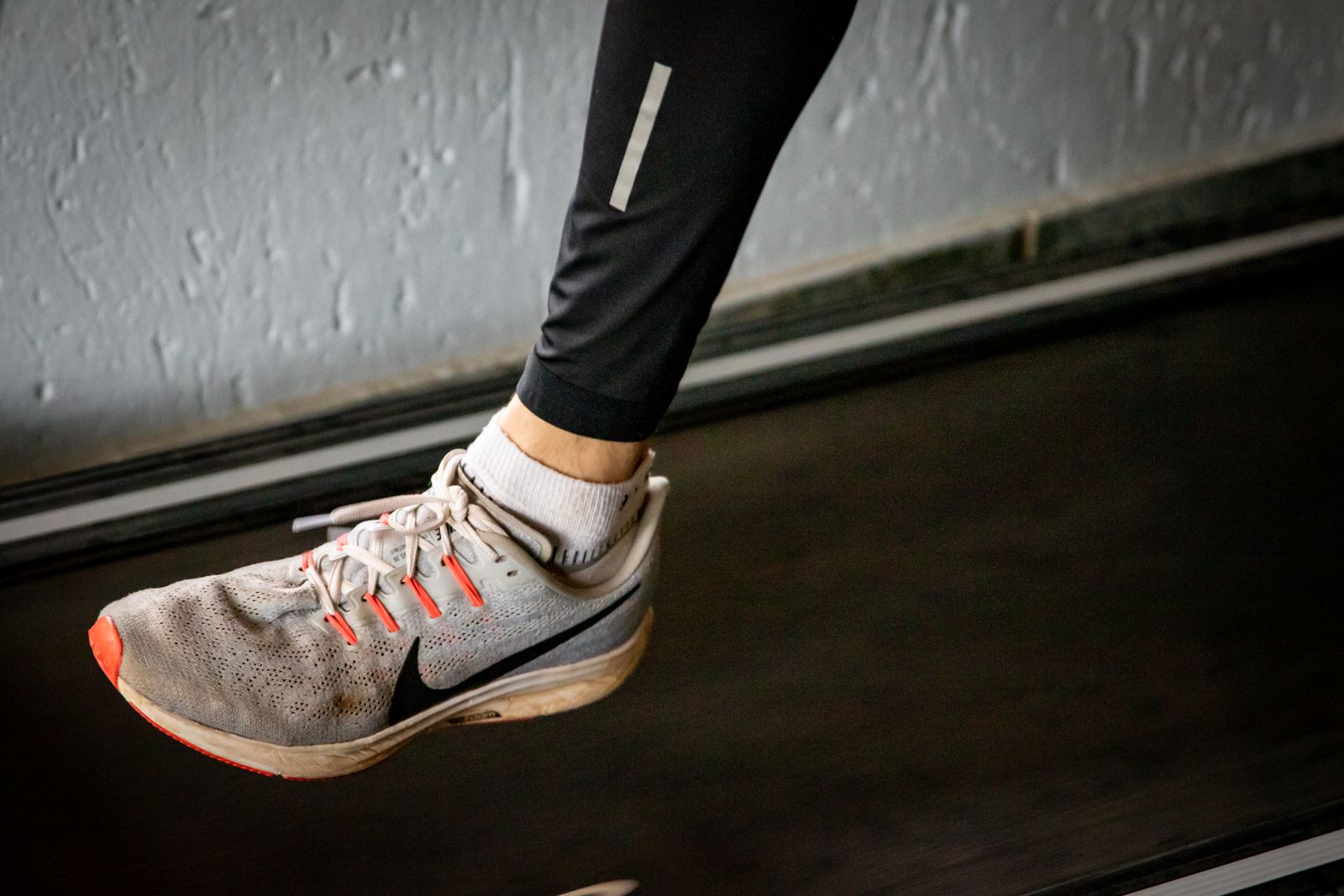
This is the most common mistake we see. Many beginners assume that because running shoes are expensive and cushioned, they must be the safest option. Running shoes are designed for forward motion, with a tread and a rigid heel that help you move in a straight line. Zumba asks for the opposite: sideways travel, quick turns and frequent changes of direction.
That does not make running shoes dangerous for everyone, and one class will not ruin your knees. But if you plan to attend three or four classes a week, the cumulative twisting adds up, and it is worth buying a pair built for lateral work. A basic cross-training shoe is often enough, and many people find a dance sneaker even better.
How to choose Zumba shoes: a two-minute test in the shop
To choose Zumba shoes, press the sole to check it flexes at the ball of the foot, rotate on your forefoot to see whether it turns smoothly, hop five times to check your heel stays locked, and leave about a thumb’s width of space at the toe. Shop in the evening when feet are slightly swollen.
Run through these steps before you pay:
- Flex check. Bend the shoe with your hands. It should fold near the ball of the foot, not in the middle of the arch.
- Weight check. Hold one shoe in each hand. If it feels clunky, it will feel worse by minute 40.
- Pivot test. Stand on the shop floor, shift your weight onto the ball of your foot and rotate about 90 degrees. The foot should turn without sticking or squeaking.
- Hop test. Do five small jumps and a few side steps. Your heel should not slide up and out of the shoe.
- Room check. Wiggle your toes. There should be roughly a thumb’s width in front of the longest toe, and no pinching at the sides.
Replace your shoes when the cushioning feels flat, the sole is worn smooth or the heel collapses. For someone attending three to four classes a week, that is often within roughly a year, sooner if you also use the same pair for walking.
Tops, bottoms and sports bras for Indian weather
Most Indian cities are hot and humid for much of the year, so fabric choice matters as much as fit. Zumba clothes for women and men should pull sweat away from the skin, dry quickly and stretch in four directions. The table compares the common options so you can match fabric to your climate and budget.
| Fabric | Sweat handling | Stretch | Best for | Watch out for |
|---|---|---|---|---|
| Cotton | Absorbs but stays wet | Low to medium | Short, easy classes, cooler months | Heavy, clingy and slow to dry in humid cities |
| Polyester or dri-fit blends | Wicks and dries fast | Medium | Everyday Zumba in most cities | Can hold odour, so wash after every class |
| Nylon with spandex | Wicks well | High | Leggings, sports bras, fitted tops | Cheap, thin versions can turn see-through when you squat |
| Denim or thick stretch fabric | Traps heat and sweat | Low | Not recommended | Restricts squats and lunges |
A few practical notes for the climate and culture:
- Leggings or shorts? Leggings keep muscles warm and cover your legs in a studio or shared hall. Shorts or capris give more airflow in hot weather or an AC-less room. Either works, as long as the waistband does not roll down.
- Kurta and dupatta. A long kurta or dupatta flaps during turns and can catch on a chair or your own foot. If you prefer a longer top, choose one that ends at the hip, with snug sleeves.
- Squat test. Before your first class, do five deep squats in front of a mirror. If the fabric sags, shifts or goes sheer, change it.
- Sports bra. Pick a high-support, non-padded style that holds you firmly and does not dig into your shoulders or ribs. A comfortable bra is more useful than a fashionable one.
- Socks. Thin, moisture-wicking socks reduce friction and blisters. Cotton socks stay damp.
What to wear for Zumba at home in an online class
For an online Zumba class at home, wear the same outfit you would wear to a studio, including shoes. Add a thin yoga mat or a clear, non-slip patch of floor about 6 by 6 feet, keep a towel and water within reach, and move furniture so you can turn freely.
Home flooring changes the shoe question. Polished vitrified tiles or marble can be slippery under a smooth sole, and they offer little cushioning for bare feet. Carpet or a rubber mat grips more, so a very sticky sole can catch on it during pivots. If you are unsure, try a few basic steps and adjust: wear a lightly textured sole on slick tiles, and a smoother sole on a grippy mat.
If you live in an apartment, a cushioned mat also cuts noise for the neighbours below. For a clear picture of how live sessions work, see our guide to online Zumba classes. If you are new to the whole format, what is a Zumba class walks through what happens from warm-up to cool-down.
Do different Zumba formats need different outfits?
Yes, a little. Standard Zumba and Zumba Gold both suit light lateral-support sneakers and a fitted outfit. Toning classes add light sticks and Aqua Zumba is done in a pool, so footwear and gear change. The table below shows the small adjustments to make, but always check your class description.
| Format | Footwear | Outfit notes | Bring along |
|---|---|---|---|
| Standard Zumba | Light cross-trainers or dance sneakers | Wicking top, leggings or fitted shorts | Towel, water, hair tie |
| Zumba Gold (lower impact) | Same lateral-support shoe, more cushioning is welcome | Comfortable stretch fabrics, no tight waistbands | Water, a chair nearby for balance |
| Zumba Toning | Same sneakers | Fitted sleeves so arm work is not restricted | Light toning sticks, if the class uses them |
| Aqua Zumba | Water shoes with grip | Swimwear or quick-dry sports clothing | Towel, spare dry clothes |
Our guide to Zumba Toning covers the sticks and the extra upper-body work in detail. At Fitstrot, lead Zumba trainer Yash Pathak, who is ZIN Licensed, ACE Certified and Strong Nation Certified, gives the same advice to new members: sort shoes first, and treat everything else as comfort.
Troubleshooting: common Zumba outfit problems and fixes
- Waistband keeps rolling down. Choose a high-rise cut with a wide, flat band, or size down slightly in stretch leggings.
- Feet slide inside the shoe. Try thinner socks or a different lacing pattern, and check that the shoe is not half a size too large.
- Blisters on the heel or toes. Wear moisture-wicking socks, break new shoes in over a couple of short sessions, and keep nails trimmed.
- Chafing on inner thighs. Wear fitted shorts or leggings in a smooth stretch fabric, and avoid rough seams.
- Top rides up during arm work. Pick a longer fitted tank or a tee that ends near the hip, and avoid loose cuts.
- Knee or ankle pain after class. Review your shoes first. If pain continues, or is sharp, swollen or comes with locking, stop and see a doctor or physiotherapist before your next session.
- Everything smells after class. Wash synthetic clothes after every class and dry them fully. Do not leave them sealed in a gym bag.
Good gear lowers your risk but cannot guarantee you stay injury-free. Warm up before you begin and drop the intensity if a step feels wrong. If you are starting from scratch, our Zumba for beginners guide covers pacing for your first few weeks.
A simple first-class checklist
You can build a complete setup without spending much. Rank your purchases like this: shoes first, sports bra second, and everything else from clothes you already own, provided they pass the squat test.
- Light sneakers with arch support and a smooth pivot
- High-support sports bra
- One or two wicking tops and stretch leggings or fitted shorts
- Thin wicking socks and a hair tie
- Small towel and a 750 ml to 1 litre water bottle
- For home classes, a mat or cleared 6 by 6 foot floor space
Frequently asked questions about what to wear for Zumba
Can I wear running shoes to Zumba?
You can for a one-off trial class, but it is not ideal. Running shoes have grippy, forward-focused soles that resist turning, which raises rotational stress on the knee during pivots. If you plan to attend regularly, switch to light cross-trainers or dance sneakers that allow smooth turns.
What are the best shoes for Zumba?
The best shoes for Zumba are lightweight sneakers with arch support, cushioning under the heel and forefoot, and a sole that pivots smoothly without sliding. Cross-trainers and dance sneakers usually fit this description. Check by rotating on your forefoot in the shop before buying.
Should I wear leggings or shorts to Zumba?
Both work. Leggings keep muscles warm and give full coverage in group settings, while shorts or capris offer more airflow in hot, humid weather. Choose whichever has a snug waistband and does not shift when you squat or lunge.
Can I do Zumba barefoot or in socks at home?
It is not recommended for regular practice. Bare feet on tile or marble give no cushioning, and socks alone can slip on smooth floors. Wear clean indoor sneakers with arch support, and use a mat if your floor is very slippery or very hard.
Why do my knees hurt after Zumba, and can footwear help?
Knee pain after Zumba is often linked to twisting during pivots, and shoes that grip the floor can make it worse. Lateral-friendly footwear, a proper warm-up and lower-impact versions of steps usually help. If pain is sharp, swollen or lasts more than a few days, see a doctor.
Your next step
Pick your shoes, clear a patch of floor and try a live session. Explore FitStrot’s online Zumba classes and bring your new outfit to your first class.


