
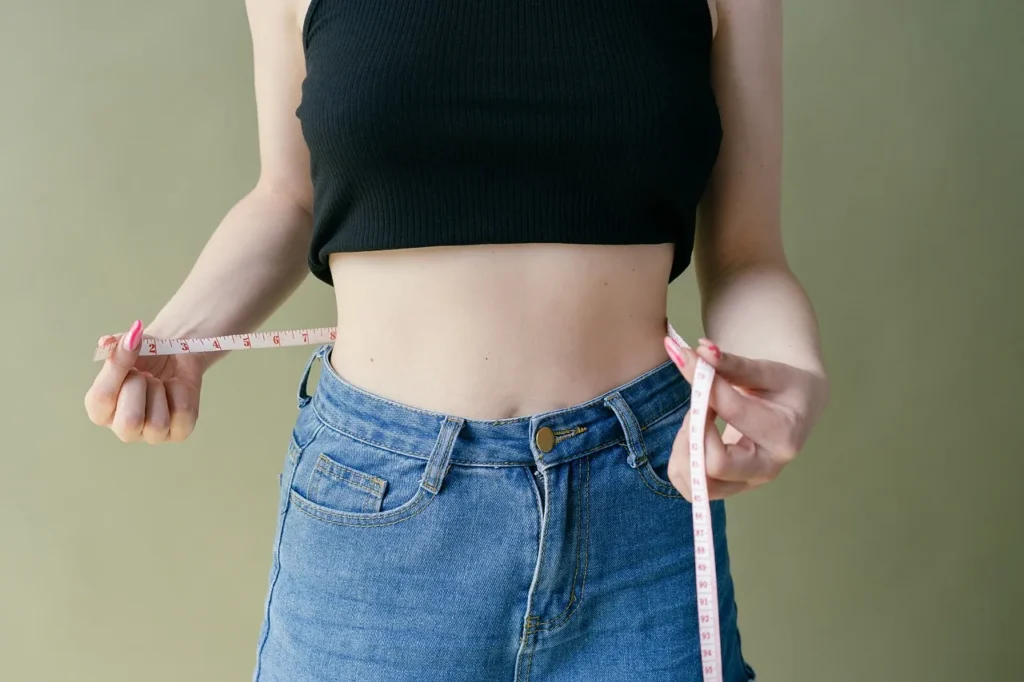
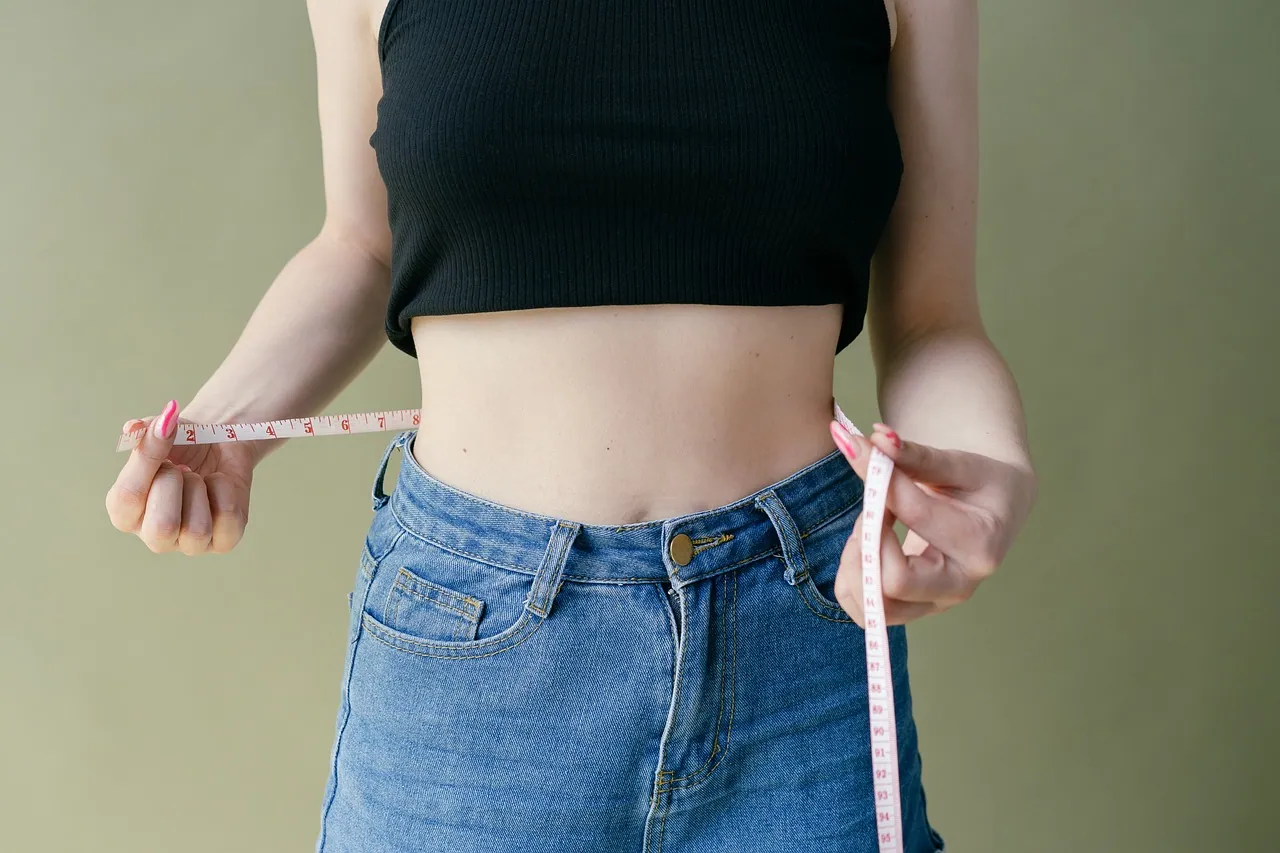
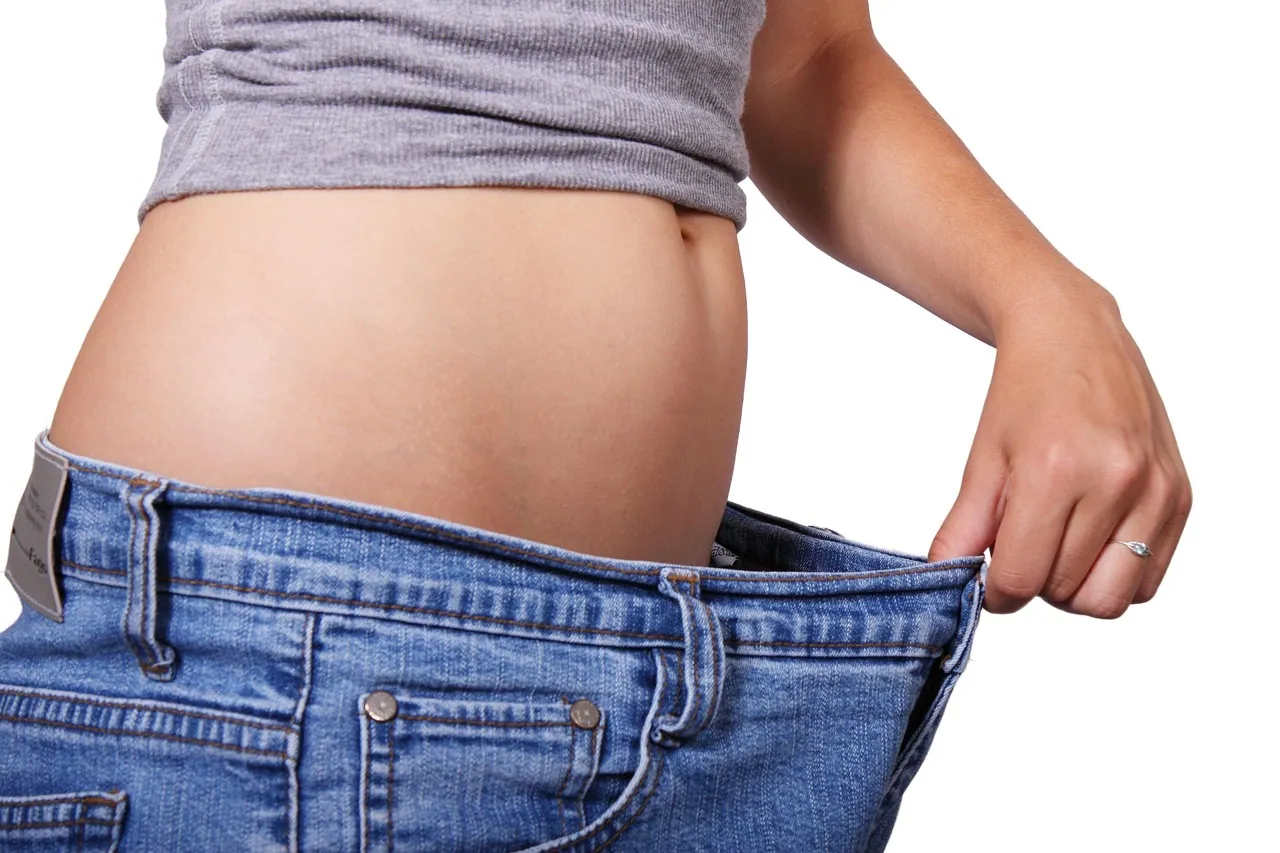
Your jeans button up more easily, your kurta sits looser at the waist, yet the bathroom scale shows the same number it did three weeks ago. That gap is the whole inch loss vs weight loss question. Weight loss is the total drop in everything you carry: fat, muscle, water, food in your gut. Inch loss is a drop in body size, which mostly reflects fat. The two usually move together, but not always at the same speed. This guide explains why the tape can move while the scale stalls, how to measure your waist, hips and thighs so the numbers mean something, and what to do when either number stops moving.
Inch loss vs weight loss: which number shows fat loss?
Inch loss is usually the better sign of fat loss, because fat takes up more space than the same weight of muscle and changes slowly, while scale weight can swing 1–2 kg in a day from water, salt and food. The best picture comes from tracking both: weight weekly as an average, and waist, hip and thigh every 2–4 weeks.
A scale cannot tell you whether a kilo came off as fat or water, or whether you added muscle at the same time. Harvard’s Nutrition Source makes the same point about BMI, which is built on scale weight: it is an “indirect and imperfect” measure that “does not distinguish between body fat and lean body mass” (Harvard T.H. Chan School of Public Health, Body Fat).
A tape measures how much space your body takes up at one spot. Fat is less dense than lean tissue, so losing fat shrinks you more than losing the same weight of muscle. Waist size also tracks the fat that matters most for health. Harvard Health notes that deep belly fat releases fatty acids and inflammatory cytokines that raise type 2 diabetes and heart disease risk, while hip and thigh fat is far less harmful (Harvard Health Publishing, Why worry about your waistline?).
| Question | Scale weight (kg) | Inch loss (cm on the tape) |
|---|---|---|
| What it measures | Total mass: fat, muscle, bone, water, gut contents | Body size at one site (waist, hip, thigh, arm) |
| Day-to-day noise | High. 1–2 kg swings from salt, carbs, periods, bowel habits | Low if measured the same way. Under 1 cm between careful repeats |
| Can it separate fat from muscle? | No | Partly. A shrinking waist with steady weight points to fat loss plus muscle gain |
| Link to health risk | Indirect, via BMI | Direct for waist size: belly fat is tied to diabetes and heart risk |
| Best frequency | Daily or 3×/week, read as a weekly average | Every 2–4 weeks |
| Main weakness | Hides fat loss when you gain muscle or hold water | Easy to fudge: tape position, breathing, pulling tight |
| Best used for | Checking your overall calorie balance | Checking where fat is coming off and whether you are recomposing |
What “inch loss” means on a tape, and what it doesn’t
In fitness, inch loss means a measured drop in circumference at one or more body sites, usually waist, hips, thighs and upper arms. It is a size change, not a weight change. When it comes from eating a little less and training more, it mostly reflects fat loss. When it happens overnight, it almost always reflects water or compression, not fat.
That matters in India, where “inch loss” is sold by salons and slimming centres. Body wraps, sauna belts, “inch loss treatment” sessions and tablets can shrink the tape reading the same afternoon by squeezing or sweating fluid out of the tissue. Drink water and eat dinner, and the number returns within a day or two. None of them changes the fat stored in your fat cells.
Real inch loss has three features:
- It is slow. It shows over weeks, not hours.
- It holds. It is still there 2 weeks later.
- It shows up in clothes. Waistbands, blouse fittings and shirt buttons agree with the tape.
If a product promises several inches off in one session, treat it as a water trick.
Losing inches but not weight: 5 reasons the scale stalls
If you are losing inches but not weight, the most common causes are water retention hiding fat loss, muscle gain from new strength training, extra glycogen stored after a higher-carb day, the premenstrual week, and weighing at inconsistent times. A shrinking waist over 3–4 weeks usually means fat loss is happening even if the scale is flat.
1. Glycogen and water
Muscles and liver store carbohydrate as glycogen, bound to water. A 1992 paper in the American Journal of Clinical Nutrition put the figure at three to four parts water for every part glycogen (Kreitzman et al., 1992). That is why the scale drops fast when you cut carbs, and jumps after a wedding dinner of biryani and sweets. Neither change is fat.
2. You started strength training
New lifters can add muscle while losing fat, so the scale shows the difference between the two, which can be close to zero. The tape still shows the fat loss. This is body recomposition, covered below.
3. Sore muscles hold water
Hard new sessions cause mild muscle damage, and repair holds extra fluid in the muscle for a few days. The scale often rises 0.5–1 kg in the first 2 weeks of a new programme while the waist shrinks.
4. Your menstrual cycle
Fluid retention follows a pattern across the cycle. In a year-long study of 765 cycles in 62 healthy women, self-reported fluid retention peaked on the first day of the period and was lowest in the mid-follicular phase, roughly the week after your period ends (White et al., 2011). If you menstruate, compare your weight with the same phase of last month, not with last week.
5. Weighing at random times
Evening weigh-ins, salty restaurant meals, late dinners and constipation all add noise. Weigh on waking, after the toilet, before food or water, and average the week.
What is body recomposition?
Body recomposition means losing fat and gaining muscle at the same time, so your shape changes more than your weight. It works best for beginners and people returning to training. It relies on regular strength training, around 1.6 g of protein per kg of body weight a day, and a small calorie deficit or maintenance calories.
Body recomposition is the main reason inch loss and weight loss drift apart. Muscle is built after resistance training when protein is high enough, while stored fat is burned when you eat a little less than you use. Both can happen in the same weeks.
The clearest evidence comes from a 2016 randomised trial at McMaster University. Forty young men ate about 40% fewer calories than they needed for 4 weeks and trained 6 days a week with weights and interval sprints. The group eating 2.4 g of protein per kg a day gained 1.2 kg of lean mass and lost 4.8 kg of fat. The group eating 1.2 g/kg gained 0.1 kg of lean mass and lost 3.5 kg of fat (Longland et al., American Journal of Clinical Nutrition, 2016).
Don’t copy that trial. A 40% deficit with 6 supervised sessions a week and provided meals is not a sensible home plan. What it shows is that protein, lifting and a deficit can move fat and muscle in opposite directions at once. A gentler version works over months. It works less well if you are already lean and have trained for years. For a closer look at body fat numbers and how to bring them down, read our guide on how to reduce body fat percentage.
How to measure waist, hips and thighs properly
A tape sitting 2 cm higher, or a breath held in, can change the reading more than a month of fat loss. The World Health Organization’s expert consultation on waist and hip measurement sets out a standard protocol (WHO, Waist circumference and waist–hip ratio, 2008 consultation). Here it is adapted for home use.
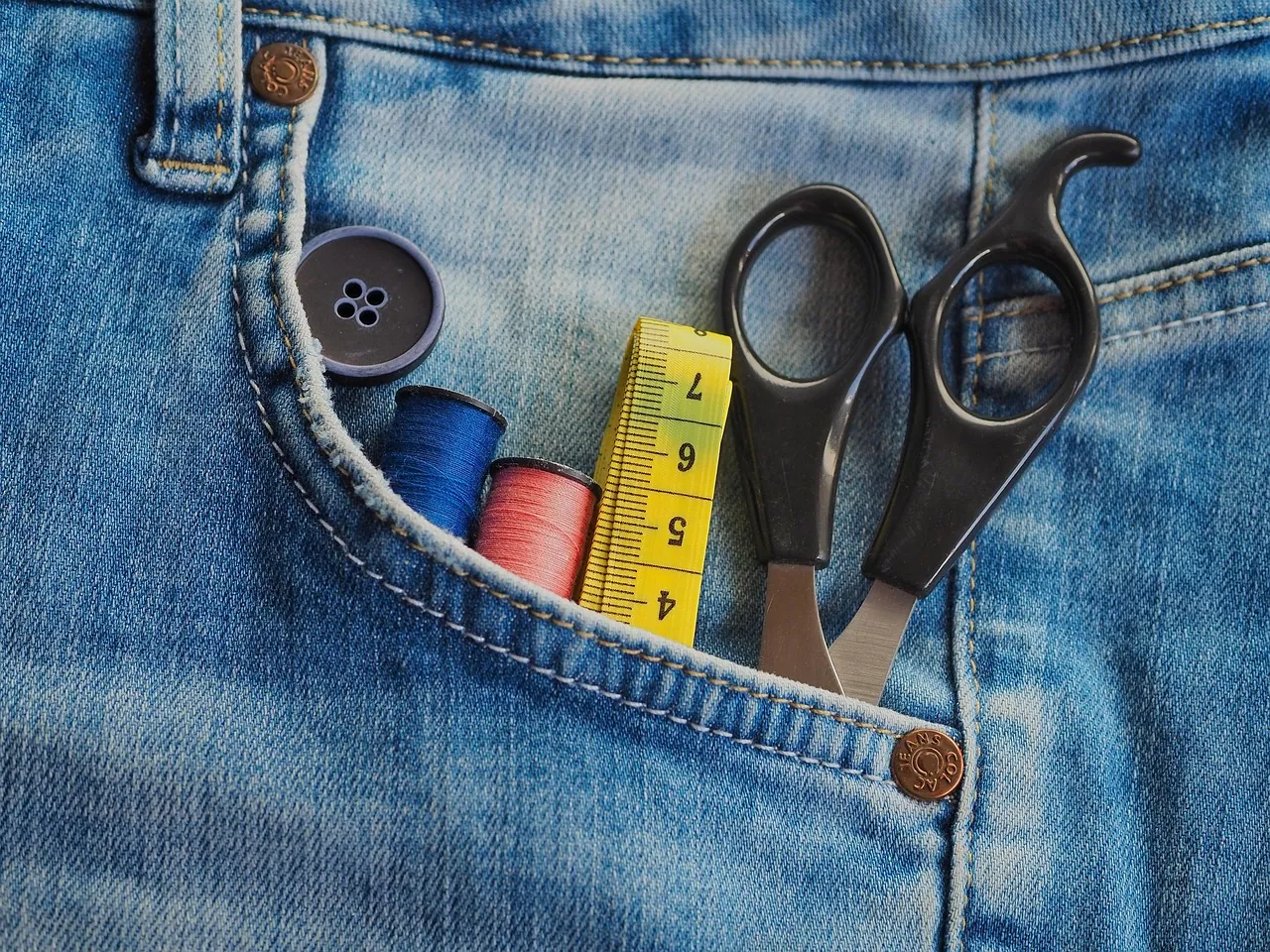
Step-by-step
- Timing: morning, after the toilet, before food or drink, same day of the week.
- Tape: a non-stretch tailor’s tape, flat on bare skin without pressing in.
- Stance: upright, feet together, arms at your sides, weight even.
- Breathing: read the waist at the end of a normal breath out. Don’t suck in.
- Repeat: measure twice. If readings are within 1 cm, average them; if not, repeat both (the WHO rule).
- Record: note the date and, if relevant, your cycle day.
| Site | Landmark | What it tells you | Useful reference |
|---|---|---|---|
| Waist | Midpoint between the lowest rib and the top of the hip bone (iliac crest) | Belly fat, including deep visceral fat. The most useful single number for health | Increased risk above 90 cm for South Asian men and 80 cm for South Asian women (IDF values in the WHO report) |
| Hips | Widest part of the buttocks, tape parallel to the floor | Lower-body fat and glute muscle. Can stay flat or rise with glute training | Used to work out waist-to-hip ratio |
| Thigh | A fixed distance above the top of the kneecap (for example 15 cm), same leg each time | Lower-body fat. Often one of the last areas to shrink, especially in women | Compare only with your own earlier readings |
| Upper arm | Halfway between shoulder tip and elbow, arm relaxed | Arm fat plus muscle. Can grow with training even while fat falls | Compare only with your own earlier readings |
| Waist-to-hip ratio | Waist ÷ hips | Where you store fat | WHO: substantially increased risk at ≥0.90 in men and ≥0.85 in women |
| Waist-to-height ratio | Waist ÷ height, same units | Belly fat relative to your frame | NHS: keep your waist to less than half your height |
The WHO report lists a lower waist cut-off for South Asian men (90 cm) than for European men (94 cm), because South Asians tend to carry more abdominal fat at the same BMI. The NHS likewise uses lower BMI thresholds for people with a South Asian background (NHS, Overweight and obesity). Landmarks also differ: Harvard Health measures just above the hip bone. Using the same spot every time matters more than which spot. Harvard’s Nutrition Source notes waist measurement “has not been standardized”, so use the table to track your own trend, not to diagnose. If your waist is well above these references, ask your doctor about blood sugar, blood pressure and cholesterol checks.
Reading your numbers: a scale vs tape decoder
After 4 weeks of weekly average weights and two sets of measurements, read the pattern here.
| Scale (weekly average) | Waist | Most likely meaning | What to do next |
|---|---|---|---|
| Down | Down | Fat loss. The plan is working | Change nothing. Keep protein and strength sessions steady |
| Flat | Down | Recomposition, or fat loss hidden by water | Keep going for another 4 weeks. Check strength is rising |
| Up slightly (under 1 kg) | Down | Muscle gain, glycogen refill or new-training water | Common in the first 6–8 weeks of lifting. Keep going |
| Down fast (over 1 kg a week) | Barely changed | Mostly water and glycogen, possibly muscle loss | Raise protein and calories slightly. Don’t cut carbs to zero |
| Flat | Flat | You are eating at maintenance | Trim 200–300 kcal a day, or add 2,000–3,000 steps a day |
| Up | Up | Fat gain, or a big salt and water week | Check portion sizes, liquid calories and weekend eating |
| Flat | Up, hips/thighs only | Glute and leg muscle gain from new training | Look at waist first. If waist is flat or down, this is fine |
How to do body recomposition: a 12-week walkthrough
To do body recomposition, lift weights 3 times a week with progressively heavier loads, eat about 1.6 g of protein per kg of body weight daily, keep calories at maintenance or 300–500 kcal below it, sleep 7+ hours, and judge progress by waist size and strength every 4 weeks, not by daily weight.
- Weeks 1–4: learn the movements with light weights, hit protein most days, take baseline measurements.
- Weeks 5–8: add a little weight or a couple of reps each week. Measure at weeks 4 and 8.
- Weeks 9–12: if waist is down and strength up, carry on. If waist hasn’t moved in 8 weeks, use the decoder above.
Body recomposition workout plan (3 days a week)
Strength training is what makes recomposition possible. The Mayo Clinic recommends strength training all major muscle groups at least twice a week, using a weight heavy enough to tire the muscle in about 12 to 15 repetitions, and notes that sessions of 20 to 30 minutes are enough to see results (Mayo Clinic, Strength training: get stronger, leaner, healthier). The plan below uses 3 full-body days you can do at home with dumbbells or bands.
| Day | Session | Main exercises (sets × reps) | Time |
|---|---|---|---|
| Monday | Full body A | Goblet squat 3×10–12, dumbbell row 3×10–12, push-up (knees or full) 3×8–12, glute bridge 3×12–15, plank 3×30 sec | 35–45 min |
| Tuesday | Walk or yoga | 7,000–10,000 steps, or a 30–45 min yoga or mobility class | 30–45 min |
| Wednesday | Full body B | Romanian deadlift 3×10–12, overhead press 3×10–12, reverse lunge 3×10 each leg, lat pulldown or band pulldown 3×12, side plank 3×20 sec each side | 35–45 min |
| Thursday | Walk or cardio class | Brisk walk or a dance/Zumba class at conversational effort | 30–45 min |
| Friday | Full body C | Step-up 3×10 each leg, incline push-up or bench press 3×10–12, one-arm row 3×10–12 each side, hip thrust 3×12, dead bug 3×10 each side | 35–45 min |
| Saturday | Active rest | Long walk, cycling, sport or a family outing on foot | 45–60 min |
| Sunday | Rest | Sleep in, stretch, measure (every 4th Sunday) | — |
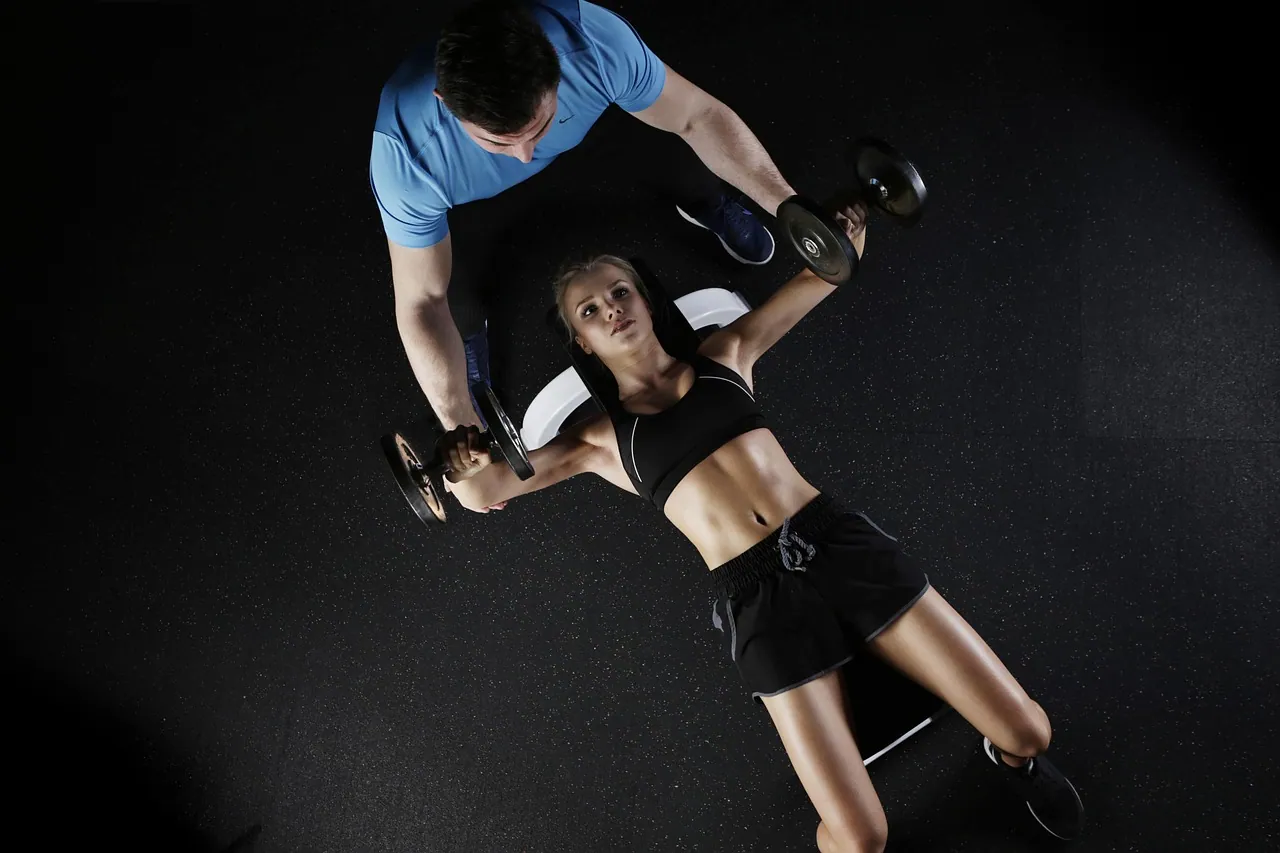
The key rule is progression: when you hit the top of the rep range with good form, add weight. If you are new to lifting or have a knee, back or shoulder issue, a few sessions of 1-on-1 personal training will get your form right before you add load.
Protein for body recomposition
Protein is the other half. A 2018 meta-analysis of 49 trials with 1,863 participants found that protein supplementation increased strength and muscle gains from resistance training, and that intakes above about 1.62 g per kg of body weight a day gave no further gain in fat-free mass (Morton et al., British Journal of Sports Medicine, 2018). So around 1.6 g/kg a day is a sensible target. For a 60 kg woman that is roughly 95–100 g, and for a 75 kg man about 120 g.
That is more than most Indian diets provide, especially vegetarian meals built on rice, roti and a small katori of dal. Spread it across 3–4 meals using paneer, tofu, eggs, chicken, fish, curd, soya chunks, sprouts, chana and rajma. If you have kidney disease, check with your doctor before raising protein.
Body recomposition diet: keep the deficit small
A body recomposition diet is not a crash diet; a big deficit makes muscle harder to keep. Eat at maintenance or 300–500 kcal below it. Keep your normal Indian meal pattern and adjust portions: half the plate vegetables, a generous protein portion, one or two rotis or a fist of rice, and less oil, sweets and fried snacks. If you want a structured plan built around your food and routine, an online nutritionist consultation can set your calorie and protein targets.
Inch loss but not weight loss for months: when to change course
A flat scale for 3–6 weeks while your waist shrinks is normal. For 3–4 months, it deserves a closer look.
- Waist dropping, lifts rising: recomposition. Keep going.
- Waist dropped early, then stopped: trim 200–300 kcal or add steps, recheck in 4 weeks.
- BMI in the obese range, weight flat for 12 weeks: the scale matters for joints, blood sugar and blood pressure too. Aim for both.
- Thyroid, PCOS or hormonal symptoms (fatigue, irregular periods, hair changes): see a doctor for tests. Don’t change medication on your own.
If you want to know what a realistic monthly weight change looks like, see our guide on how much weight you can lose in a month.
Inch loss for women, men and beginners: which number to watch
- Women: the cycle makes the scale noisy, so trust the tape and clothes. Waist usually shrinks before hips and thighs; glute training may hold hip size steady.
- Men: belly fat tends to go first, so waist is the fastest-moving number. The 90 cm South Asian reference is a useful marker.
- Beginners and returners: expect a flat scale and a shrinking tape for 2–3 months.
- People with a lot to lose: both numbers should fall over time.
FAQ
Is inch loss better than weight loss?
For tracking fat loss, usually yes, because waist size swings less with water. For health, both count: if your BMI is high, the scale should also trend down. Track both.
Why am I losing inches but not weight?
Water retention, glycogen refill, your menstrual cycle or new muscle from strength training can mask fat loss on the scale. If your waist keeps shrinking over 4–8 weeks, you are losing fat.
Does inch loss mean fat loss?
Gradual inch loss over weeks, measured the same way, mostly reflects fat loss. Inch loss in one session from wraps, sauna belts or tablets is water and returns within a day or two.
How often should I measure inches?
Every 2–4 weeks, in the morning before food, with a non-stretch tape. Measure twice and average if the readings are within 1 cm.
What is body recomposition?
Losing fat and building muscle at the same time, through strength training, about 1.6 g of protein per kg daily and eating at or slightly below maintenance. It works best for beginners and returners.
How much protein do I need for body recomposition?
About 1.6 g per kg of body weight a day; a 2018 meta-analysis found no extra muscle gain above about 1.62 g/kg. For a 60 kg person that is roughly 95–100 g, spread over 3–4 meals.
Do inch loss treatments and body wraps work?
They shrink the tape reading for a few hours by pushing out fluid, but they do not remove fat. Lasting inch loss comes from a modest calorie deficit and strength training.
Not sure whether your plan is working? Book a session with an online weight loss trainer and get a measuring routine, a 3-day strength plan and protein targets built around your meals.


