

Most Indian men who search for a slim body are not chasing a six-pack. They want a flat stomach in a tucked-in shirt, a face that looks sharper in photos, and a waist that stops creeping up one belt notch a year. That goal is realistic, measurable and achievable in 12 to 16 weeks for most men, provided you stop treating “slim” as “light” and start treating it as “less fat, same or more muscle”.
This guide gives you the numbers first: the waist and BMI markers that matter for Indian men, a protein table built on dal, paneer, eggs and chicken, a one-day Indian meal chart, and a 12-week training plan you can run at home or in a gym. Every figure is sourced, and where a popular promise is unsafe, we say so.
What does a slim body for man actually look like?
For an Indian man, a slim body means a waist below 90 cm, a BMI roughly between 18.5 and 23, and visible muscle on the shoulders, chest and legs. Researchers at AIIMS found a waist of 90 cm or more in Indian men signals high cardiovascular risk (Misra et al., 2006), so the tape measure matters more than the scale.
The 90 cm figure comes from a study of 2,050 adults in north India, which proposed two waist action levels for Asian Indians: 78 cm, where risk starts to rise, and 90 cm, where the odds of blood pressure, sugar and cholesterol problems climb sharply. The widely used Western cut-off of 102 cm misses most Indian men at risk.
BMI works the same way. A WHO expert consultation published in The Lancet in 2004 concluded that many Asian people face high diabetes and heart risk below the standard overweight line of 25, and named 23.0 kg/m² as a public-health action point. That is why Indian doctors treat 23 to 24.9 as overweight.
| Marker | Slim / healthy zone | Watch zone | Act now | How to measure |
|---|---|---|---|---|
| Waist circumference | Below 78 cm | 78–89 cm | 90 cm or more | Tape at navel level, relaxed, after breathing out, first thing in the morning |
| BMI (Asian cut-offs) | 18.5–22.9 | 23.0–24.9 | 25 or above | Weight (kg) ÷ height (m)² |
| Waist-to-height ratio | Below 0.5 | 0.5–0.54 | 0.55 or above | Waist (cm) ÷ height (cm); a common screening rule of thumb |
| Strength check | 20+ clean push-ups | 8–19 | Under 8 | Chest to fist height, body straight |
| Visual check | Belt sits flat, no overhang | Slight overhang when seated | Overhang when standing | Side photo in the same light every 2 weeks |
If you already have a lean waist but want a sharper, more defined look, your real target is body composition. Our guide on how to reduce body fat percentage covers measurement methods and the ranges in detail, so this article sticks to getting slim in the everyday sense.
Lean, skinny or skinny-fat: the Indian twist nobody mentions
Many Indian men are surprised to discover they are “skinny-fat”: thin arms and a normal BMI, yet a soft belly and poor blood reports. It is a well-documented South Asian pattern, not a willpower problem.
The classic example is the “Y-Y paradox”, published in The Lancet in 2004. Two doctors, one Indian and one British, had the same BMI of about 22.3. The Indian doctor carried 21.2% body fat; the British doctor carried 9.1%. The NIH Endotext chapter on thin-fat obesity explains why: South Asians store less fat under the skin and more around the organs, which is the metabolically riskier kind.

If you are skinny-fat and simply eat less, you lose muscle with the fat and end up a smaller version of the same soft shape. The fix is a modest calorie deficit plus lifting plus enough protein, so the scale moves slowly while the waist drops and the shoulders fill out.
Quick self-diagnosis
- Lean: waist under 85 cm, you can see some shape in your arms and shoulders, and you manage 20+ push-ups.
- Skinny-fat: BMI under 23, but a belly overhang when seated, thin arms, and fewer than 10 push-ups. Priority: build muscle, small deficit only.
- Overweight: waist 90 cm or above. Priority: steady fat loss first, with strength training from week one to protect muscle.
Myth check: how to slim body in 7 days (and why it doesn’t work)
No. Real fat loss for most men runs at about 0.5–1 kg per week. The CDC notes that people who lose about 0.5–1 kg (1–2 lb) a week are more likely to keep it off. Anything faster in 7 days is mostly water, gut contents and glycogen, and it returns within days of eating normally.
Seven-day plans promise 3 to 5 kg. The scale does move, but here is why: when you cut carbs sharply, your body burns through stored glycogen, and each gram of glycogen holds roughly three grams of water. Drop your rice and roti for a week and 1.5–2 kg of water can leave. None of it is fat.
The CDC’s guidance on losing weight recommends about 1 to 2 pounds (0.5–0.9 kg) a week, and notes that even a 5% loss improves blood pressure, cholesterol and blood sugar. For an 85 kg man, 5% is about 4.25 kg: a genuinely useful first target that takes 6 to 10 weeks, not 7 days.

What you can do in 7 days: set up your calorie target, buy the protein foods, start two strength sessions and a daily step goal, and take your baseline waist and photos. If you want to see what a realistic timeline looks like for men who have done it, our weight loss before and after guide for men breaks down month-by-month change.
How to slim body without losing muscle: the four levers
Getting slim takes four levers pulled together: a daily deficit of about 300–500 kcal, protein near 1.6 g per kg of body weight, strength training 3 times a week, and 7+ hours of sleep. Dropping any one of them usually means losing muscle, stalling, or regaining the weight within months.
Lever 1: a modest calorie deficit
For fat loss that protects muscle, a review of evidence for natural bodybuilders by Helms and colleagues (2014) recommends losing about 0.5–1% of body weight per week. For an 80 kg man, that is 0.4–0.8 kg weekly.
Worked example: a 30-year-old man, 175 cm, 80 kg, desk job with a short evening walk, burns roughly 2,400–2,500 kcal a day. Eating around 2,000 kcal creates a deficit of about 450 kcal, which lands in that 0.5–1% band. Crash intakes like 1,200 kcal are too low for most men and wreck training.
Lever 2: protein at every meal
A 2018 meta-analysis of 49 trials in the British Journal of Sports Medicine found that gains in lean mass from strength training stopped improving beyond about 1.62 g of protein per kg of body weight per day. That is your practical target: roughly 120–130 g a day for an 80 kg man, split across 3 to 4 meals.
Lever 3: lifting, not just cardio
The WHO 2020 physical activity guidelines advise adults to get 150–300 minutes of moderate activity a week plus muscle-strengthening work on at least two days. For a slim, defined look, treat three strength sessions as the core and walking as the fat-burning support.
Lever 4: sleep
This is the lever men ignore. In a 2010 crossover trial in the Annals of Internal Medicine, dieters who slept 5.5 hours instead of 8.5 lost 55% less fat and 60% more lean mass on the same diet. Late-night scrolling can quietly cancel your deficit.
Protein math for Indian plates
Hitting 120 g of protein on a typical Indian diet of rice, roti and a small katori of dal is hard. A normal thali often gives only 40–60 g. The table shows the foods that close the gap most efficiently. Values are approximate, based on standard food composition data; brands and recipes vary.

| Food | Portion | Protein (g) | Calories (kcal) | Protein per 100 kcal | Approx. cost (₹) |
|---|---|---|---|---|---|
| Chicken breast (raw weight) | 150 g | 33 | 180 | 18.3 | 60–75 |
| Whey protein | 1 scoop (30 g) | 24 | 120 | 20.0 | 60–90 |
| Egg whites | 5 whites | 18 | 85 | 21.2 | 35–40 |
| Whole eggs | 3 eggs | 19 | 215 | 8.8 | 21–24 |
| Soya chunks (dry weight) | 40 g | 21 | 140 | 15.0 | 8–10 |
| Hung curd / Greek yoghurt | 200 g | 18 | 150 | 12.0 | 40–80 |
| Paneer (regular) | 100 g | 18 | 290 | 6.2 | 40–50 |
| Low-fat paneer / tofu | 100 g | 14–18 | 140–180 | ~10 | 30–60 |
| Fish (rohu, raw weight) | 150 g | 25 | 145 | 17.2 | 40–60 |
| Dal (cooked) | 1 katori (150 g) | 7 | 110 | 6.4 | 8–12 |
| Roasted chana | 30 g | 6 | 110 | 5.5 | 4–6 |
| Toned milk | 250 ml | 8 | 145 | 5.5 | 14–16 |
Dal and chana are healthy but inefficient protein sources, since each gram of protein comes with plenty of carbohydrate. Keep them, but anchor each meal with something from the top half of the table. Vegetarians can reach 110–120 g with soya chunks, hung curd, low-fat paneer and one scoop of whey.
A dieting chart for slim body: one day, two versions
Here is a sample day at about 2,000 kcal and 115–140 g of protein for the 80 kg man in our example. It keeps familiar Indian meals but shifts proportions: more protein, less rice or roti, vegetables on every plate. Adjust portions up or down by one roti or half a katori of rice if your target differs.
| Meal | Vegetarian option | Non-vegetarian option | Protein (g) | kcal |
|---|---|---|---|---|
| Breakfast (8 am) | Besan chilla (2) with 100 g low-fat paneer filling + green chutney | 3-egg + 2-white omelette with onion, tomato + 1 multigrain toast | 28–30 | 400 |
| Mid-morning (11 am) | 200 g hung curd with 1 small fruit | Same, or 1 scoop whey in water | 18–24 | 200 |
| Lunch (1:30 pm) | 2 phulka + 1 katori rajma + soya chunk sabzi (30 g dry) + salad | 2 phulka + 100 g chicken curry (less oil) + 1 katori dal + salad | 30–36 | 550 |
| Evening (5 pm) | 30 g roasted chana + black coffee or chai (less sugar) | Same | 6 | 150 |
| Post-workout / pre-dinner | 1 scoop whey in water or 250 ml toned milk | 1 scoop whey in water | 8–24 | 120–145 |
| Dinner (8:30 pm) | ½ katori rice + 1 katori dal + 100 g tofu/paneer bhurji + sabzi | ½ katori rice + 150 g grilled fish or chicken + sabzi + salad | 25–30 | 500 |
| Daily total | Cooking oil: about 3 tsp (15 ml) across the day | 115–140 | ~1,950–2,000 | |
This is a template. If you have diabetes, kidney disease, high uric acid or take regular medication, have a doctor or registered dietitian adjust it. An online nutritionist consultation can build the same structure around your own foods, schedule and blood reports.
The 12-week slim body workout plan
A 12-week slim body workout for men should combine 3 full-body strength sessions a week, a daily target of 8,000–10,000 steps, and one optional cardio session. Progress by adding reps or weight every week. Expect a 4–8 cm drop in waist over 12 weeks if the diet is consistent.
The waist range is an estimate. At 0.5–1% of body weight a week, an 80 kg man loses about 5–9 kg of mostly fat in 12 weeks, and waist change usually tracks that loss. Your own result depends on your starting point and how consistently you follow the plan.
| Weeks | Strength (3×/week) | Sets × reps | Steps / cardio | Nutrition focus | Checkpoint |
|---|---|---|---|---|---|
| 1–2 | Squat, push-up, dumbbell row, hip hinge, plank | 2 × 10–12, stop 3 reps short of failure | 6,000–7,000 steps/day | Log food; hit 100 g protein | Baseline waist, weight, photos, push-up test |
| 3–4 | Same moves, add split squat | 3 × 8–12 | 7,000–8,000 steps | Set ~400–500 kcal deficit | Waist down 1–2 cm |
| 5–6 | Goblet squat, incline/decline push-up, row, Romanian deadlift, side plank | 3 × 8–12, add load or reps | 8,000–9,000 steps + 1 × 20 min brisk walk or cycle | Protein to ~1.6 g/kg | Push-ups +5 from baseline |
| 7–8 | Add overhead press and glute bridge | 3–4 × 6–12 | 9,000 steps + 1 cardio session | One planned higher-carb day per week | Waist down 3–4 cm total |
| 9–10 | Heavier dumbbells or harder progressions (archer push-up, Bulgarian split squat) | 4 × 6–10 | 9,000–10,000 steps + 2 cardio sessions | Recheck calories if weight stalls 2+ weeks | New progress photos |
| 11–12 | Keep load; add 1 finisher (5-min circuit) | 3–4 × 6–10 | 10,000 steps | Plan maintenance calories for after week 12 | Retest all baseline markers |
Slim body exercise list: the six moves that do the work
These six moves cover every major muscle:
- Squat (or goblet squat): legs and core; the biggest calorie burner per set.
- Push-up progressions: chest, shoulders, triceps; scalable from wall push-ups to archer push-ups.
- Dumbbell or backpack row: upper back, which gives the V-shape that makes a waist look smaller.
- Romanian deadlift: hamstrings and glutes; protects the lower back of desk workers.
- Overhead press: shoulder width, the other half of looking slim.
- Plank and side plank: core control. Crunches will not burn belly fat; no exercise spot-reduces fat.
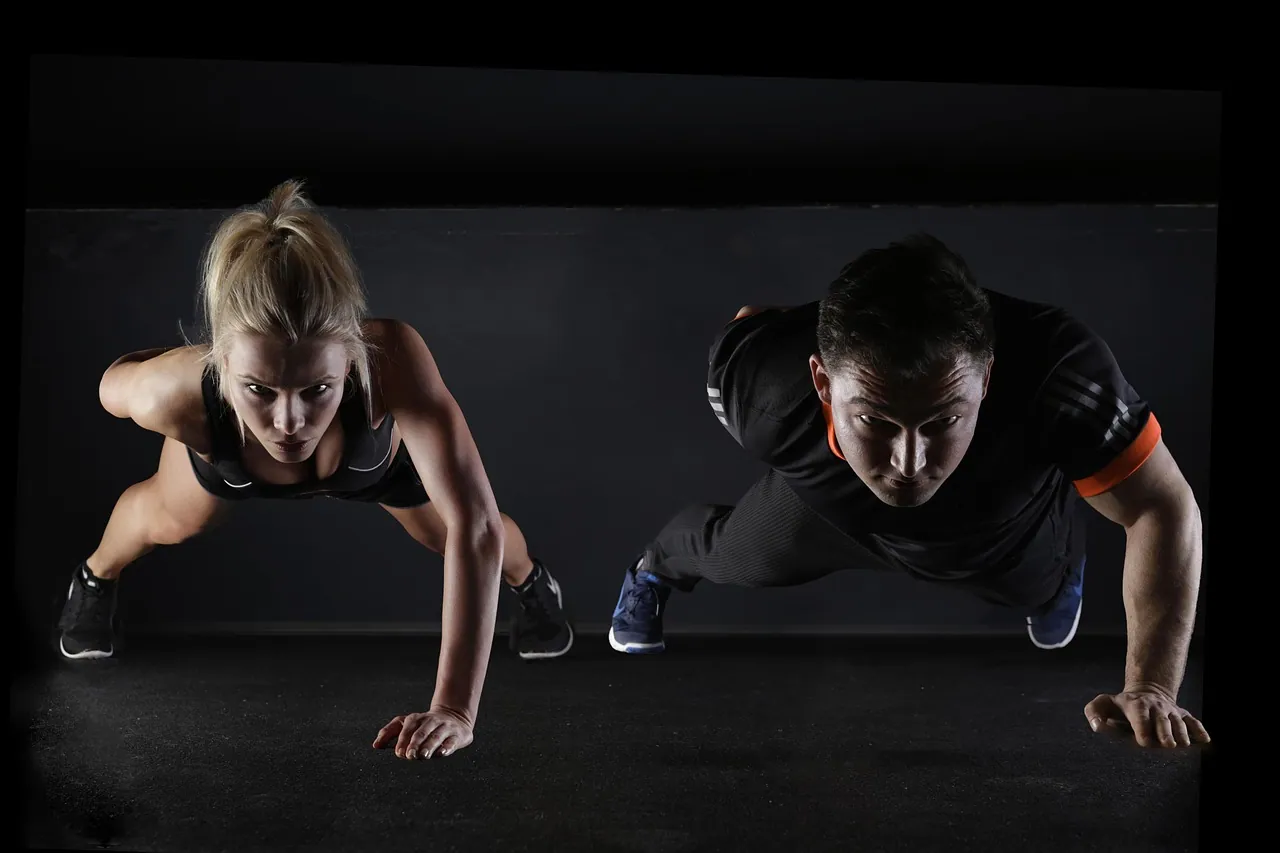
How to get slim body at home, with no gym
A pair of adjustable dumbbells (₹2,000–4,000) or even a backpack loaded with books covers the whole plan. Replace the goblet squat with a backpack squat, rows with backpack rows, and the overhead press with pike push-ups. The rule is the same: when 12 reps feel easy, make the move harder. If you want someone to check your form and increase the difficulty over video, 1-on-1 personal training removes the guesswork.
Where slim body yoga fits in
Yoga will not replace lifting for building shoulders or protecting muscle in a deficit, but it earns a place. A 30–40 minute flow on rest days improves hip and hamstring mobility (which helps your squats and deadlifts), counts toward your weekly activity minutes, and helps many men wind down for better sleep. Online yoga classes are an easy way to add two sessions without extra travel.
Stuck at the same waist for three weeks? Troubleshooting
A plateau is normal. Before cutting food further, work through this list in order.

- Hidden calories: 1 tablespoon of ghee or oil is about 120 kcal. Three extra “small” pours a day wipe out most of a 400 kcal deficit. Measure oil for one week.
- Weekend drift: two restaurant meals and a few drinks on Saturday can add 1,500–2,500 kcal.
- Step count has fallen: dieting makes you move less without noticing. Check your phone data; restore your step target.
- Sleep under 6.5 hours: revisit Lever 4. Fix screen time before you cut food.
- Water retention: a new training block, a salty meal or stress can hide fat loss for 1–2 weeks. Judge by 7-day weight averages and the waist, not one morning.
- You are recomposing: if your waist is steady but strength is rising and photos look better, you may be gaining muscle while losing fat. That is a win.
- Genuine plateau: only after all of the above, reduce intake by 100–150 kcal (for example, half a roti less at dinner) or add 2,000 steps a day.
When “slim” is the wrong goal for you
A slim body is a good goal for a man carrying extra fat around the middle. It is a bad goal in some situations:
- You are already underweight (BMI under 18.5): your goal is to gain muscle, which means eating in a surplus and lifting.
- You feel anxious or guilty around food, or are skipping meals to “earn” eating: talk to a doctor or mental-health professional before starting any diet.
- Sudden unexplained weight loss, constant thirst or fatigue: these can signal diabetes or thyroid problems. Get blood tests before changing your diet.
- Existing conditions: heart, kidney or liver disease, or medication for sugar or blood pressure, all need medical input, because a deficit can change how those medicines work.
Also be wary of “slim body” creams, belts, fat-burner pills and detox teas. None of them has good evidence for fat loss, and pills bought online may not contain what the label says. Money spent on them is better spent on food and a coach.
Frequently asked questions
Slim body kaise banaye for men?
Slim body banane ke liye roz lagbhag 300–500 kcal kam khaiye, har meal mein protein (dal, paneer, soya, anda, chicken) rakhiye, hafte mein 3 din strength training kijiye, 8,000–10,000 kadam chaliye aur 7+ ghante soiye. Waist 90 cm se kam lana ek achha target hai.
How long does it take a man to get a slim body?
Most men with a waist of 90–100 cm need 12 to 24 weeks. Losing 0.5–1% of body weight per week, as recommended in a 2014 evidence review, means about 5–9 kg over 12 weeks for an 80 kg man. Larger starting weights take longer.
How much protein does a man need to get slim?
About 1.6 g per kg of body weight per day, based on a 2018 meta-analysis of 49 trials. For an 80 kg man that is about 125–130 g daily, spread across three to four meals.
What waist size is considered slim for an Indian man?
Below 90 cm is the key health threshold for Indian men, and below 78 cm is lower-risk. Many men who look slim in clothes sit around 76–84 cm, depending on height.
Can I get a slim body without exercise?
You can lose weight through diet alone, but much of it may be muscle, which leaves a skinny-fat look. Strength training at least twice a week, as the WHO recommends, is what keeps the shape you want.
Is running enough to get a slim body?
Running helps burn calories and supports heart health, but running alone does not build shoulders or protect muscle in a deficit. Pair two to three runs with three strength sessions for the best result.
Do slim body creams or belts work?
No. Creams and sweat belts only cause temporary water loss from the skin’s surface. Fat loss requires an overall calorie deficit, and no product can reduce fat from one area.
Start with one number this week: measure your waist tomorrow morning and write it down. Then run weeks 1–2 of the plan above. If you would rather have a coach set your calories, check your form and adjust the plan every fortnight, book a trial session with a Fitstrot trainer.


