
Complementary feeding is the single biggest change your baby’s diet will ever go through — and in India it usually happens with plenty of advice and very little data. This guide covers infant nutrition from day one to the first birthday: when to add solids, what texture and how much at 6, 7–8 and 9–11 months, the iron and vitamin D numbers almost nobody checks, and the foods that must wait until 12 months. Every figure comes from WHO, ICMR-NIN, NIH, NHS, CDC or the NFHS.
Read this first: this is general education, not a prescription. Babies born preterm or small-for-dates, or with reflux, cow’s milk protein allergy or faltering growth, need an individual plan from their paediatrician. Never start, stop or change a prescribed supplement or medicine on the basis of an article. If anything here contradicts your paediatrician, your paediatrician wins.
What is complementary feeding, and when does it actually start?
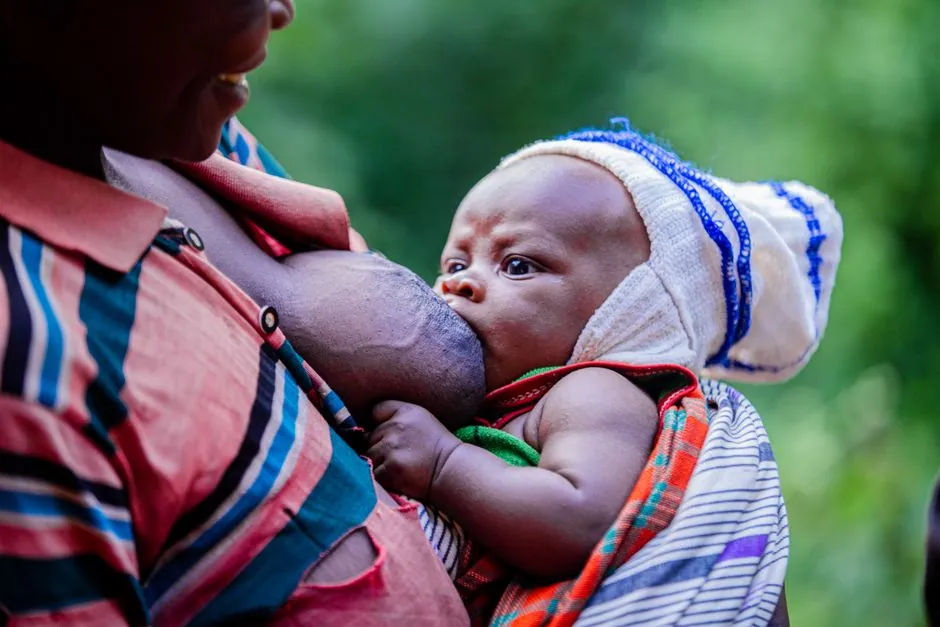
Complementary feeding is the stage when foods other than breast milk or formula are added while milk feeds continue. WHO places it at around 6 months, when “an infant’s need for energy and nutrients starts to exceed what is provided by breast milk.” Breast milk still supplies half or more of a 6–12-month-old’s energy needs.
Solids at this age complement milk; they do not replace it. WHO’s infant and young child feeding guidance recommends breastfeeding to 2 years or beyond alongside safe, adequate complementary foods. A 7-month-old filling up on khichdi and dropping milk feeds is being over-fed on solids, not making progress.
Exclusive breastfeeding for six months: what the numbers say about India
Exclusive breastfeeding means breast milk only — no water, ghutti, honey, gripe water or top-up formula — for six months, with prescribed medicines and drops the only exception. Globally only about 47% of infants aged 0–6 months were exclusively breastfed over 2018–2025, and fewer than one-third (30.8%) of children aged 6–23 months got a diet meeting their nutritional needs, per WHO.
India beats the global average on the first count and trails badly on the second. The NFHS-5 (2019–21) national fact sheet reports 63.7% of Indian babies under six months exclusively breastfed, up from 54.9% in NFHS-4. But only 45.9% of babies aged 6–8 months were getting any solid or semi-solid food with breast milk, just 11.3% of children aged 6–23 months received an adequate diet, and 67.1% of children aged 6–59 months are anaemic.
Read those numbers together and the story is clear: India is getting breastfeeding right and complementary feeding wrong — babies started late, fed too thin, fed too little variety. That is how a nationwide iron problem is built.
Six readiness signs that matter more than the calendar: when to start solids
A baby is ready for solids when they can sit with support and hold their head steady, bring objects to their own mouth, and swallow food instead of tongue-thrusting it back out. The NHS lists these three as the reliable signs; Mayo Clinic adds that babies “show they want food by leaning toward the food and opening their mouths wide.”
Three signals get misread constantly: night waking, watching you eat, and chewing fists. Every baby does all three at four months, and none means hunger for solids.
Start at around six months, per NHS weaning guidance. Before four months is not safe for a term baby. If your baby was born preterm, use corrected age and ask your paediatrician — readiness is judged from the due date.
Complementary feeding chart: texture, amount and Indian first foods by age
The mistake that costs most is texture. Thin food is dilute food and a baby’s stomach is small — thickness is how calories get in. A good test: porridge should sit on an upturned spoon for a second before falling.
| Age | Texture | Amount per meal | Meals + milk | Indian foods to offer |
|---|---|---|---|---|
| 6 months | Smooth, thick purée and mash; no lumps yet | 2–3 teaspoons, building to 2–3 tablespoons | 1–2 meals; breast milk or formula on demand | Thick ragi or rice porridge, mashed moong dal, steamed mashed apple, pear, papaya, banana, sweet potato, carrot, pumpkin |
| 7–8 months | Thicker mash with soft lumps; mashed with a fork, not blended | 3–4 tablespoons, twice a day | 2–3 meals + 1 snack; milk feeds continue | Dal-rice mash, soft khichdi with ghee, curd, mashed paneer, well-cooked egg, ragi sheera, avocado, chikoo |
| 9–11 months | Soft chopped and finger foods; minced meat or fish | 4–6 tablespoons, plus finger foods | 3–4 meals + 1–2 snacks | Soft roti pieces, idli, upma, chopped boiled vegetables, mashed rajma or chana, minced chicken or fish, paneer cubes, nut butter in porridge |
| 12 months+ | Family food, chopped small; still no added salt or sugar | Roughly one-third to one-half of an adult portion | 3 meals + 2 snacks; cow’s milk may now be a drink | Family meals plated before salt is added, whole cow’s milk, more fish and eggs |
6 months: the first weaning food, one ingredient at a time
Start with a single food in small amounts. Mayo Clinic suggests beginning with 1 or 2 teaspoons and waiting “3 to 5 days between each new food to see if your baby reacts.” Offer it when your baby is alert, not ravenous. First-attempt rejection means nothing — babies commonly need eight to fifteen exposures before a new taste is accepted.
7–8 months: raise the texture before your baby turns nine months
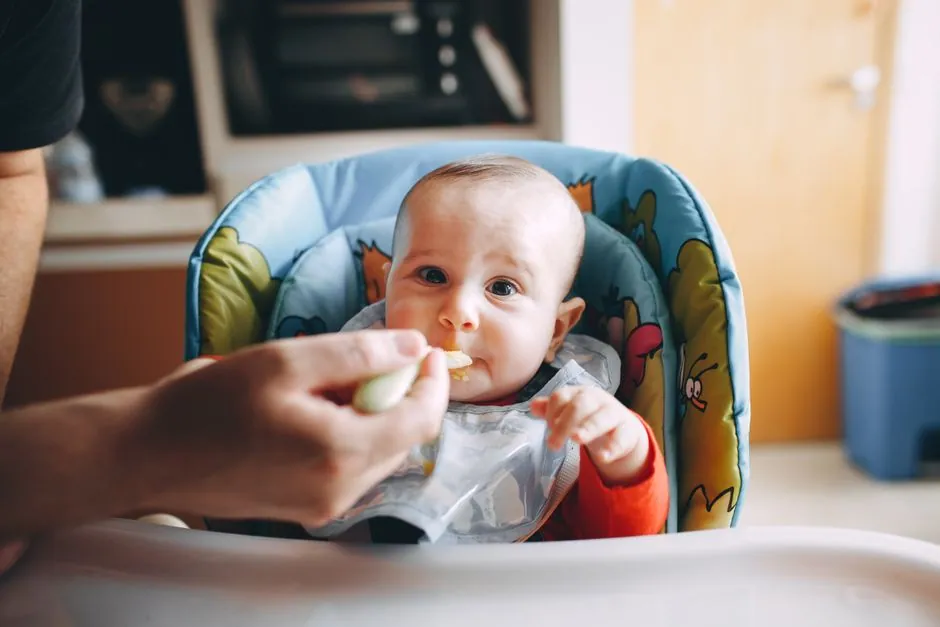
Babies accept lumps most easily in a window of roughly 6 to 10 months. Stay on purées past nine months and you often buy a fussy eater at eighteen. Move from blended to fork-mashed in weeks, not months. WHO’s pattern here is 2–3 meals a day at 6–8 months, with breastfeeding continuing.
9–11 months: finger foods and real chewing
By nine months most babies can pick up soft pieces and self-feed. WHO recommends 3–4 meals a day at 9–23 months plus 1–2 snacks. Offer finger-length soft strips, not coin shapes, and always seat your baby upright — never feed a baby lying down, in a moving car or while being carried.
How much is enough? Energy, protein, iron and vitamin D by age
An Indian infant needs about 530 kcal a day from 0–6 months and 660 kcal a day from 6–12 months, per ICMR-NIN’s 2020 nutrient requirements. Protein RDA moves from 1.40 to 1.23 g per kg per day. The number that changes most is iron: 0.27 mg a day at 0–6 months, 11 mg a day at 7–12 months.
| Nutrient | 0–6 months | 6–12 months | Source |
|---|---|---|---|
| Energy | 530 kcal/day | 660 kcal/day | ICMR-NIN 2020 |
| Protein (RDA) | 1.40 g/kg/day | 1.23 g/kg/day | ICMR-NIN 2020 |
| Iron | 0.27 mg/day (AI) | 11 mg/day (RDA, 7–12 months) | NIH ODS |
| Vitamin D | 10 mcg (400 IU)/day | 10 mcg (400 IU)/day | NIH ODS |
That roughly forty-fold iron jump is the whole reason complementary feeding runs on a six-month timetable: a term baby’s iron stores last about four to six months and breast milk is low in iron. The NIH Office of Dietary Supplements points to iron-containing complementary foods such as iron-fortified cereals from this point. In an Indian kitchen that means ragi, minced meat, egg, dal and green leafy vegetables paired with a vitamin C food — lemon, guava or amla at the same meal improves absorption from plant sources. With 67.1% of Indian under-fives anaemic, this is not optional.
Vitamin D is the other gap, and breast milk genuinely cannot close it: human milk supplies only about 25 to 78 IU per litre against an Adequate Intake of 400 IU a day. NIH ODS notes the American Academy of Pediatrics recommends 400 IU a day for exclusively and partially breastfed infants from soon after birth. Ask your paediatrician for the dose — do not self-prescribe, and do not double up if formula already provides it.
Spoon-feeding or baby led weaning: does it matter which you choose?
Neither method is proven superior for growth, and most families end up doing both. Baby led weaning skips purées for soft finger foods from six months; spoon-feeding starts with purées and adds texture in stages. The non-negotiables are identical: start around six months, get iron in early, raise texture by nine months, never leave a baby unsupervised with food.
| Factor | Spoon-feeding | Baby led weaning |
|---|---|---|
| Start age | Around 6 months | Around 6 months, once sitting unsupported |
| Getting iron in | Easier; fortified cereal and dal go in by spoon | Harder early on; needs deliberate iron-rich finger foods |
| Texture progression | Can stay too smooth for too long | Built in from day one |
| Mess and wastage | Lower | Considerably higher at first |
| Choking safety | Depends on texture control | Depends on food shape — strips, never coins or whole nuts |
| Best for Indian kitchens | Dal-rice mash, ragi porridge, khichdi | Idli fingers, roti strips, steamed carrot batons, paneer |

Foods to avoid before the first birthday, and the reason for each
Each item below has a mechanism behind it, not tradition: honey carries a botulism risk, cow’s milk as a main drink an iron and gut-bleeding risk, salt burdens immature kidneys, added sugar damages emerging teeth, and whole nuts and coin-shaped foods are choking hazards.
| Food | Avoid until | Why | Source |
|---|---|---|---|
| Honey (including in ghutti or on a soother) | 12 months | May cause infant botulism, a severe food poisoning | CDC; NHS |
| Cow’s milk as a main drink | 12 months | Poor iron source and may cause intestinal bleeding in infants | CDC; Mayo Clinic |
| Added salt | Throughout infancy | Immature kidneys cannot handle the sodium load | NHS |
| Added sugar and sugary drinks | 2 years | No room in an infant’s diet for added sugars; tooth decay | CDC; NHS |
| Fruit and vegetable juice | 12 months | No juice under 12 months; maximum 4 oz a day at ages 1–3 | CDC |
| Whole nuts and coin-shaped hard foods | 5 years for whole nuts | Choking risk; ground nuts and nut butters are fine from 6 months | NHS |
| Rice drinks in place of milk | 5 years | Arsenic content; not a milk substitute | NHS |
| Tea, coffee and caffeinated drinks | 24 months | No established safe caffeine limit for young children | CDC |
Full details are on CDC’s foods to avoid or limit page and the NHS list of foods to avoid giving babies. Curd, paneer and cooked milk in food are fine from six months — the 12-month rule is about cow’s milk as a drink.
Allergen introduction: the advice that reversed after 2015
Delaying allergenic foods does not prevent allergy — it appears to increase the risk. The landmark LEAP trial randomised 640 high-risk infants aged 4–11 months to eat or avoid peanut. By 60 months, peanut allergy affected 13.7% of the avoidance group versus 1.9% of the consumption group among infants with a negative initial skin-prick test, and 35.3% versus 10.6% among those with a positive test.
That 2015 New England Journal of Medicine result, available via PubMed Central, rewrote guidance worldwide. The NHS now advises that allergen foods — peanuts, hens’ eggs, gluten and fish among them — “can be introduced from around 6 months of age, 1 at a time and in small amounts so you can spot any reaction.”
Practically: introduce peanut as smooth peanut butter thinned into porridge, never whole nuts — a tiny quantity, in the morning, at home, on a well day — and keep it in the diet regularly once tolerated. If your baby has severe eczema or a known egg allergy, or a sibling has a serious food allergy, speak to your paediatrician first. Lip or facial swelling, hives, vomiting or breathing difficulty is an emergency.
A sample day of infant feeding at 9 months in an Indian home
An illustration of structure, not a prescription — quantities and appetite vary by day. Milk feeds stay on demand alongside.
- 7 am: breastfeed or formula feed.
- Breakfast, 8.30 am: 4 tablespoons of thick ragi porridge with mashed banana, or half a soft idli with dal.
- 10.30 am: breastfeed or formula, then a nap.
- Lunch, 12.30 pm: 5–6 tablespoons of soft khichdi with ghee, mashed carrot and pumpkin, curd, and guava for vitamin C.
- 3 pm: breastfeed or formula.
- Snack, 4.30 pm: steamed apple sticks, paneer cubes or soft roti strips.
- Dinner, 6.30 pm: 4–5 tablespoons of dal-rice mash with spinach, minced chicken or mashed egg.
- Bedtime: breastfeed or formula.
Offer water in an open cup with meals from six months — a few sips, not a bottleful, because water fills a small stomach without feeding it. Plate the baby’s portion before salt goes into the family pot; that one habit removes most of the difficulty from this stage.
Troubleshooting: refusal, gagging, constipation and slow weight gain
Refusal. A baby who turns away has finished. Pressure, screens and chasing with the spoon all reduce intake over weeks. Re-offer the same food days later, cooked differently.
Gagging versus choking. Gagging is loud, red-faced and protective. Choking is silent — if your baby is silent, blue or cannot cough, act immediately and call for emergency help. Learn infant back-blows and chest thrusts before you start solids.
Constipation. Common in the first weeks of solids. Offer water with meals, add pear, prune, papaya and cooked vegetables, and cut back excessive rice or banana. Hard pellet stools with blood, or a baby in real pain, needs a doctor.
Slow weight gain. Before adding meals, raise the energy density of the ones you have: a teaspoon of ghee in the khichdi, thicker porridge, full-fat curd, mashed avocado or nut butter. Thin food fed frequently is the classic pattern behind faltering growth in Indian infants. Weight crossing downward across growth chart lines needs a paediatrician and an individual plan; Fitstrot’s online nutritionist consultation can support the family side alongside your doctor.

Infant nutrition red flags: when to call your paediatrician the same day
Get medical advice promptly if your baby shows any of the following — none should wait for a routine appointment.
- Refusing all feeds, or markedly fewer wet nappies.
- Weight loss, or weight stalling or crossing downward across centile lines.
- Forceful, repeated or green vomiting after feeds.
- Blood in stool, or diarrhoea lasting more than a day or two.
- Hives, facial swelling, wheezing or breathing difficulty after a food — emergency.
- Extreme pallor or unusual lethargy, which can signal anaemia.
- Unable to manage any lump or texture by ten months.
For the next stage, see our guides to child nutrition and the best nutritional drink for toddlers. Breastfeeding mothers thinking about their own diet should read our diet chart for breastfeeding mothers rather than any crash plan.
Frequently asked questions about complementary feeding
Can I start complementary feeding at 4 months instead of 6?
WHO and the NHS both advise starting at around 6 months, and no solids should be given before 4 months under any circumstances. Some babies are assessed by a paediatrician as ready between 4 and 6 months, which Mayo Clinic acknowledges. That is a medical decision made for an individual baby — not a general rule, and not something to decide from a growth spurt or night waking.
What is the best first weaning food for an Indian baby?
There is no single best first food. Thick ragi or rice porridge, mashed moong dal, and steamed mashed vegetables such as carrot, pumpkin or sweet potato all work. Choose one, offer 1–2 teaspoons, and wait 3 to 5 days before adding the next. Prioritise getting an iron-rich food into the rotation within the first two or three weeks.
How much water should a baby drink after starting solids?
Small sips from an open or free-flow cup with meals, from around six months. Before six months an exclusively breastfed baby needs no water at all, even in Indian summers — breast milk is roughly 87% water. Over-watering a baby displaces milk and food from a very small stomach.
Are packaged infant cereals better than homemade porridge?
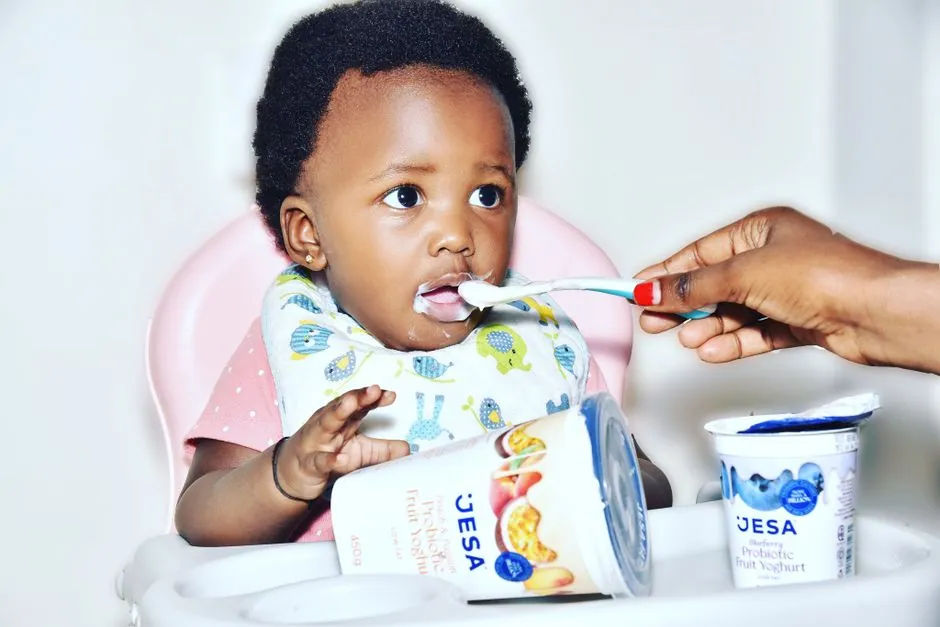
Commercial infant cereals are usually iron-fortified, a genuine advantage given the 11 mg daily iron requirement from 7 months. Homemade porridge is cheaper and more adaptable in texture. Many families use both. Read the label for added sugar, and never use any product as a substitute for breast milk or formula in the first year.
When can my baby have cow’s milk, curd and paneer?
Curd, paneer and milk cooked into food are fine from around six months. Cow’s milk as a main drink should wait until 12 months — CDC warns it may put babies under 12 months at risk of intestinal bleeding, and Mayo Clinic notes it is a poor iron source.
How do I know whether my baby is getting enough iron?
You cannot tell by looking, which is why 67.1% of Indian children aged 6–59 months are anaemic. From 7 months the requirement is 11 mg a day. Offer iron-rich foods at most meals, pair plant iron with a vitamin C food, and ask your paediatrician whether a haemoglobin check or supplement is appropriate for your baby.
Does my baby need vitamin D drops in sunny India?
Very possibly. Breast milk supplies only about 25 to 78 IU of vitamin D per litre against an Adequate Intake of 400 IU a day, and sun exposure is limited for most Indian infants by clothing, indoor living and air quality. The AAP recommends 400 IU a day for breastfed infants. Ask your paediatrician for the dose rather than buying drops yourself.
What should I do if my baby gags on lumpy food?
Stay calm and let the gag reflex do its job — it is protective, not dangerous. Keep offering soft lumps in small amounts, because avoiding texture makes gagging last longer. Silent choking is different and is an emergency. Seat your baby upright, never feed a baby lying down or on the move, and learn infant first aid before starting solids.
Where to go from here
Pick three things and do them this week: thicken the porridge until it holds on a spoon, add one iron-rich food to a daily meal, and plate the baby’s portion before salt goes in. Those three fix most of what goes wrong between six and twelve months. If weight or feeding worries you, see your paediatrician, then take the meal plan to a dietitian — a registered nutritionist consultation can turn this chart into a routine that fits your kitchen.


