
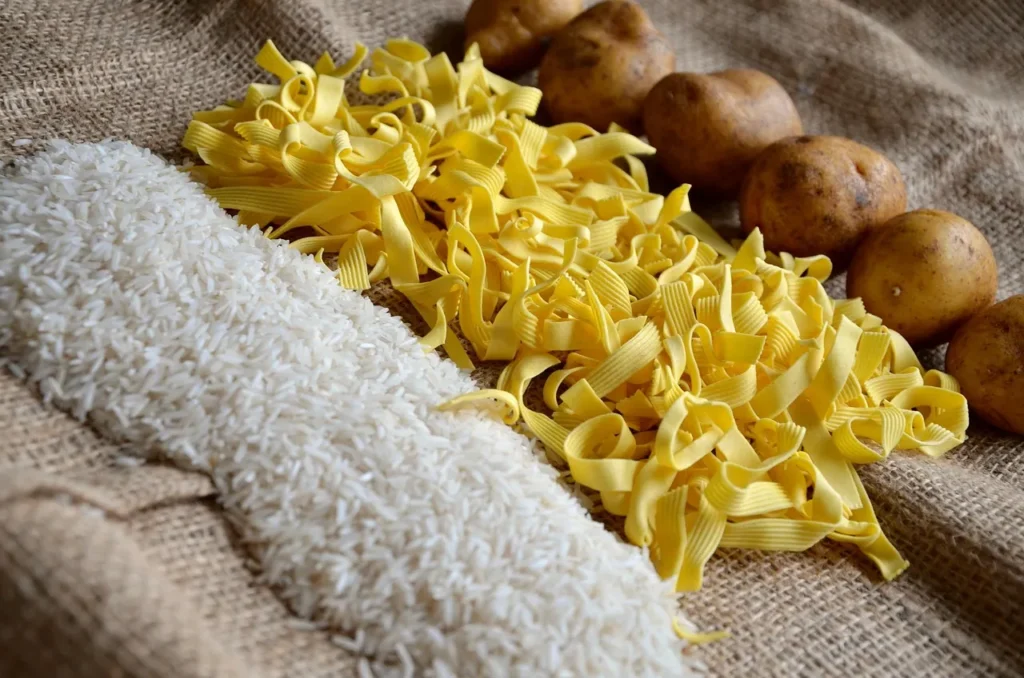
The difference between nutrition and nutrients comes down to one idea: nutrients are the things, nutrition is the process. Protein, iron, vitamin C and water are nutrients: chemical substances you can name, weigh and print on a label. Nutrition is everything that happens to them, from the moment you pick up a roti to the moment its carbohydrate powers a muscle cell. One is a noun you can count. The other is a sequence your body carries out.
It’s a school exam favourite, but it matters beyond exams too. Adults can eat “enough protein” on paper and still have poor nutrition if the process breaks down between plate and cell. Below you’ll get exam-ready definitions, a nutrition vs nutrients table, a types of nutrients chart with Indian food sources, the five stages of nutrition, and a real ICMR-NIN thali broken down both ways.
What is the difference between nutrition and nutrients?
Nutrients are chemical substances in food that the body needs to survive, grow and repair itself: carbohydrates, proteins, fats, vitamins, minerals and water. Nutrition is the whole process by which an organism takes in food and uses those nutrients: ingestion, digestion, absorption, assimilation and egestion. Nutrients are the raw material. Nutrition is the work done with them.
The NIH’s StatPearls reference defines nutrients as “chemical substances required by the body to sustain basic functions” that are “optimally obtained by eating a balanced diet” (StatPearls, NCBI Bookshelf). Notice that the definition already points to the process: you get nutrients by eating, and eating is the first step of nutrition.
The World Health Organization takes the wider view. It calls nutrition “a critical part of health and development” and links better nutrition to stronger immune systems, safer pregnancy and a lower risk of diabetes and heart disease (WHO, Nutrition health topic). No single nutrient does that. A good diet digested, absorbed and used over months does.
A simple way to remember it:
- Nutrient = the petrol.
- Nutrition = filling the tank, the fuel line, the engine burning it, and the exhaust going out.
Nutrition and nutrients difference at a glance
If you revise one thing, make it this table. Board-exam “differentiate between” answers are marked point by point, like this.
| Basis of difference | Nutrition | Nutrients |
|---|---|---|
| What it is | A process (a series of steps) | Substances (chemical compounds and elements) |
| Part of speech in a sentence | “Good nutrition”, “poor nutrition” | “Rich in nutrients”, “a nutrient deficiency” |
| Can it be measured in grams? | No. It is judged by health outcomes (growth, BMI, haemoglobin) | Yes: g, mg or µg per day |
| Examples | Ingestion, digestion, absorption, assimilation, egestion | Carbohydrates, proteins, fats, vitamins, minerals, water |
| Where it happens | Mouth, stomach, intestines, liver, every cell | Found in food; later carried in blood and stored in tissues |
| What goes wrong | Malnutrition: undernutrition or overnutrition | Deficiency or excess of a specific nutrient (such as iron-deficiency anaemia) |
| Relationship | Needs nutrients to exist | Useless to the body without nutrition |
Note the last row: the two terms aren’t opposites. Each depends on the other.
How many types of nutrients does your body need?
Most textbooks list six classes of nutrients: carbohydrates, proteins, fats, vitamins, minerals and water. Some add dietary fibre as a seventh. Carbohydrates, proteins and fats are macronutrients because you need them in grams and they supply energy. Vitamins and minerals are micronutrients, needed in milligrams or micrograms. Water is needed in large amounts but gives no energy.
StatPearls puts it the same way: carbohydrates, lipids and proteins are macronutrients and “serve as a source of energy”, water “is required in large amounts but does not yield energy”, and vitamins and minerals are micronutrients that “play essential roles in metabolism” (NCBI Bookshelf).
Macronutrients: the energy givers
Each gram of macronutrient carries a fixed amount of energy: 4 kcal per gram of carbohydrate, 4 kcal per gram of protein and 9 kcal per gram of fat (StatPearls, NCBI). That is why a tablespoon of ghee has far more calories than a tablespoon of cooked dal even though they look similar in size.
- Carbohydrates are the body’s first-choice fuel, especially for the brain and for exercise. In Indian diets they come mostly from rice, wheat, millets and potatoes. Our explainer on the function of carbohydrates in nutrition goes deeper.
- Proteins are the building blocks of muscle, enzymes, hormones and antibodies. They are made of amino acids, and nine of these (including leucine, lysine and tryptophan) are essential, meaning your body can’t make them, so food must supply them (StatPearls, NCBI). Vegetarians can see how to combine sources in our high-protein vegetarian foods list.
- Fats store energy, form cell membranes and let you absorb vitamins A, D, E and K.
Micronutrients: small amounts, big jobs
There are 13 essential vitamins. Four are fat-soluble (A, D, E and K) and nine are water-soluble (vitamin C and the eight B vitamins), according to the US National Library of Medicine’s MedlinePlus encyclopedia. Water-soluble vitamins that the body doesn’t use leave through urine, so you need a steady supply. Fat-soluble ones are stored.
Minerals are inorganic elements such as calcium, iron, zinc, iodine and magnesium. Calcium builds bone, iron carries oxygen in haemoglobin, and iodine is needed for thyroid hormone.
“Micro” refers to the dose, not the importance. An NCBI StatPearls review estimates that over 2 billion people worldwide have micronutrient deficiencies, mainly pregnant women and children under five, and that about 1 billion have vitamin D deficiency (StatPearls: Micronutrient Intake, Imbalances, and Interventions).
Water and fibre: the two that don’t fit neatly
Water isn’t a macronutrient or a micronutrient, but it is still a nutrient. Mayo Clinic notes that water makes up about 50% to 65% of body weight and that healthy adults generally need about 2.7 to 3.7 litres of total fluid a day, with food supplying about 20% of it (Mayo Clinic). Fibre is a carbohydrate that humans can’t fully digest. That is why some syllabi count it separately and teach “7 types of nutrients”. WHO advises at least 25 g of naturally occurring dietary fibre a day for everyone over 10 years old. Our fibre nutrition guide covers Indian sources.
Types of nutrients and their sources
Use this chart for revision or meal planning. Sources are everyday Indian foods; the last column gives the classic textbook deficiency.
| Nutrient class | Macro or micro | Energy (kcal/g) | Main job in the body | Common Indian sources | Classic deficiency example |
|---|---|---|---|---|---|
| Carbohydrates | Macro | 4 | Primary fuel for brain and muscles | Rice, roti, ragi, jowar, poha, potato, banana | Fatigue and low energy (with protein: marasmus) |
| Proteins | Macro | 4 | Build and repair tissue, enzymes, antibodies | Dal, chana, rajma, paneer, curd, eggs, fish, chicken | Kwashiorkor in children |
| Fats | Macro | 9 | Stored energy, cell membranes, absorb vitamins A, D, E, K | Ghee, groundnut or mustard oil, peanuts, til, almonds | Dry skin, poor absorption of fat-soluble vitamins |
| Vitamins (13) | Micro | 0 | Help enzymes work; vision, immunity, blood clotting | Amla and guava (C), carrot and papaya (A), sunlight and egg yolk (D), leafy greens (K, folate) | Night blindness (A), scurvy (C), rickets (D) |
| Minerals | Micro | 0 | Bones, oxygen transport, fluid balance, thyroid function | Ragi and milk (calcium), green leafy vegetables and pulses (iron), iodised salt (iodine) | Anaemia (iron), goitre (iodine) |
| Water | Neither (needed in litres) | 0 | Temperature control, transport, digestion | Drinking water, buttermilk, coconut water, dal, fruits | Dehydration |
| Dietary fibre (7th in some syllabi) | Carbohydrate, not digested | Mostly none | Bowel regularity, feeds gut bacteria | Whole wheat atta, millets, sprouts, vegetables, fruits with skin | Constipation |
What is nutrition in animals and humans? Five steps from plate to cell
Nutrition in animals, including humans, is heterotrophic: we can’t make our own food, so we eat plants or other animals. It happens in five steps: ingestion (taking food in), digestion (breaking it into simple nutrients), absorption (moving nutrients into blood), assimilation (cells using them), and egestion (removing undigested waste).
Followed through one plate of dal-chawal:
| Stage | Where it happens | What happens to the nutrients | Dal-chawal example |
|---|---|---|---|
| 1. Ingestion | Mouth | Food is taken in, chewed and mixed with saliva; starch digestion begins | You eat a spoonful of rice and dal |
| 2. Digestion | Stomach and small intestine | Acid and enzymes break proteins, starch and fat into amino acids, glucose, fatty acids and glycerol | Dal protein becomes amino acids; rice starch becomes glucose |
| 3. Absorption | Small intestine (villi) | Simple nutrients pass into blood and lymph | Glucose and amino acids enter the bloodstream |
| 4. Assimilation | Liver and every body cell | Nutrients are used for energy, growth and repair, or stored | Glucose fuels your walk; amino acids repair muscle |
| 5. Egestion | Large intestine and rectum | Water is reabsorbed; undigested matter (mostly fibre) leaves as stool | Husk and fibre from dal and vegetables are eliminated |
The US National Institute of Diabetes and Digestive and Kidney Diseases confirms that “the small intestine absorbs most of the nutrients in your food” and that the large intestine “absorbs water and changes the waste from liquid into stool” (NIDDK, Your Digestive System & How It Works).
The nutrients (protein, starch) stay the same in every row. The nutrition is the work done on them.
What is nutrition? Types of nutrition
Biology textbooks also split nutrition by how an organism gets its food:
- Autotrophic nutrition: the organism makes its own food from simple substances. Green plants use carbon dioxide, water and sunlight in photosynthesis.
- Heterotrophic nutrition: the organism depends on others for food. It has three sub-types: holozoic (swallowing solid food, as humans and amoeba do), saprophytic (absorbing nutrients from dead matter, as fungi do) and parasitic (living off a host, as tapeworms and cuscuta do).
Exam-ready answers for school students
Model answers at three levels. Adapt the length to the marks on offer.
What is nutrition? (short answer)
Nutrition is the process by which an organism takes in food and uses it for energy, growth, repair and maintenance of the body. (1 mark)
What is nutrition? (Class 10)
In the Class 10 chapter Life Processes, nutrition is defined as the process of obtaining food and converting it into energy and body substances. A 3-mark answer should add the two modes (autotrophic and heterotrophic), name one example of each (green plants; humans), and list the steps of human nutrition: ingestion, digestion, absorption, assimilation and egestion.
Difference between nutrition and nutrients (Class 6)
For younger students, a two-line answer is enough:
- Nutrients are the parts of food our body needs, such as carbohydrates, proteins, fats, vitamins and minerals.
- Nutrition is the way our body takes in food and uses these nutrients to grow and stay healthy.
A useful memory trick: nutrient ends in “-ent” like ingredient. Nutrition ends in “-tion” like action. Ingredient versus action.

Myth check: four things people get wrong
Myth 1: “Nutrition” and “nutrients” are just two spellings of the same thing.
They aren’t. A biscuit contains nutrients; whether you get good nutrition depends on your whole diet and how your body uses it.
Myth 2: If a food label shows the nutrients, I’m covered.
A label tells you what’s in the packet, not what reaches your cells. Fat-soluble vitamins need dietary fat to be absorbed. The ICMR-NIN notes that micronutrients from food are “better absorbed and more bioavailable” than supplements or fortification, and that routinely taking certain nutrients as supplements “will interfere with absorption of other nutrients” (ICMR-NIN, My Plate for the Day).
Myth 3: Malnutrition only means not eating enough.
Malnutrition covers both undernutrition and overnutrition. WHO reports that around 45% of deaths among children under five are linked to undernutrition, while 1.9 billion adults are overweight or obese (WHO). India has both problems at once, which ICMR-NIN calls the “double burden”. A person can overeat calories and still lack iron or vitamin D. That is sometimes called “hidden hunger”.
Myth 4: A multivitamin can replace a balanced diet.
ICMR-NIN’s own guidance is blunt: “No vitamin or mineral (micronutrients) supplements will provide the adequacy of all nutrients” that a balanced plate supplies. Supplements have a place when a doctor finds a deficiency. They don’t replace the process of eating varied food.
One Indian day of eating, read two ways
ICMR-NIN’s My Plate for the Day shows how a roughly 2,000 kcal Indian diet can be built from raw ingredients. Read the first two columns as food, the last three as nutrients, and the whole plan as nutrition in action.
| Food group | Raw amount per day | Share of energy | Energy (kcal) | Protein (g) | Fat (g) |
|---|---|---|---|---|---|
| Cereals, including millets | 250 g | 42% | ~843 | ~25 | ~5 |
| Pulses (or egg, fish, meat for part) | 85 g | 14% | ~274 | ~20 | ~3 |
| Milk / curd | 300 ml | 11% | ~216 | ~10 | ~13 |
| Vegetables + green leafy vegetables | 400 g | 9% | ~174 | ~10 | ~2 |
| Fruits | 100 g | 3% | ~56 | ~1 | ~1 |
| Nuts and seeds | 35 g | 9% | ~181 | ~6 | ~15 |
| Fats and oils | 27 g | 12% | ~243 | 0 | ~27 |
| Total | ~1,200 g | 100% | ~2,000 | ~72 (about 15% of energy) | ~66 (about 30% of energy) |
Source: ICMR-National Institute of Nutrition, My Plate for the Day. Protein and fat totals are the sums of the rows. NIN notes that sugar, if eaten, should stay within 25–30 g a day, and that this plate isn’t designed for any medical condition.
What this shows:
- Protein comes from five places, not one. Cereals alone contribute about 25 g, more than pulses. Nutrition is about the combination.
- Vegetables provide only 9% of the energy but most of the vitamin C, folate, potassium and fibre. A calorie count would miss their role entirely.
- It lines up with WHO targets. WHO recommends at least 400 g of fruits and vegetables a day, total fat at 30% of energy or less, protein at 10–15% of energy and salt under 5 g a day (WHO Healthy Diet fact sheet, updated 2026). The NIN plate gives 500 g of fruits and vegetables, 30% of energy from fat and 15% from protein.
The ICMR-NIN Dietary Guidelines for Indians go stricter than WHO on sugar: less than 5% of total daily energy for adults, and no added sugar at all for children under 2.
Troubleshooting: the right nutrients, but nutrition still failing
Because nutrition is a process, it can fail even when nutrient intake looks fine. Here are the common weak points, stage by stage:
- Ingestion problems: skipped meals, low appetite or a narrow diet (say, only rice and potatoes). Fix: aim for variety across ICMR-NIN’s food groups rather than one “superfood”.
- Digestion problems: ongoing acidity, bloating or diarrhoea can stop food breaking down properly. Recurring symptoms need a doctor, not weeks of self-treatment.
- Absorption problems: conditions like coeliac disease or long-term gut inflammation damage the small intestine, where NIDDK says most nutrients are absorbed. Someone can eat plenty of iron-rich food and still be anaemic. Only a diagnosis explains why.
- Nutrient interactions: vitamins A, D, E and K need some dietary fat to be absorbed, so a teaspoon of oil or a few nuts helps a salad.
- Higher demand: pregnancy, adolescence, illness and heavy training all raise needs, so the same diet can fall short.
Important: symptoms such as constant tiredness, breathlessness on stairs, hair fall, frequent infections or unexplained weight change can have many causes. See a doctor and get tested (a haemoglobin or vitamin D test, for example) before buying supplements. If you’re already on medicines, don’t start, stop or change them based on an article. Take that decision with your doctor.
Once medical causes are ruled out, a qualified dietitian can spot which nutrients are missing and fit the fixes into Indian meals you already eat. Fitstrot’s online nutritionist consultation does this one-on-one over video.
Frequently asked questions
What is nutrition and nutrients in simple words?
Nutrients are the useful substances in food, such as carbohydrates, proteins, fats, vitamins, minerals and water. Nutrition is the process of eating food, digesting it, absorbing those nutrients and using them for energy, growth and repair. Nutrients are what you get from food. Nutrition is how your body gets and uses them.
Is nutrition the same as a nutrient?
No. A nutrient is a single substance, such as iron or vitamin C, that can be measured in grams, milligrams or micrograms. Nutrition is the overall process and state of how well your body takes in and uses all nutrients. You can have enough of one nutrient and still have poor overall nutrition.
How many types of nutrients are there?
There are six main classes: carbohydrates, proteins, fats, vitamins, minerals and water. Many Indian school syllabi add dietary fibre as a seventh. Carbohydrates, proteins and fats are macronutrients that supply energy (4, 4 and 9 kcal per gram). Vitamins and minerals are micronutrients. Water gives no energy but is essential.
What are the five steps of nutrition in humans?
The five steps are ingestion (taking food in through the mouth), digestion (breaking food into simple nutrients in the stomach and small intestine), absorption (nutrients passing into blood through the small intestine), assimilation (cells using nutrients for energy, growth and repair) and egestion (removing undigested waste through the large intestine).
Which nutrients give energy?
Only the three macronutrients give energy. Carbohydrates and proteins each provide 4 kcal per gram and fats provide 9 kcal per gram. Vitamins, minerals and water provide no calories, although many vitamins help enzymes release energy from food.
What is malnutrition: a nutrient problem or a nutrition problem?
Malnutrition is a nutrition problem that shows up as nutrient imbalances. It includes undernutrition (stunting, wasting, micronutrient deficiencies) and overnutrition (overweight and obesity). WHO links around 45% of deaths in children under five to undernutrition, while 1.9 billion adults worldwide are overweight or obese.
Can supplements give me good nutrition?
Supplements can correct a diagnosed deficiency, but they can’t replace good nutrition. ICMR-NIN states that no vitamin or mineral supplement provides all the nutrients a balanced plate does, and that micronutrients from food are better absorbed. Take supplements only when a doctor recommends them.
Want to turn nutrients on a label into nutrition that works for your body? Book an online session with a Fitstrot nutritionist. We’ll review a typical day of your meals and show you which one or two changes will make the most difference.


