

Used as a steady habit, yoga for mental health is less about fixing a problem and more about giving your nervous system a daily place to slow down. Twenty minutes of gentle movement, slow breathing and quiet attention will not cure anything, but many people find it helps them feel calmer, sleep a little better and react less sharply to a crowded day. Below: what yoga can and cannot do, a routine to start tonight, and when to see a professional instead.
Can Yoga Really Help Your Mental Health?
Yoga can support everyday mental wellbeing as a complement to good sleep, movement, food and company. A realistic goal is feeling steadier and less tense after three or four short sessions a week, noticed over several weeks. It is a supportive habit, not a treatment, and it does not replace therapy or medication for a diagnosed condition.
Mind and body are not separate systems, which is why yoga and mental health belong in one sentence. Stress shows up as tight shoulders, a clenched jaw and shallow breathing. Yoga works from the body upward: loosen the muscles, lengthen the breath, and give attention one simple thing to follow. The benefits of yoga for mental health are modest but cumulative.
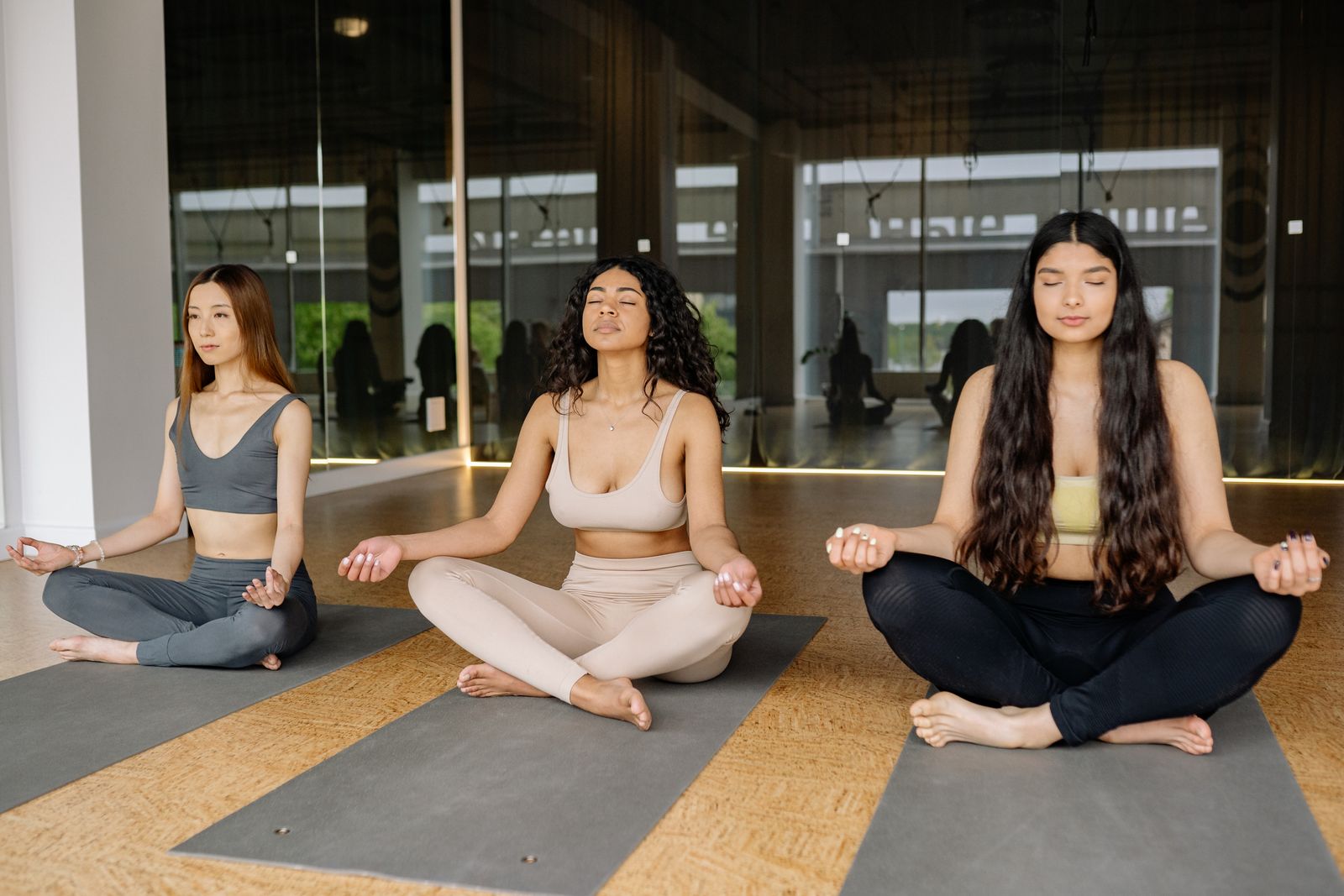
How Does Yoga Work on the Mind and Body?
Yoga combines three things: slow movement, controlled breathing and focused attention. Together they shift the body away from the alert fight-or-flight state toward the calmer rest-and-digest state. In practice that means a slower heartbeat, looser muscles and fewer racing thoughts within about 10 to 20 minutes of unhurried practice.
Each part contributes something different:
- Movement releases tension built up by long hours at a desk or phone.
- Breathing is the fastest lever. A longer exhale than inhale signals safety to the body, which is why most calming practices lean on it.
- Attention gives the mind a job, leaving less room for rumination, the habit of replaying one worry on repeat.
Turning “I should look after myself” into a repeatable 20 minutes is what makes yoga for emotional wellbeing practical.
Myth Check: What Yoga Is Not
Myth: you must be flexible. You do not. The poses that help most, such as child’s pose, legs up the wall and simple seated breathing, ask for no flexibility at all. Bend your knees and use a cushion.
Myth: you must clear your mind. Also false. A busy mind is normal. The practice is noticing you have drifted and returning to the breath.
Myth: yoga is a replacement for therapy or medication. It is not. If you are managing depression, an anxiety disorder or any diagnosed condition, yoga sits beside professional care, never in place of it. Never stop or change a prescribed medicine because yoga is helping.
Yoga Styles Compared by How They Feel
Different styles suit different moods. Pick a starting point, then adjust after a week or two.
| Style | Pace | What it feels like | Often a good fit when you feel |
|---|---|---|---|
| Restorative | Very slow, props hold you | Deep rest, almost like a guided nap | Wired, exhausted or overstimulated (see restorative yoga) |
| Hatha | Slow, steady | Simple poses with attention on alignment and breath | New to yoga and want structure |
| Yin | Slow, long holds of 2 to 4 minutes | Deep, quiet stretching with time to notice thoughts | Restless but able to sit with stillness |
| Yoga nidra | Lying still, guided | A spoken body scan that can feel like sinking | Struggling to wind down at night (see yoga for sleep) |
| Vinyasa | Flowing, moderate to brisk | Movement linked to breath, warming and energising | Flat, low on energy or stuck in your head (see vinyasa yoga) |
A simple rule: when keyed up, go slower and more supported; when flat, go a little more active. If unsure, start with hatha or restorative.
A 20-Minute Routine You Can Do Tonight
This is a beginner-friendly sequence built from common mental health yoga poses. You need a mat or a folded blanket, a wall, and a quiet corner. Move slowly and stop anything that hurts.
| Step | Time | What to do | Form cue |
|---|---|---|---|
| 1. Arrive in easy pose (Sukhasana) | 3 min | Sit cross-legged, breathe in for 4 counts and out for 6 | Sit on a cushion so the knees sit below the hips; relax the jaw |
| 2. Cat-cow (Marjaryasana-Bitilasana) | 2 min | On hands and knees, arch and round the spine with the breath | Move slowly; let the breath lead each movement |
| 3. Child’s pose (Balasana) | 3 min | Knees wide, hips back toward the heels, forehead down | Place a pillow under the forehead or hips if it feels strained |
| 4. Seated forward fold (Paschimottanasana) | 2 min | Legs out in front, fold from the hips and let the head hang | Bend the knees generously; no pulling or forcing |
| 5. Supine twist | 3 min | Lie on your back, drop both knees to one side, then the other | Keep both shoulders heavy on the floor; about 90 seconds a side |
| 6. Legs up the wall (Viparita Karani) | 4 min | Hips near the wall, legs resting up the wall, arms relaxed | Skip or ask your doctor first if you have eye or blood pressure concerns |
| 7. Corpse pose (Savasana) | 3 min | Lie flat, eyes closed, breathing naturally | Cover up if you feel cold; let go of effort |
Indian homes are often shared and busy, so a fixed time, say right after dinner or before sleep, works better than waiting for a quiet moment. The guide to yoga at home covers setting up a small space.
How Often Should You Do Yoga for Mental Wellbeing?
Three to four sessions of 15 to 30 minutes a week is a sensible starting point, with a few minutes of breathing on other days. Consistency matters more than length. Give it four to six weeks before judging, and expect gradual change.
This gentle four-week ramp is easy to adjust.
| Week | Sessions | Length | Focus | Check-in question |
|---|---|---|---|---|
| 1 | 3 a week | 10 to 15 min | Slow breathing, child’s pose, savasana | Did I manage to start, even if it was short? |
| 2 | 3 a week | 15 to 20 min | Add cat-cow and seated forward fold | Do my shoulders and jaw feel looser afterwards? |
| 3 | 3 to 4 a week | 20 min | Full routine from the table above | Am I falling asleep a little easier? |
| 4 | 4 a week | 20 to 30 min | Add a style you enjoy: yin, nidra or gentle vinyasa | What do I notice earlier now, tension or mood dips? |
Jot a one-line note after each session on how you felt before and after; it shows which style suits you.
Yoga Breathing Exercises That Fit Into Any Day
Slow breathing needs no mat and works at a desk or on a metro seat; three to five minutes helps many people settle.
- Longer exhale breathing: inhale through the nose for about 4 counts, exhale slowly for about 6. Repeat for 3 to 5 minutes. This is the safest starting point.
- Gentle alternate nostril breathing (Nadi Shodhana): breathe softly through one nostril at a time without holding the breath. Keep it light and stop if you feel dizzy.
Be cautious with forceful or fast styles such as kapalbhati and bhastrika, and with long breath holds. They are stimulating rather than calming and not suitable for everyone (see the safety list below). If you tend towards panic, skip holds entirely.
Troubleshooting: When Yoga Does Not Seem to Help
“My mind will not stop racing.” That is normal early on. Follow the breath at the nostrils, and keep sessions to five minutes rather than fighting your thoughts.
“I felt worse, more tearful or uneasy.” Slowing down can bring feelings up. Shorten the session, keep your eyes open, favour movement over long stillness, and stop if it is distressing. If it keeps happening, speak to a counsellor or therapist.
“I get bored.” Change the style. If you find dance easier than stillness, Zumba for mental health offers a more energetic route to a lighter mood.
“I keep skipping it.” Shrink the goal: ten minutes at a fixed time beats a perfect plan you drop by week two.
“I am doing it, but I still feel low or anxious most days.” That is a sign to add professional support, not to try harder. See the next sections.
Yoga for Different Situations in Indian Life
Students and exam seasons. A 10-minute evening session with a long exhale and legs up the wall helps you wind down before sleep.
Office workers and long commutes. Cat-cow, a seated forward fold and slow breathing take only a few minutes after work.
New parents and caregivers. A five-minute breathing practice while the baby naps counts; sleep, food and family support matter as much as any pose.
For targeted routines, the dedicated guides on yoga for anxiety and yoga for stress go deeper on those specific experiences. If you prefer to practise in a live online setting, the post on online yoga for mental wellness explains how classes work.
Building a Wider Mental Wellness Routine
Yoga works best as one part of a routine, not the whole of it. Pair it with regular meals, water, daylight, walking and time with people you trust. A registered dietitian can help you build steady Indian meals; see Fitstrot’s online nutritionist consultation.
If weight is on your mind too, see yoga for weight loss.
See Your Doctor or a Mental Health Professional If…
Yoga is supportive, not a treatment. Please speak to a doctor, psychiatrist or counsellor if any of these apply to you:
- You have felt low, empty or hopeless most days for two weeks or more.
- You have panic attacks, constant worry you cannot switch off, or fear that stops you doing normal things.
- Your sleep, appetite or concentration has changed noticeably for several weeks.
- You are relying on alcohol, tobacco or other substances to cope.
- You are already on prescribed medication or in therapy. Do not stop or change any medicine because yoga is helping; talk to your prescriber first.
If you are having thoughts of harming yourself or ending your life, please do not wait. Call 112 for emergency help or the Tele-MANAS helpline on 14416, and tell someone you trust where you are right now.
Who Should Take Extra Care or Skip Certain Practices
Check with your doctor first if you fall into any of these groups, and tell your instructor before class.
- Pregnancy: avoid forceful breathing, long breath holds, deep twists, hot yoga and lying flat on the back for long periods in later pregnancy.
- High blood pressure, heart conditions or glaucoma: avoid inversions such as legs up the wall unless your doctor agrees, and skip breath holds and fast breathing.
- Epilepsy, fainting or dizziness: avoid fast breathing styles and very hot rooms.
- Back, neck or joint injuries and recent surgery: modify forward folds and twists, bend the knees, and follow your doctor or physiotherapist.
- Trauma history or severe anxiety: long silent stillness with closed eyes can feel unsafe. Keep your eyes open, keep sessions short, and choose a trauma-aware teacher.
- Eating disorders: body-focused instructions can be triggering, so work with your treating clinician before joining classes.
- Severe depression, mania or psychosis: do not start intensive meditation or breathing programmes without your professional’s agreement.
Frequently Asked Questions About Yoga for Mental Health
Is yoga good for mental health?
Yes, as a supportive habit. Slow movement, steady breathing and focused attention can leave you feeling calmer and less tense, especially if you practise three to four times a week. It is not a cure or a replacement for therapy or medication, and results vary from person to person.
How long does yoga take to help mental health?
Many people feel calmer after a single 15 to 20 minute session, particularly after breathing practice. More lasting changes in mood and stress response usually build over several weeks of regular practice, so give it about four to six weeks before judging whether it suits you.
What are the best yoga poses for mental health?
Gentle, easy poses work best: child’s pose, cat-cow, seated forward fold, a supine twist, legs up the wall and savasana, plus slow breathing. None need flexibility. Skip legs up the wall if you have glaucoma or high blood pressure unless your doctor agrees.
Can yoga replace therapy or medication?
No. Yoga can sit alongside professional care, but it should never replace therapy, counselling or prescribed medication. If you have a diagnosed condition, keep following your treatment plan and never stop or change medicine without speaking to your doctor first.
Can I do yoga for mental health at home or online?
Yes. The calming effect comes from slow breathing, gentle movement and attention, which work at home as well as in a studio. Online classes add live guidance and remove travel time.
Start With a Live Class
If you would like a teacher to guide the pace, try a session with Fitstrot’s online yoga classes and begin with a gentle or restorative class this week.


