

Short answer: yes — is Zumba cardio is a question with a settled answer, and the answer is that a standard group class sits squarely in the moderate-to-vigorous aerobic band. The 2024 Adult Compendium of Physical Activities assigns a Zumba group class 6.5 METs and a Zumba home video 5.5 METs, both above the 3.0-MET line that separates “moderate aerobic activity” from light movement. What the answer does not tell you is how much of your weekly cardio quota one class actually covers, how it stacks up against a run, or what to do when your heart rate refuses to climb. That is what the rest of this page is for.
So, is Zumba cardio — and how confident can we be?
Zumba is cardio. In a controlled trial of 19 healthy women aged 18–22, the American Council on Exercise recorded an average heart rate of 154 bpm during a 39-minute class — roughly 80% of predicted maximum — with an average energy cost of 9.5 kcal per minute, 369 kcal per session and an average intensity of 8.8 METs. Those figures land inside the intensity range published for improving cardiovascular endurance, which is the technical definition of a cardio workout.
Two things make Zumba unusually well-evidenced compared with other dance formats. First, the ACE-commissioned study measured oxygen uptake directly rather than estimating from step counts, recording an average VO2 of 30.9 mL/kg/min, or 64% of the participants’ VO2max. Second, national guidelines name it by category: the NHS lists dancing explicitly among moderate-intensity activities that count toward the weekly target for adults aged 19 to 64.
The honest caveat is that “Zumba” describes a licensing format, not a fixed dose. A 45-minute class taught at a Latin-club tempo with full-range travel steps is a different physiological event from a 25-minute living-room video you half-follow while watching the instructor’s feet. The Compendium’s one-MET gap between studio and home video is the published version of exactly that difference.
Inside a Zumba cardio workout: what 45 minutes actually does
A Zumba cardio workout is built as an interval session disguised as a playlist. Choreography alternates high-tempo merengue, salsa and reggaeton tracks with slower cumbia or bachata recovery tracks, which pushes heart rate up in waves rather than holding it flat. That structure is why the ACE researchers described the response as “interval-style” rather than steady-state, and it is the reason a class can average 80% of maximum heart rate without feeling like a time trial.
Physiologically, the adaptations you are buying are the standard aerobic ones. Mayo Clinic lists a stronger heart that pumps blood more efficiently, higher HDL cholesterol with lower LDL, better blood-pressure and blood-sugar control, improved sleep, and reduced risk of heart disease, type 2 diabetes, stroke and several cancers among the returns on regular aerobic work.
The evidence for Zumba specifically is good on fitness and weaker on fat. A 2020 systematic review and meta-analysis in IJERPH pooled eight controlled studies (196 participants in Zumba groups, 177 controls) and found a significant improvement in VO2peak — standardised mean difference 0.53, 95% CI 0.04 to 1.02, p = 0.03 — but no significant change in body-fat percentage (SMD −0.25, 95% CI −0.67 to 0.16, p = 0.23). The authors’ own conclusion is worth quoting plainly: Zumba “could be an effective tool to enhance VO2peak but an ineffective strategy for losing total fat mass.” Read the full meta-analysis on PMC before anyone sells you Zumba as a fat-loss guarantee. A separate 8-week randomised controlled study in the Journal of Sports Sciences (2016) reached a similar shape of conclusion: real cardiorespiratory gains, modest body-composition change without a diet component.
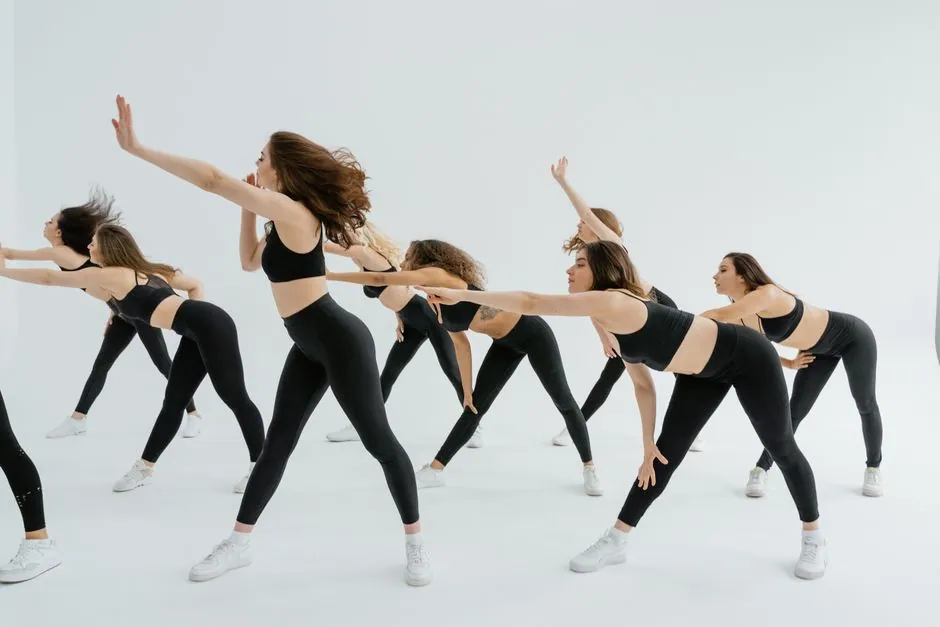
Aerobic exercise heart rate zone: where a Zumba class actually lands
An aerobic exercise heart rate zone is defined as a percentage of your estimated maximum heart rate, which the American Heart Association estimates as 220 minus your age. Moderate intensity is roughly 50–70% of that maximum; vigorous intensity is roughly 70–85%. The ACE study’s 154 bpm average put a 20-year-old participant at about 77% — the lower half of the vigorous band, sustained for nearly 40 minutes.
Use the table below to find your own numbers. If your watch spends most of a class in column three, you are doing moderate cardio. If it spends most of the class in column four, you are doing vigorous cardio — and, as you will see in the next section, vigorous minutes count double.
| Age | Estimated max HR | Moderate zone (50–70%) | Vigorous zone (70–85%) | Typical Zumba class average |
|---|---|---|---|---|
| 20 | 200 bpm | 100–140 bpm | 140–170 bpm | ~154 bpm (ACE measured) |
| 30 | 190 bpm | 95–133 bpm | 133–162 bpm | 135–150 bpm |
| 40 | 180 bpm | 90–126 bpm | 126–153 bpm | 128–142 bpm |
| 50 | 170 bpm | 85–119 bpm | 119–144 bpm | 120–135 bpm |
| 60 | 160 bpm | 80–112 bpm | 112–136 bpm | 112–126 bpm |
Two honest limits on this table. The 220 − age formula carries an error band of roughly ±10–12 bpm for any individual, so treat it as a starting estimate, not a verdict. And if you take beta-blockers or any medication that blunts heart rate, the numbers will read low regardless of how hard you are working — talk to your doctor about using perceived exertion or the talk test instead, and never adjust medication to hit a training zone.
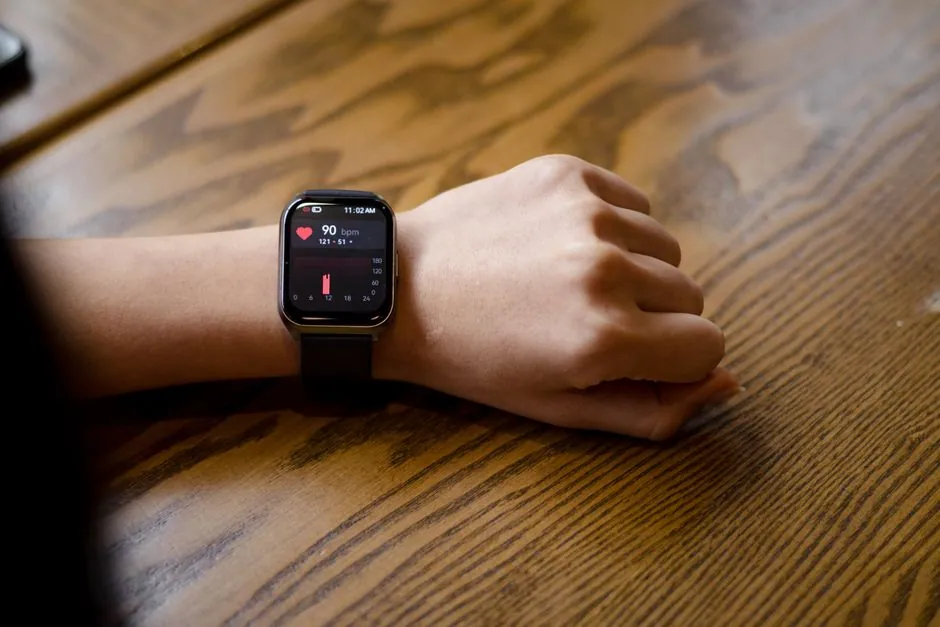
Is Zumba cardio or strength? Correcting the most common mix-up
Zumba is cardio, not strength training. The squats, lunges and plié movements inside choreography load your legs and glutes repeatedly at bodyweight, which builds muscular endurance — but progressive overload, the mechanism that builds muscle size and bone density, requires load that increases over time. Bodyweight choreography at a fixed tempo does not progressively overload anything after the first few weeks.
This matters because the guidelines treat the two as separate obligations, not substitutes. The WHO Guidelines on Physical Activity and Sedentary Behaviour ask adults for their weekly aerobic minutes and, separately, “muscle-strengthening activities at moderate or greater intensity that involve all major muscle groups on 2 or more days a week.” Six Zumba classes a week satisfies the first line and leaves the second line completely unmet.
Cardio vs aerobic exercise: are they the same thing?
In everyday use, yes. “Cardio” is shorthand for cardiorespiratory or aerobic exercise — continuous, rhythmic activity using large muscle groups that raises heart rate and breathing for a sustained period. Technically, “aerobic” describes the metabolic pathway (oxygen-fuelled), while “cardio” describes the training target (the heart and lungs). Zumba qualifies on both counts, though its sprint-like bursts briefly tap anaerobic pathways too.
The practical fix is not to abandon Zumba; it is to bolt two short resistance sessions onto it. Twenty-five minutes of squats, rows, presses and a loaded carry, twice a week, covers the WHO strength line without denting your dance schedule. If you are not sure how to build that around your class days, a 1-on-1 personal training block is the fastest way to get the programming right the first time.
Zumba calories burned in 30 minutes vs running, cycling and HIIT
A 65 kg adult burns roughly 222 kcal in 30 minutes of a Zumba group class and about 188 kcal in 30 minutes of a Zumba home video, using the Compendium MET values and the standard equation (kcal/min = MET × 3.5 × body weight in kg ÷ 200). That puts studio Zumba slightly below a 12-minute-mile run and comfortably above brisk walking — an honest mid-table finish, not the calorie bonfire the marketing suggests.
The table below runs the same equation across four body weights common in India. Cross-checked against the Harvard Health calories-burned chart, which lists 198 kcal for 30 minutes of low-impact aerobics and 252 kcal for high-impact aerobics at 70 kg, the figures line up within about 10%.
| Activity | METs | 55 kg | 65 kg | 75 kg | 85 kg |
|---|---|---|---|---|---|
| Brisk walking, 5.6–6.3 km/h | 4.8 | 139 | 164 | 189 | 214 |
| Zumba, home video | 5.5 | 159 | 188 | 217 | 245 |
| Zumba, group class | 6.5 | 188 | 222 | 256 | 290 |
| Stationary cycling, general | 6.8 | 196 | 232 | 268 | 303 |
| HIIT, moderate effort | 7.0 | 202 | 239 | 276 | 312 |
| Aerobic dance, high impact, vigorous | 8.0 | 231 | 273 | 315 | 357 |
| Running, 8 km/h (12 min/mile) | 8.5 | 245 | 290 | 335 | 379 |
| Elliptical trainer, vigorous | 9.0 | 260 | 307 | 354 | 402 |
| Running, 10 km/h (10 min/mile) | 9.3 | 269 | 317 | 366 | 415 |
| Rope skipping / vigorous HIIT | 11.0 | 318 | 375 | 433 | 491 |
Read this table for adherence, not arithmetic. Rope skipping burns roughly 1.7× what a Zumba class burns per minute — but almost nobody skips rope for 45 unbroken minutes, three times a week, for a year. Zumba’s advantage is that people keep showing up, and a 222-kcal session you complete 140 times a year beats a 433-kcal session you complete 12 times. If you want the strict comparison between formats, a 30-minute session sits at roughly two-thirds of the numbers above — useful, but not a swap for the full class.

Your heart rate isn’t climbing? Work through this list
If your watch shows 105 bpm for most of a class you paid for, the class is not the problem — one of five things usually is. Work down the list in order; the first two fix the majority of cases.
- You are marking the steps, not doing them. Half-range arms and a shuffle instead of a step-touch can drop a routine from 6.5 METs to about 4. Commit to full travel on the legs even when the arms are still catching up.
- You are learning, not moving. Weeks one to three of any new format are cognitively expensive and metabolically cheap. Heart rate typically rises once choreography becomes automatic — which is an argument for repeating the same playlist, not chasing new ones.
- Your wrist monitor is losing the signal. Optical sensors read poorly during rapid arm movement and in cold rooms. Tighten the strap one notch above the wrist bone, or use a chest strap for one class as a calibration check.
- The class is genuinely low-tempo. Zumba Gold and many beginner formats are designed at a lower intensity. That is a feature, not a fault, but you should count those minutes as moderate rather than vigorous.
- You have adapted. After several months, the same routine at the same tempo produces a lower heart rate because your fitness improved. Add a weighted vest-free progression instead: more travel, deeper squats in the squat sections, or one extra track.

Zumba aerobic exercise that counts toward the WHO 150–300 minutes
Adults need 150–300 minutes of moderate-intensity aerobic activity per week, or 75–150 minutes of vigorous-intensity activity, or an equivalent combination, according to the WHO 2020 guidelines. The US CDC applies the same 2:1 conversion — one vigorous minute is worth two moderate minutes. A 45-minute Zumba class taken in the vigorous band therefore contributes 90 moderate-equivalent minutes.
Here is a realistic week for someone who wants Zumba to carry the cardio load and still meet the strength line. Everything in it is 45 minutes or under, and nothing requires a gym.
| Day | Session | Minutes | Intensity | Counts as (moderate-equivalent) |
|---|---|---|---|---|
| Monday | Zumba group class | 45 | Vigorous | 90 min |
| Tuesday | Full-body strength: squat, row, press, carry — 3 sets of 8–10, 90 s rest. Cue: ribs down, spine neutral. | 25 | Strength | Strength day 1 of 2 |
| Wednesday | Zumba home video | 30 | Moderate | 30 min |
| Thursday | Brisk walk after dinner | 30 | Moderate | 30 min |
| Friday | Zumba group class | 45 | Vigorous | 90 min |
| Saturday | Strength: hinge, lunge, pull, plank — 3 sets of 8–10, 90 s rest. Cue: drive through mid-foot. | 25 | Strength | Strength day 2 of 2 |
| Sunday | Mobility and rest | 20 | Light | — |
| Weekly total | — | 220 min | — | 240 moderate-equivalent minutes |
That week lands mid-range in the WHO band with room to grow, and it covers both strength days. If three classes a week feels like too much or too little, our guide to how often you should do Zumba works through the frequency question in detail, and how long it takes to see Zumba results sets realistic timelines for the first three months.
Who Zumba works best as cardio for — and who should modify
Low impact aerobic exercise options for knees, beginners and the over-50s
Standard Zumba includes jumps, hops and rapid direction changes, which load the knees and ankles. If that is a problem, low impact aerobic exercise versions exist and still count: keep one foot on the floor throughout, replace every jump with a step-out, and reduce the depth of squat sections. The Compendium’s 5.5-MET home-video value is a fair estimate of what a consistently low-impact class delivers, which remains solidly moderate cardio. Aqua-based and chair-based variations drop the load further again.
Anyone with existing joint disease, uncontrolled hypertension, a recent cardiac event, or who is pregnant should get medical clearance before starting, and should take it from a trainer who can see them. Fitstrot’s online Zumba classes are taught by Yash Pathak, ZIN Licensed, ACE Certified and Strong Nation Certified, which means modifications are built into the class rather than improvised.
Zumba benefits for weight loss: what the evidence supports
Zumba reliably improves cardiorespiratory fitness and reliably burns 190–290 kcal per 30-minute class depending on body weight. It does not reliably reduce body-fat percentage on its own — that was the clear finding of the 2020 meta-analysis, where the pooled fat-mass effect was not statistically significant. Weight change is driven by the difference between energy intake and total daily expenditure, and three classes a week adds roughly 700 kcal to the expenditure side, or about 0.7 kg of theoretical fat over a month before any compensation.
That is a real contribution, not a transformation. Pairing classes with a structured Indian eating plan is what turns it into measurable change, and it is worth getting that plan from a qualified professional rather than a forwarded PDF — an online nutritionist consultation is the cheapest correction you can make to a training plan that is otherwise fine.
Cardio dance workout alternatives if Zumba isn’t your format
The physiology is not unique to Zumba. Any cardio dance workout that keeps you in the 50–85% heart-rate band for 30-plus minutes — bhangra fitness, Bollywood cardio, aerobics, salsa at studio tempo — produces the same category of adaptation. The 2024 Compendium rates partnered salsa at 4.8 METs and high-impact aerobic dance at 8.0 METs, which brackets Zumba on both sides. Pick the one you will still be doing in six months; that variable outweighs every MET difference in the table above.
Frequently asked questions
Is Zumba cardio or strength training?
Zumba is cardio. The 2024 Compendium rates a group class at 6.5 METs, firmly in the moderate-to-vigorous aerobic range, and ACE measured an average of 8.8 METs and 80% of maximum heart rate across a 39-minute class. It provides muscular endurance in the legs and core but no progressive overload, so it does not satisfy the WHO requirement for muscle-strengthening activity on 2 or more days a week.
Does aerobic exercise build muscle?
Aerobic exercise builds very little muscle in trained adults. It improves muscular endurance and can produce small size gains in previously sedentary beginners during the first few weeks, but hypertrophy requires progressively increasing load. Untrained people often see early leg-muscle changes from Zumba; those changes plateau once the choreography stops being novel, typically within 6 to 10 weeks.
Is 30 minutes of Zumba enough cardio for one day?
Yes, for most adults. Thirty minutes at moderate intensity covers one-fifth of the WHO’s 150-minute weekly minimum; done five days a week it meets the minimum outright. If your class runs in the vigorous band, 30 minutes counts as 60 moderate-equivalent minutes under the CDC’s 2:1 conversion, so three such sessions a week already clear 150.
Can Zumba replace running for cardiovascular fitness?
For general health, yes. A 2020 meta-analysis of eight controlled studies found Zumba significantly improved VO2peak (SMD 0.53, 95% CI 0.04–1.02). Running burns more per minute — 290 kcal versus 222 kcal per 30 minutes at 65 kg — so a runner training for a race should keep running. For someone whose goal is heart health and consistency, the formats are interchangeable.
How many days a week should I do Zumba as my cardio?
Three to five days a week suits most people. Three 45-minute vigorous classes deliver 270 moderate-equivalent minutes, which sits comfortably inside the WHO’s 150–300 minute band. Beyond five days, add variety rather than volume: the repeated impact pattern is the same every session, and mixing in walking or cycling reduces overuse risk at the knees and ankles.
Is Zumba a low impact aerobic exercise?
Standard Zumba is not low impact — it includes jumps, hops and rapid direction changes. Zumba Gold and modified classes are, and keeping one foot on the floor throughout converts any class into a low-impact version at roughly 5.5 METs, which is still moderate cardio. Choose the modified version if you have knee, hip or ankle problems, and confirm with your doctor first.
Do I need a heart rate monitor to know if my class counts as cardio?
No. The talk test is validated and free: at moderate intensity you can speak in short sentences but not sing; at vigorous intensity you can manage only a few words before needing a breath. A wrist monitor is useful for tracking trends over weeks, but for deciding whether a single session counted, breathing tells you the same thing.
Put the answer to work
You now have the number that matters: a Zumba group class is 6.5 METs of genuine aerobic exercise, worth 90 moderate-equivalent minutes at 45 minutes of vigorous effort. Book two classes into next week, add one 25-minute strength session, and check your watch’s average heart rate against the age table above. If it sits in your moderate or vigorous band, the question is settled for your body, not just in general — and if it doesn’t, the troubleshooting list tells you exactly which lever to pull first.


