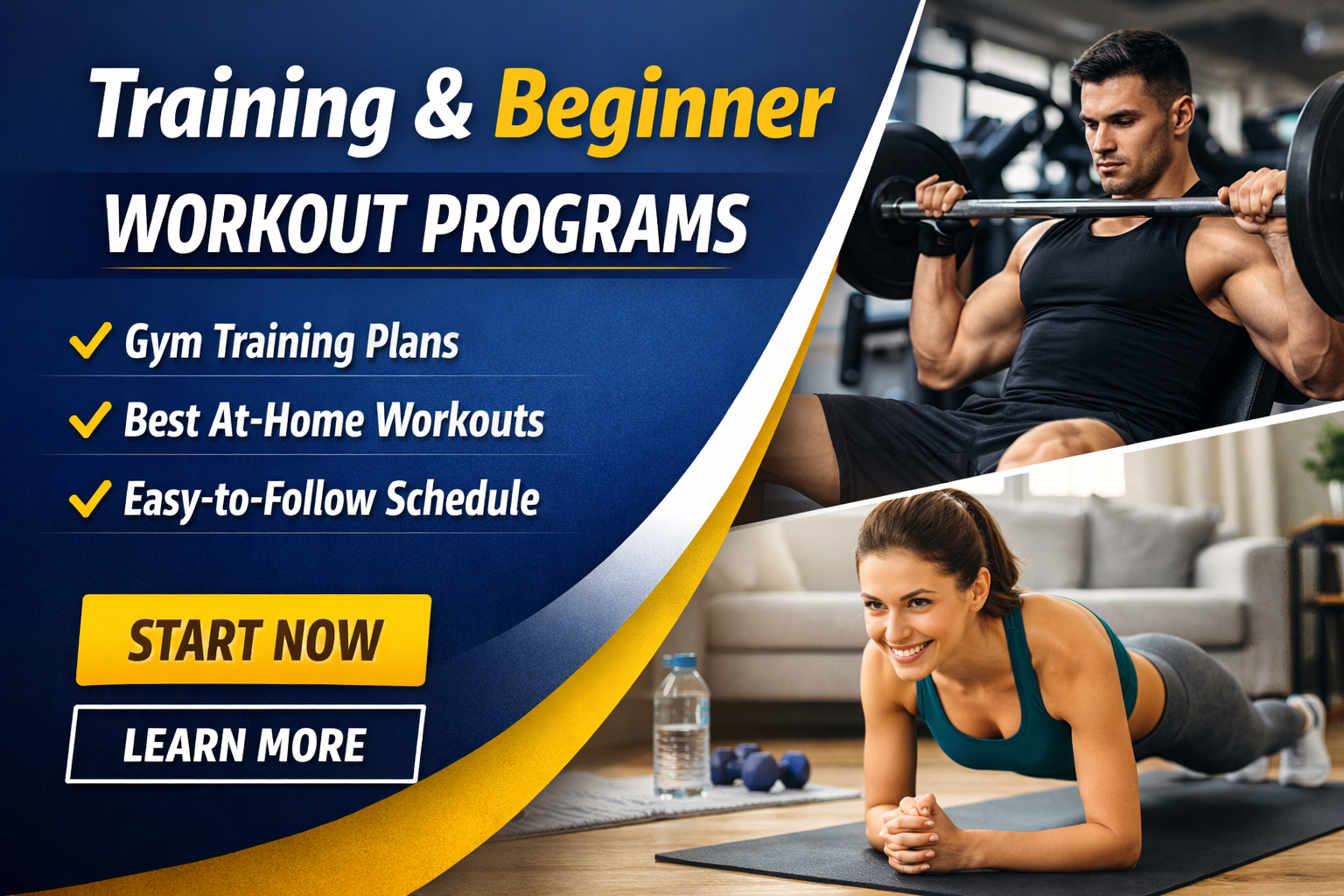
Structured & Beginner Programs: The Complete Guide to Starting Your Fitness Journey
Starting a fitness journey can feel overwhelming—especially for beginners. With endless workout videos, influencer routines, and conflicting advice online, it’s hard to know where to begin. This is why a structured gym training program or a well-planned workout routine for beginners is essential. Without structure, many beginners lose motivation, train inconsistently, or risk injury.
The good news? You don’t need to be an expert or spend hours exercising. Whether you prefer a gym environment or are searching for the best at-home workout program, beginners can achieve real results with the right plan. In this guide, you’ll learn how structured workouts work, how to start safely, and how to follow beginner-friendly gym and home programs that actually deliver progress.
What Is a Structured Training Program?
A structured training program is a planned workout system that defines what exercises to do, how often to train, and how to progress over time. Unlike random workouts, structured workouts follow a clear path that helps beginners build strength, stamina, and confidence safely.
The biggest benefits of structured training include consistency, measurable progress, and reduced injury risk. Beginners often struggle because they jump between routines without giving their body time to adapt. A beginner fitness plan removes this confusion by providing direction and purpose.
Random workouts might feel exciting, but they rarely deliver long-term results. Planned programs, whether in the gym or through home workouts, help beginners stay motivated and see steady improvements. Structure also ensures balanced training—working all major muscle groups instead of overtraining one area.
How Beginners Should Start Training
Before starting any workout routine, beginners should assess their current fitness level. This doesn’t require tests or measurements—simply note your mobility, strength, and stamina. Can you squat comfortably? Do push-ups feel challenging? How quickly do you get tired?
Beginners should focus on foundational movement patterns:
- Push (push-ups, presses)
- Pull (rows, pulldowns)
- Squat (bodyweight or goblet squats)
- Hinge (deadlifts, glute bridges)
- Core stability (planks, dead bugs)
Warm-ups and cool-downs are essential. A short warm-up prepares muscles and joints, while stretching helps recovery and flexibility. Beginners should start slow—low intensity, fewer sets, and shorter sessions focused on proper form.
A workout schedule for beginners should include 3–4 training days per week. More is not better at the start. Rest days are where recovery and progress happen, and avoiding overtraining keeps motivation high.
Gym Training Program for Beginners
The gym is an excellent environment for beginners because it offers equipment variety, guidance, and clear progression options. Machines provide stability, while free weights help build coordination and strength.
Sample Beginner Gym Training Program
Day 1 – Full Body Strength
- Squats or Leg Press – 3×10
- Dumbbell Bench Press – 3×10
- Lat Pulldown – 3×10
- Dumbbell Rows – 3×12
- Plank – 3×30 seconds
Day 2 – Light Cardio & Mobility
- 20–30 minutes brisk walking or cycling
- Mobility and stretching work
Day 3 – Full Body Strength
- Goblet Squats – 3×10
- Shoulder Press – 3×10
- Seated Row Machine – 3×10
- Romanian Deadlifts – 3×10
- Core work
Day 4 – Optional Conditioning
- Light cardio or circuit-style training
Beginners should use moderate weights and focus on technique. Machines are ideal early on, while free weights can be introduced gradually. Rest 60–90 seconds between sets, avoid ego lifting, and increase weights only when form remains solid.
Workout Routine for Beginners: A General Framework
No matter where you train, beginners benefit from a universal workout structure:
- Warm-up (5–7 minutes)
- Light cardio and dynamic movements
- Strength Training (20–30 minutes)
- Full-body exercises using controlled movements
- Low-Intensity Cardio (5–10 minutes)
- Walking, cycling, or light rowing
- Stretching (3–5 minutes)
- Focus on worked muscles
Beginners should choose exercises that target multiple muscles rather than isolations. Full-body routines outperform body-part splits at this stage because they improve coordination and efficiency.
Progressive overload simply means doing slightly more over time—extra reps, better form, or slightly heavier resistance. Tracking workouts helps beginners stay motivated and see improvement week by week.
Best At-Home Workout Program for Beginners
Home workouts are one of the best ways for beginners to stay consistent. They’re convenient, affordable, and remove common barriers like travel time and gym anxiety. With minimal equipment, beginners can build strength effectively.
What You Need
- Yoga mat
- Resistance bands
- Optional dumbbells
At-Home Workout Structure
Day 1 – Full Body Strength
- Bodyweight Squats – 3×12
- Push-ups (wall or knee) – 3×8–10
- Glute Bridges – 3×12
- Resistance Band Rows – 3×12
- Plank – 3×20–30 seconds
Day 2 – Cardio & Mobility
- Marching in place or brisk walking
- Jump rope or low-impact cardio
- Mobility flow
Day 3 – Full Body Strength
- Lunges – 3×10 per leg
- Shoulder Taps – 3×10
- Hip Hinge (Band RDL) – 3×12
- Dead Bug – 3×10
Day 4 – Low-Intensity Conditioning
- Walking, cycling, or yoga-style movements
Progression at home is simple—add reps, slow down tempo, or increase resistance. Consistency matters more than intensity, especially for beginners.
How to Build a Workout Schedule as a Beginner
A balanced workout schedule ensures recovery while building strength and endurance. Beginners should alternate training days with rest or light activity.
Ideal Beginner Schedule
- Monday: Strength Training
- Tuesday: Light Cardio
- Wednesday: Strength Training
- Thursday: Mobility or Cardio
- Friday: Strength Training
- Weekend: Optional activity or rest
This structure balances strength, cardio, and flexibility. Beginners aiming for fat loss can increase light cardio, while those focused on muscle gain can prioritize strength sessions.
Common Mistakes Beginners Should Avoid
Many beginners quit early due to avoidable mistakes. Doing too much too soon leads to burnout and injury. Skipping warm-ups increases injury risk, while ignoring proper form slows progress.
Other common mistakes include not tracking workouts, copying advanced influencer routines, and expecting fast results. Fitness progress takes time—consistency always beats intensity.
When to Switch or Upgrade Your Training Program
As beginners get stronger, workouts may start to feel easier. Signs of progress include better form, increased strength, and improved stamina. When this happens, it’s time to upgrade.
You can increase weights, add reps, or move to an intermediate plan. Combining strength training with conditioning ensures balanced fitness and continued results.
Final Tips for Staying Consistent
Set realistic weekly goals and keep workouts short but regular. Track progress, celebrate small wins, and choose gym or home workouts based on your lifestyle—not pressure. Consistency is the real secret to success.
Conclusion
A structured training approach is the foundation of beginner success. Whether you follow a gym training program, a workout routine for beginners, or the best at-home workout program, results come from planning and consistency. Start slow, train smart, and stay disciplined. With the right structure, fitness becomes sustainable—and progress becomes inevitable.